
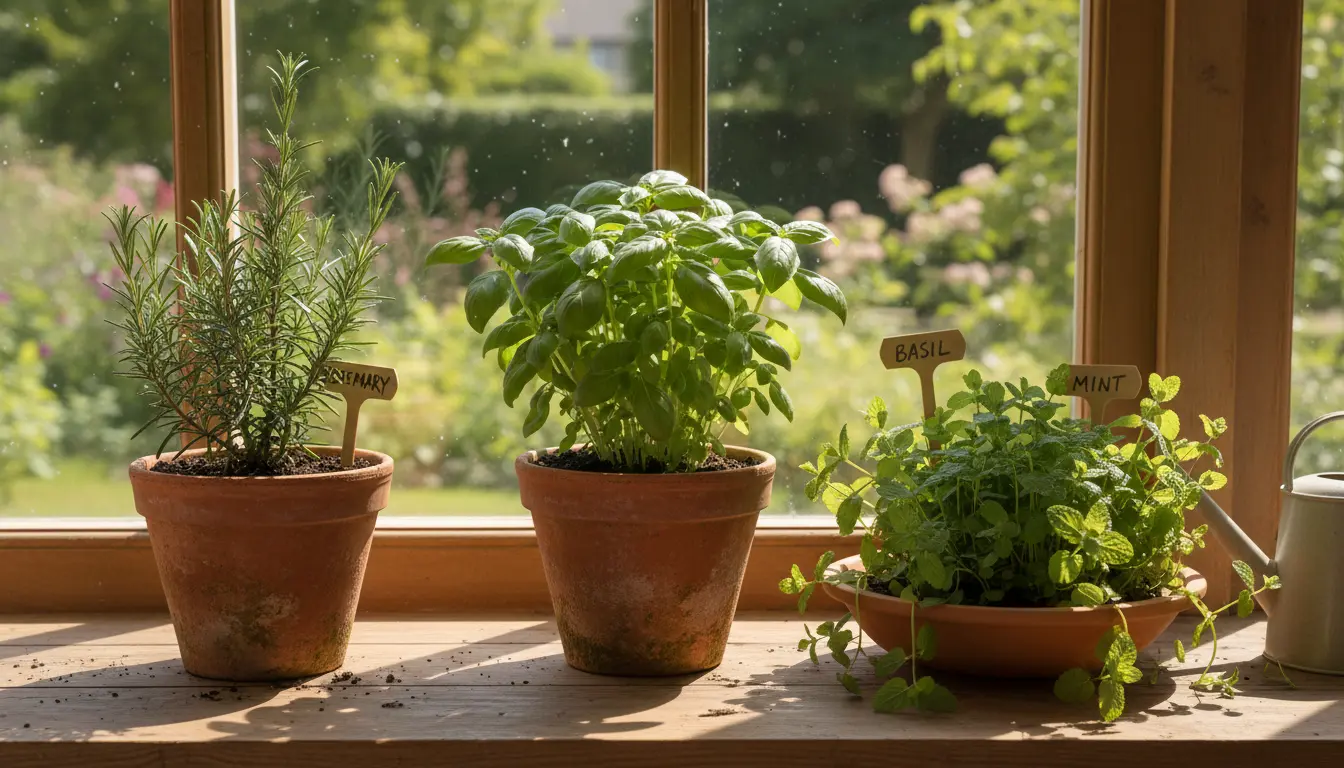
Why start a small herb garden at home
Growing a small herb garden is one of the quickest ways to add fresh flavor to meals while saving money. Herbs are low-maintenance, take little space, and reward growers with frequent harvests.
This guide gives practical steps to start and maintain a small herb garden, whether you have a balcony, windowsill, or tiny yard.
Choosing plants for a small herb garden
Pick herbs that match your cooking and light conditions. Start with 3–5 easy species to reduce complexity.
- Basil — great for sunny spots and summer use.
- Parsley — tolerates partial shade and frequent harvesting.
- Mint — spreads rapidly; best kept in a single pot.
- Rosemary — needs good drainage and sun.
- Chives — compact and hardy for most conditions.
How to match herbs to your space
Assess light: full sun (6+ hours), partial sun (3–6 hours), or shade (under 3 hours). Choose herbs suited to that light level.
Consider growth habit. Trailing or spreading herbs like mint may need separate containers to avoid crowding.
Containers and soil for a small herb garden
Containers and soil quality decide plant health. Use pots with drainage holes and a well-draining potting mix designed for containers.
Good options include terracotta pots, plastic containers, or window boxes. Terracotta breathes better but dries faster, so adjust watering accordingly.
Container sizes and arrangement
- Single small pots (4–8 inches) — best for chives, mint, parsley.
- Medium pots (8–12 inches) — ideal for basil, cilantro, rosemary.
- Window boxes — allow grouping of 3–5 compatible herbs.
Planting and starting your small herb garden
You can start from seed, seedlings, or cuttings. Seedlings are faster for beginners and reduce early-care mistakes.
- Fill pot with potting mix leaving 1 inch below rim.
- Plant seedling at the same depth as in its nursery container.
- Firm soil gently and water thoroughly to settle roots.
Spacing and companion planting
Follow recommended spacing per herb; overcrowding reduces airflow and increases disease risk. Group herbs with similar light and water needs together.
Watering, feeding, and general care for a small herb garden
Consistent but moderate watering is key. Most herbs prefer soil that dries slightly between waterings.
- Water when the top 1 inch of soil is dry.
- Use a balanced, diluted liquid fertilizer every 4–6 weeks in the growing season.
- Trim herbs regularly to encourage bushy growth and prevent flowering (bolting) in some species.
Common pests and problems
Watch for aphids, whiteflies, and fungal leaf spots. Control pests with hand removal, insecticidal soap, or increased air circulation.
If leaves yellow, check watering and drainage first. Overwatering is the most frequent cause of decline in container herbs.
Harvesting tips for a healthy small herb garden
Harvest regularly to maintain vigor. For leafy herbs, pinch leaves from the top to stimulate branching.
Harvest in the morning for best flavor and avoid removing more than one-third of the plant at once.
Many herbs like basil and cilantro release the most aroma and essential oils just before flowering, making that the best time to harvest for flavor.
Seasonal care and moving herbs indoors
Some herbs are tender perennials and will not survive frost. Move containers indoors or to a sheltered location before the first hard freeze.
Indoor light may be lower; place herbs by the brightest window or supplement with a grow light for 12–14 hours per day.
Small herb garden case study: An apartment windowsill success
Case: Maria, a busy teacher in a third-floor apartment, started a small herb garden with three pots on her south-facing windowsill. She chose basil, parsley, and chives for different uses.
She used 8-inch terracotta pots, a commercial potting mix, and a simple watering routine: water when the top inch of soil was dry. She harvested twice a week and used a tablespoon of balanced liquid fertilizer every month in spring and summer.
Result: Within six weeks, Maria had enough basil to make pesto twice and fresh parsley for weekly meals. Regular trimming kept plants compact and productive.
Quick checklist to start your small herb garden
- Choose 3–5 herbs that match your cooking and light levels.
- Select containers with drainage and a good potting mix.
- Plant seedlings, water to settle, and place in appropriate light.
- Water when surface soil is dry; fertilize lightly during growth months.
- Harvest often and move tender herbs indoors before frost.
Starting a small herb garden is fast, affordable, and yields continuous benefits for the kitchen. With the right plant choices, containers, and a simple care routine, even beginners can enjoy fresh herbs year-round.