
Why start composting at home?
Composting at home turns kitchen scraps and yard waste into nutrient-rich soil. It reduces trash, lowers landfill waste, and feeds plants naturally.
For many households, home composting also saves money on soil and fertilizer while improving garden health. The process is low-risk and adaptable to small spaces.
Composting can reduce household waste by up to 30 percent and help cut methane emissions from landfills.
Getting started with home composting
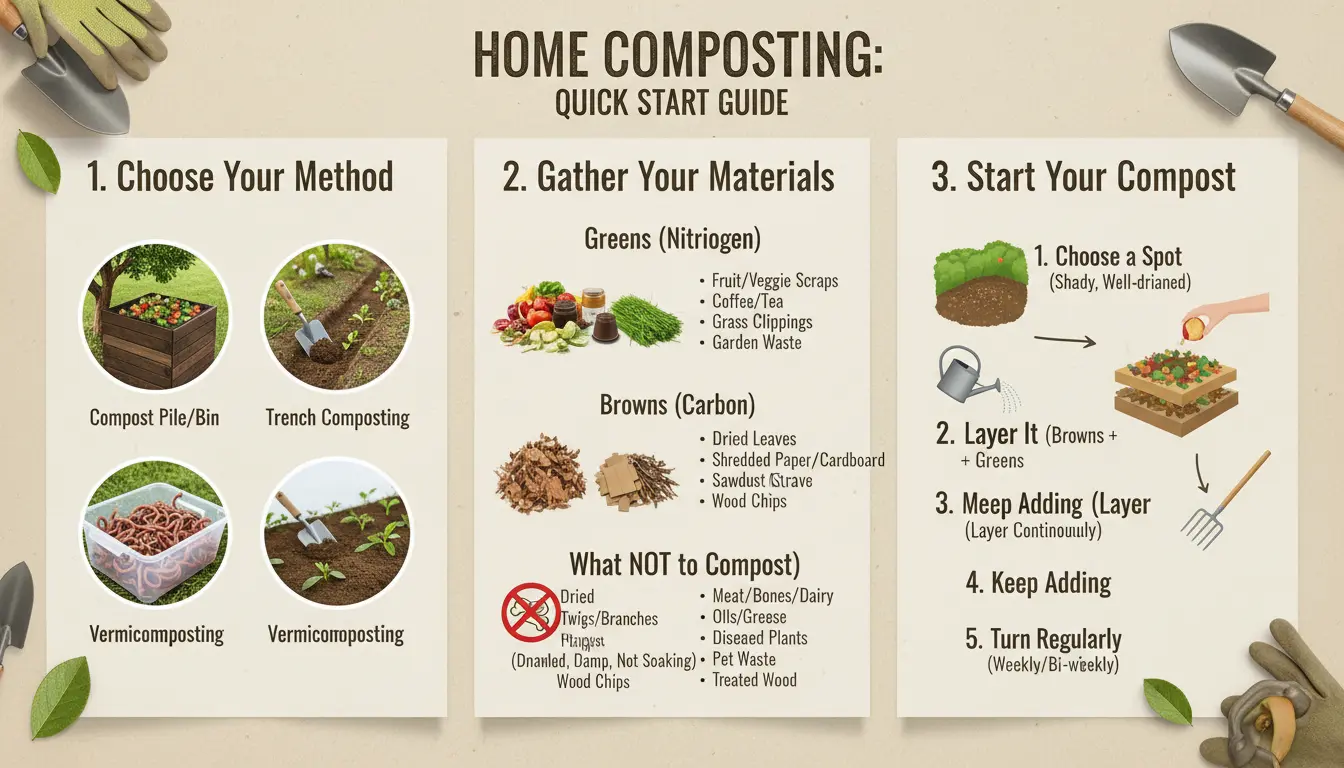
Begin by deciding what type of composting fits your space and schedule. Options include a simple bin, a tumbler, a pile, or vermicomposting with worms.
Choose the simplest method you will maintain. Consistency matters more than the specific system you pick.
Choose a composting method
- Compost bin: Enclosed, tidy, and suitable for yards. Low maintenance and hides materials.
- Tumbler: Spins to aerate and speeds decomposition. Good for faster results.
- Pile: Works for large yards. Requires turning with a pitchfork for aeration.
- Vermicompost: Uses red worms to break down scraps indoors or outdoors. Ideal for apartments.
Pick a spot and container
Place your compost on bare soil if possible to allow beneficial organisms to migrate in. A level, partly shaded area prevents drying out and overheating.
If you use a bin or tumbler, ensure easy access for adding materials and removing finished compost. Consider a secondary container for kitchen scraps to avoid daily trips outside.
What to put in your home compost
Compost works when you balance nitrogen-rich “greens” and carbon-rich “browns.” Greens provide protein for microbes, browns provide energy.
Common greens include kitchen scraps, fresh lawn clippings, and coffee grounds. Browns include dry leaves, straw, cardboard, and shredded paper.
Balancing greens and browns
- Aim for roughly 2 to 3 parts browns to 1 part greens by volume.
- Too many greens cause smells and sogginess; add more browns to dry and aerate the pile.
- Chop or shred large items to speed decomposition and increase surface area for microbes.
Maintenance and troubleshooting for home composting
Basic maintenance includes monitoring moisture, turning or aerating, and adding the right mix of materials. Regular small adjustments prevent major problems.
Moisture and aeration
The pile should feel like a wrung-out sponge: damp but not waterlogged. Water dry piles; cover excessively wet piles and add browns.
Turn or mix the pile every 1–3 weeks to add oxygen. Tumblers simplify this step and reduce manual labor.
Common problems and fixes
- Bad smell: Add dry browns and turn the pile to introduce oxygen.
- Slow breakdown: Chop materials smaller, add nitrogen-rich greens, and keep pile moist.
- Pests: Avoid meat, dairy, and oily foods. Use a closed bin or bury scraps in the center of the pile.
When is compost ready?
Mature compost is dark, crumbly, and smells earthy. Smaller systems may take 3–6 months; active, hot systems can finish in 6–8 weeks.
Use finished compost as a soil amendment, top dressing, or in potting mixes. Sift out larger undecomposed pieces for re-compositing.
Small real-world case study
Case study: A five-person household started a 200-liter bin in spring. They collected kitchen scraps in a countertop pail and added shredded leaves from fall cleanup.
After six months of turning every two weeks and maintaining a 3:1 brown-to-green ratio, they produced enough compost to amend two raised beds. Their weekly trash volume dropped by 35 percent.
Quick checklist to start composting at home
- Choose a method: bin, tumbler, pile, or vermicompost.
- Select a location with good drainage and partial shade.
- Gather materials: greens (kitchen scraps) and browns (leaves, cardboard).
- Build the pile in alternating layers and keep moisture like a damp sponge.
- Turn the pile regularly and monitor smell and moisture.
- Harvest finished compost and use it in your garden.
Final tips for successful home composting
Start small and scale up after you gain confidence. A tidy bin or tumbler works well for busy households.
Label a small jar for carrot peels, eggshells, and coffee grounds to make kitchen collection easy. Regular, small inputs create consistent results.
Composting at home is a practical way to reduce waste and improve soil health. With a little setup and routine, you can produce valuable compost for plants while lowering your environmental footprint.