
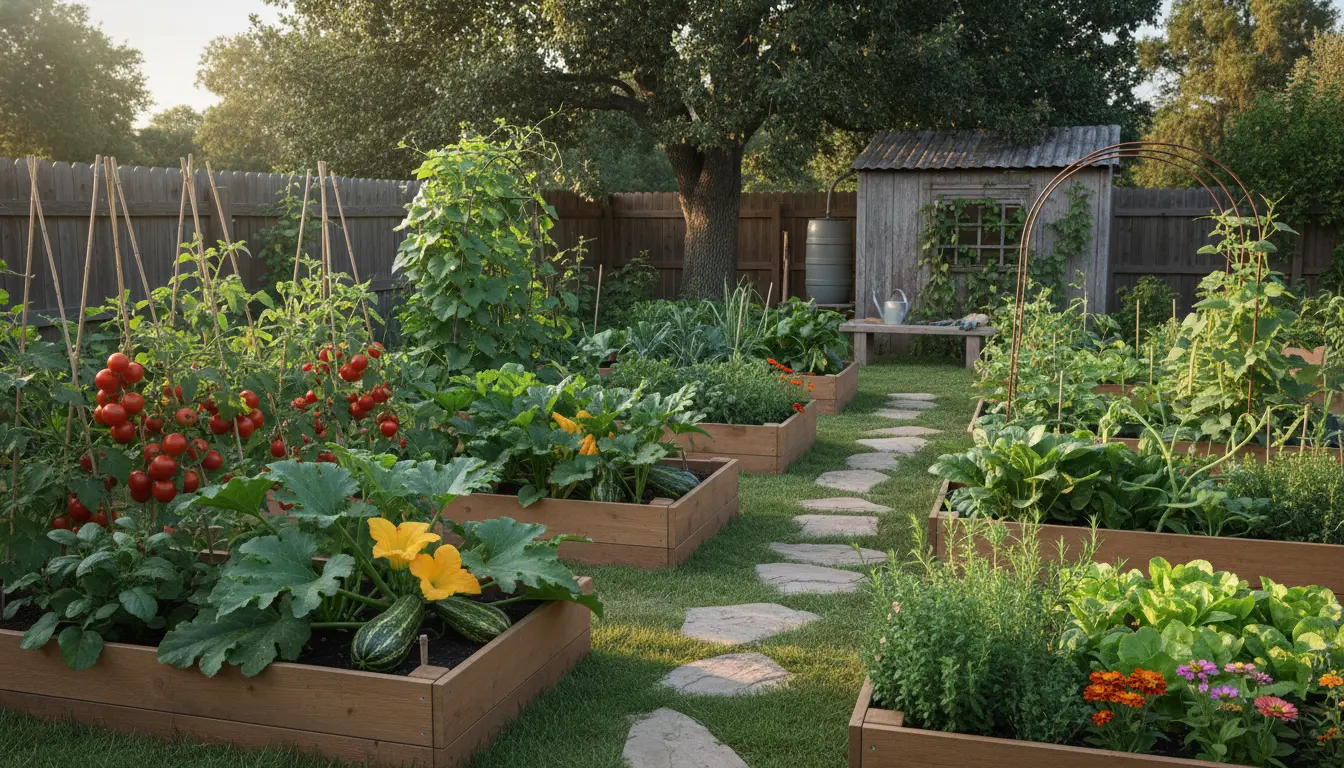
How to Start a Vegetable Garden: First Steps
Starting a vegetable garden is a practical way to grow fresh food and reduce grocery costs. This guide outlines clear steps you can follow whether you have a small balcony or a backyard plot.
Why Start a Vegetable Garden
A vegetable garden offers fresher produce, better flavor, and control over how food is grown. It also teaches planning and seasonal timing, and can be adjusted to small spaces or larger yards.
Choose the Right Site to Start a Vegetable Garden
Site selection determines how successful your garden will be. Look for a spot with at least 6 hours of direct sunlight, good drainage, and easy access to water.
If full sun is not available, select vegetables that tolerate partial shade like leafy greens and herbs. Avoid low spots where water pools after rain.
Assess sunlight and space
- Mark a full day of sunlight with notes or photos.
- Measure space to plan rows or raised beds.
- Consider vertical space for trellising vining crops.
Prepare Soil and Beds to Start a Vegetable Garden
Good soil is the foundation of a productive garden. Test soil pH and texture, and add organic matter to improve structure and fertility.
Raised beds or in-ground rows both work; raised beds warm faster in spring and drain well. Prepare beds by removing weeds and loosening soil to 8–12 inches.
Soil improvement checklist
- Add compost at a rate of 1–3 inches over the bed and mix into topsoil.
- Use well-rotted manure or commercial organic fertilizer if soil is poor.
- Adjust pH with lime (to raise) or sulfur (to lower) based on a soil test.
Plan What to Plant
Choose vegetables that match your climate, season, and kitchen habits. Start with easy crops like tomatoes, lettuce, radishes, beans, and herbs.
Make a planting map for succession planting to get continuous harvests. Note frost dates for your area to time sowing and transplanting.
Seed vs seedlings
Start with seeds for root crops, peas, and beans. Buy seedlings for tomatoes, peppers, and eggplants to save time and risk. Label rows to avoid confusion.
Planting and Watering Practices
Plant at the depth and spacing recommended on seed packets or plant tags. Proper spacing reduces disease and allows airflow.
Water deeply and less often to encourage strong roots. Aim for 1–1.5 inches of water per week, adjusting for rainfall and soil type.
- Water in the morning to reduce evaporation and leaf disease.
- Use drip irrigation or soaker hoses for consistent moisture.
- Mulch with straw or shredded leaves to retain moisture and suppress weeds.
Maintenance: Weeding, Feeding, and Pest Control
Regular maintenance keeps your garden productive. Pull weeds early, monitor for pests, and feed plants as they grow.
Use integrated pest management: hand-pick pests, use row covers, encourage beneficial insects, and apply organic treatments as needed.
Simple feeding schedule
- Apply a balanced organic fertilizer at planting time.
- Side-dress heavy feeders like corn and tomatoes mid-season.
- Top up compost annually to maintain soil health.
Harvesting Tips When You Start a Vegetable Garden
Harvest frequently for the best flavor and to encourage more production. Pick leafy greens before they bolt and beans when pods are firm but tender.
Use a clean knife or scissors to avoid tearing plants. Store harvests properly to extend freshness.
Many common vegetables, like lettuce and radishes, can be harvested within 30 days of planting from seed. Quick crops help beginners see fast results.
Common Starter Mistakes and How to Avoid Them
Beginners often overwater, overcrowd plants, or plant at the wrong season. Follow seed packet timing and resist the urge to water daily without checking soil moisture.
Start small to avoid overwhelm. A single raised bed or a few containers can provide plenty of learning and produce.
Case Study: A Small Backyard Garden That Worked
Claire started a 10 by 10 foot raised bed in a sunny corner of her yard. She mixed 2 inches of compost into the bed, planted tomatoes, lettuce, carrots, and bush beans, and used a soaker hose on a timer.
By mid-summer she harvested daily salads and 10–15 pounds of tomatoes. She credits consistent watering, mulching, and harvesting young greens for the garden’s success.
Quick Start Checklist to Start a Vegetable Garden
- Pick a sunny spot with good drainage.
- Test and amend the soil with compost.
- Choose easy vegetables for your season.
- Plant seeds or seedlings at the correct depth and spacing.
- Water deeply, mulch, and maintain weekly.
Starting a vegetable garden is a step-by-step process that rewards planning and simple daily care. Use these practical instructions to begin, learn from each season, and scale your garden over time.