
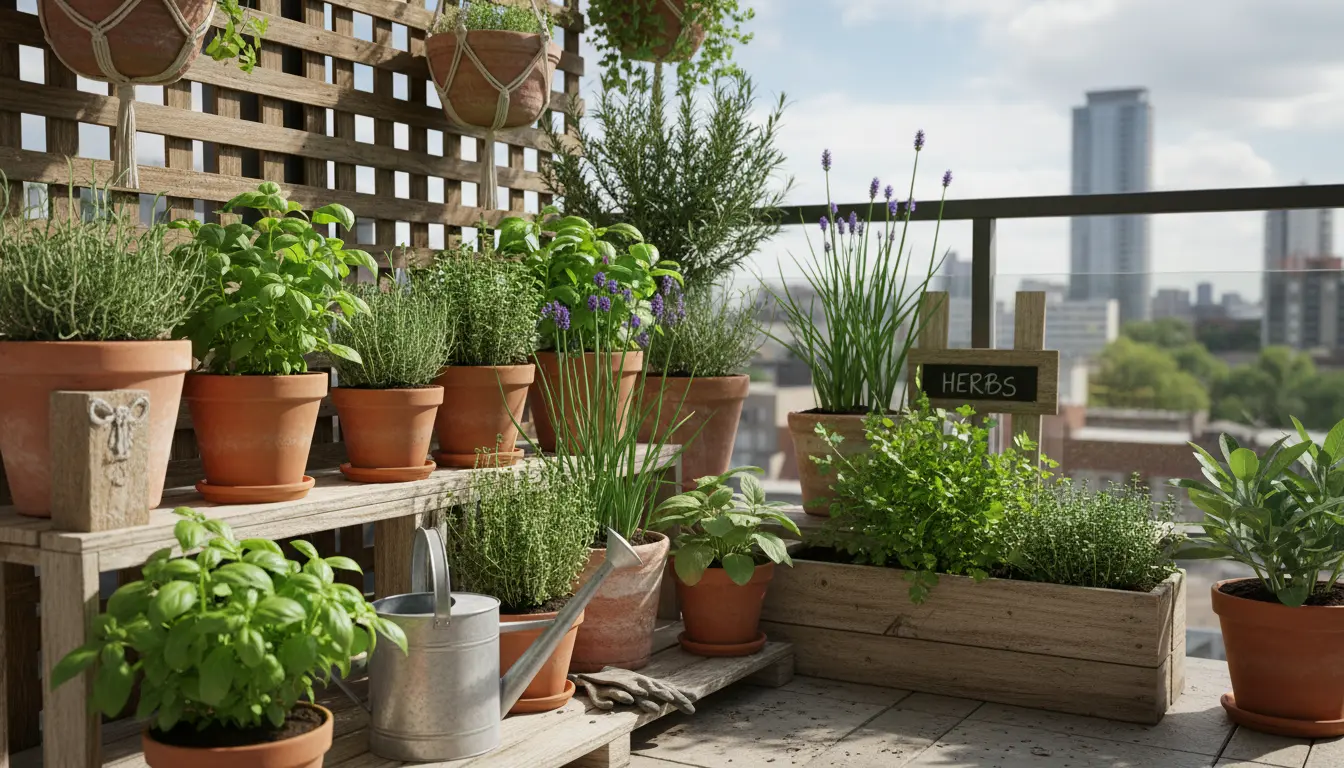
Why Start a Small Herb Garden at Home
A small herb garden adds fresh flavor to meals and can save money on groceries. Herbs are easy to grow in containers, require little space, and offer year-round use when placed in the right spot.
This guide explains practical steps to start a small herb garden, with clear choices for location, containers, soil, planting, and care.
Choose Location for a Small Herb Garden
Pick a place that gets at least 4–6 hours of sunlight per day for most culinary herbs. South or west-facing windows and balconies work well.
Consider these options:
- Balcony or patio railing
- Sunny windowsill
- Kitchen counter near natural light
- Raised bed or small plot in a backyard
Light Needs for Popular Herbs
Different herbs have varying light requirements. Match herbs to the light available to avoid slow growth.
- Full sun (6+ hours): rosemary, thyme, sage
- Partial sun (4–6 hours): basil, parsley, cilantro
- Partial shade: mint (also invasive in ground)
Pick Containers and Soil
Containers should have drainage holes and be proportional to the mature size of the herb. Use 6–12 inch pots for most herbs; larger pots for rosemary or mint.
Use a well-draining potting mix rather than garden soil. A mix labeled for containers or vegetables gives good aeration.
Container Tips
- Use terracotta for better evaporation in hot climates.
- Use plastic or glazed pots to retain moisture in dry conditions.
- Place a saucer under pots to catch excess water and protect surfaces.
Select Herbs for a Small Herb Garden
Start with 4–6 easy-to-grow herbs that you will use often. This keeps management simple and reduces overcrowding.
- Basil — great for summer and cooking
- Parsley — biennial, good in many dishes
- Mint — vigorous; best in its own pot
- Thyme — drought-tolerant and compact
- Rosemary — woody, fragrant, prefers full sun
- Cilantro — prefers cooler weather
Planting: Seeds vs. Seedlings
Seedlings or transplants give quicker results and are easier for beginners. Seeds are cheaper but need more time and attention for germination.
If you start from seed, follow packet depth instructions and keep the medium consistently moist until germination.
Spacing and Grouping
Place taller herbs at the back of a windowsill or in the center of a container. Keep aggressive growers like mint and oregano separate to prevent crowding.
Watering and Feeding Your Small Herb Garden
Water when the top inch of soil feels dry for most herbs. Overwatering causes root rot; underwatering causes wilting and flavor loss.
Fertilize lightly every 4–6 weeks during the growing season with a balanced liquid fertilizer or an organic option like compost tea.
Watering Best Practices
- Water in the morning when possible to reduce evaporation.
- Use a saucer to monitor drainage; empty collected water to prevent soggy roots.
- Adjust frequency with seasons — less in winter.
Pruning, Harvesting, and Maintenance
Regular harvesting encourages bushier growth. Pinch off flower buds on basil and parsley to keep plants focused on leaf production.
Inspect for pests such as aphids and spider mites and treat early with soapy water or a mild organic spray.
Seasonal Care
- Spring: repot as needed and divide crowded herbs.
- Summer: be ready to water more frequently in heat.
- Fall/Winter: move containers indoors if frost threatens;
- Trim back woody herbs in late winter to encourage fresh growth.
Most culinary herbs reach peak flavor just before they flower. Harvesting regularly often delays flowering and keeps leaves tasty.
Simple Troubleshooting for Small Herb Gardens
Yellow leaves often indicate overwatering or poor drainage. Sparse growth may mean insufficient light or nutrients.
Follow this checklist when plants struggle:
- Check light level and move herbs closer to a sunny window if needed.
- Confirm pot has drainage and soil is not compacted.
- Examine leaves for pests and treat promptly.
Real-World Example: Balcony Herb Garden Case Study
Sarah, a city renter, started a balcony herb garden with five 8-inch pots: basil, parsley, mint, thyme, and rosemary.
She placed pots along a south-facing railing, used a commercial potting mix, and watered twice a week in summer. Within six weeks she was harvesting basil for pasta and mint for tea. After one season, she reduced grocery herb purchases by about 60% and reported the herbs improved meal flavor and kitchen confidence.
Quick Checklist to Start a Small Herb Garden
- Choose a sunny spot with 4–6 hours of light
- Pick 4–6 useful herbs and suitable container sizes
- Use well-draining potting mix and pots with drainage holes
- Water when top inch of soil is dry and fertilize lightly
- Harvest regularly and manage pests early
Starting a small herb garden is a low-cost, high-reward project. With the right light, containers, and simple maintenance, you can enjoy fresh herbs all year. Begin with a few favorites, observe how they respond, and adjust care to build a thriving mini garden.