
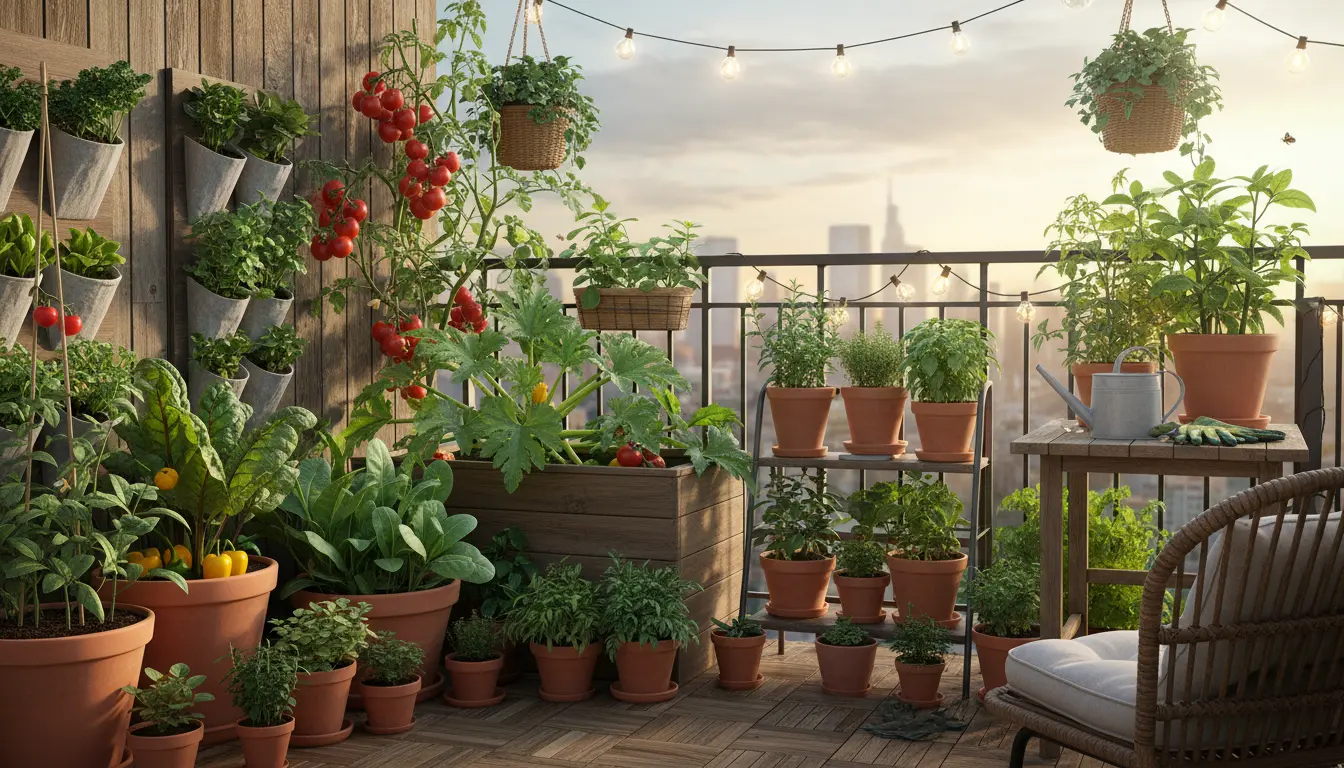
Why small space vegetable gardening works
Small space vegetable gardening lets people grow food on balconies, patios, windowsills, or tiny yards. It reduces grocery costs, improves diet quality, and makes fresh produce available year-round in many climates.
The approach focuses on efficient use of area, container choices, and plant selection. With a few adjustments most households can produce herbs, greens, and some fruiting vegetables.
Benefits of small space vegetable gardening
Growing vegetables in limited spaces brings several advantages. You gain control over pesticides and freshness, and you can tailor varieties to your taste.
Small gardens are also lower maintenance and accessible for people with mobility limits. They can be highly productive when planned correctly.
Common challenges
Space, sunlight, and water availability are the main constraints. Containers dry out faster than ground soil, and root space limits plant size and yield.
Wind and temperature swings on balconies can stress plants. The good news: most challenges have straightforward solutions.
Getting started with small space vegetable gardening
Start by evaluating the available space and sunlight. Note which hours the spot gets direct sun and where wind is strongest.
Measure the depth and width where you can place containers or beds. This determines which plants will fit and how many you can grow.
Choose containers and soil for small space vegetable gardening
Select containers with proper drainage and the right volume for the plants you choose. Larger pots retain water and support bigger root systems.
- 5–10 liter pots: herbs, salad greens, small peppers
- 15–30 liter pots: determinate tomatoes, dwarf beans, bush cucumbers
- Grow bags and half-barrels: larger tomatoes, eggplants
Use a high-quality potting mix with organic matter and good drainage. Avoid garden soil in containers because it compacts and drains poorly.
Pick the right plants for small spaces
Choose compact or dwarf varieties labeled for containers. Fast-maturing crops let you plant multiple successions each season.
Recommended plants:
- Leafy greens: lettuce, arugula, spinach
- Herbs: basil, parsley, chives
- Compact fruiting crops: patio tomatoes, dwarf peppers, bush beans
- Vertical growers: peas, pole beans, cucumbers on trellises
Layouts and methods for small space vegetable gardening
Use vertical space and layered planting to multiply productivity. Simple structures can double or triple your growing area.
Vertical and container layout ideas for small space vegetable gardening
Options to maximize yields include trellises, hanging baskets, stacked planters, and rail planters. Combine techniques based on sun and access.
- Vertical trellis: place vining crops behind shorter plants to avoid shading.
- Windowsill herb line: small pots with south-facing light for fresh herbs.
- Stacked planters: grow strawberries or shallow-rooted greens in tiers.
Watering, light, and fertilizing tips
Containers need regular watering—often daily in hot weather. Use mulch or capillary mats to reduce evaporation.
Fertilize frequently with a balanced liquid feed or slow-release pellets. Smaller containers require more frequent feeding because nutrients leach faster.
Case study: Balcony Tomato and Herb Setup
Maria, an apartment renter, used a 4-foot balcony to grow food for her family. She placed two 20-liter pots with patio tomatoes, three 10-liter pots with peppers, and a rail planter filled with basil, parsley, and lettuces.
Key choices that led to success:
- South-facing railing for maximum sun
- Self-watering pots that reduced daily watering time
- Staggered planting: quick-maturing lettuce between slower tomato growth
Result: a steady supply of fresh herbs and weekly tomato harvests through summer. Maria reported lower grocery bills and more interest from neighbors to try container gardening.
Leafy greens can be grown in just 5–10 cm of soil when container depth is used efficiently. Cut-and-come-again harvesting extends the yield from small pots.
Troubleshooting and maintenance for small space vegetable gardening
Monitor plants weekly for pests, nutrient deficiency, and water stress. Early intervention prevents small problems from becoming major losses.
Pest and disease control
Use physical barriers, sticky traps, and companion planting to reduce pests. Remove diseased leaves promptly and avoid overhead watering to reduce fungal issues.
Harvesting and succession planting
Harvest often to encourage production. For example, snip lettuce leaves when young to encourage regrowth, and replace finished crops with fall greens or cool-season vegetables.
Plan rotations to avoid depleting the same nutrients in containers: alternate heavy feeders like tomatoes with legumes or leafy crops.
Quick checklist to start small space vegetable gardening
- Measure space and sunlight hours.
- Choose container sizes and quality potting mix.
- Select compact, fast-growing varieties.
- Arrange plants vertically where possible.
- Set up a watering schedule and feeding plan.
- Monitor for pests and harvest regularly.
Small space vegetable gardening is practical, affordable, and rewarding. With the right containers, plant choices, and simple routines you can grow meaningful amounts of food even in tight urban settings.