
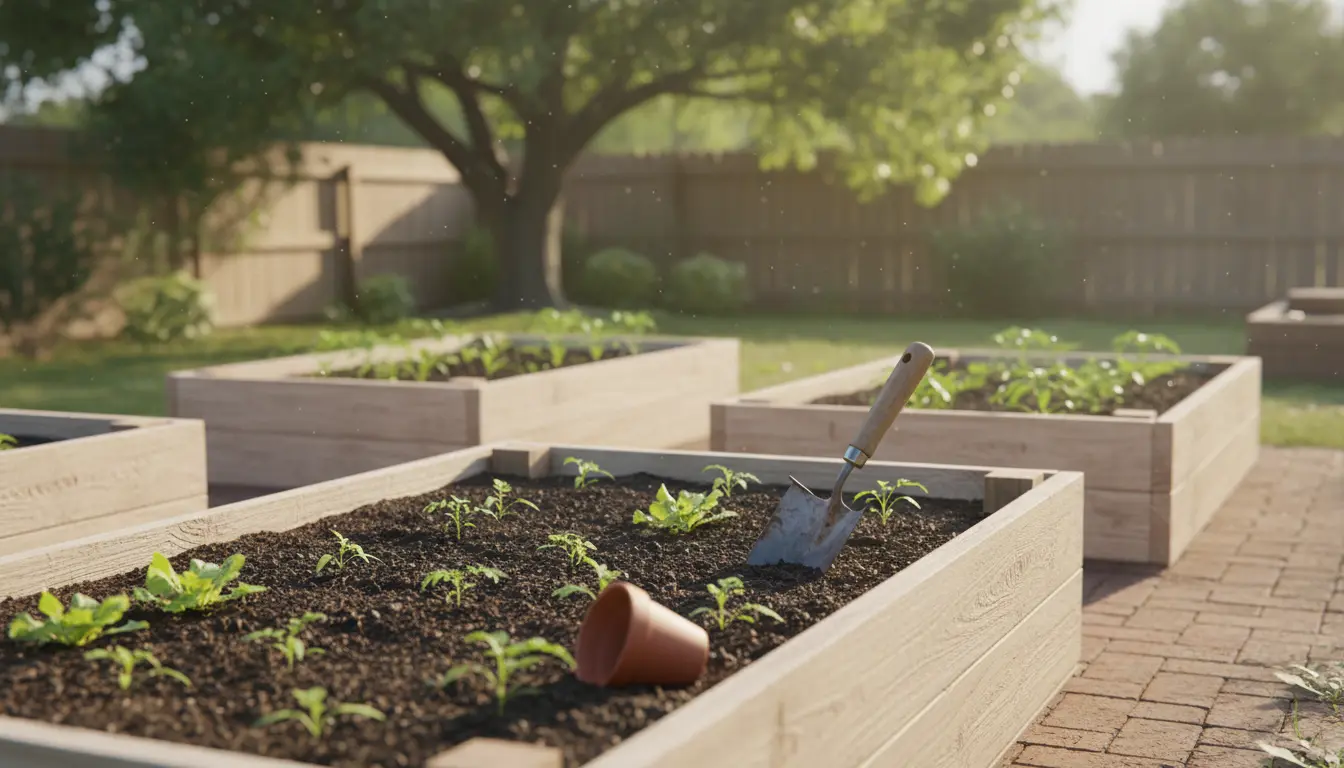
Raised bed gardening is an efficient way for beginners to grow vegetables, herbs, and flowers in a controlled, productive space. This guide covers practical steps to plan, build, and maintain your first raised beds with minimal fuss.
Why Choose Raised Bed Gardening
Raised bed gardening improves drainage, warms soil faster in spring, and reduces compaction. Beds make it easier to control soil quality and to reach plants without stepping on beds, which preserves soil structure.
For small yards or patios, raised beds maximize yields in limited space and simplify tasks like watering, weeding, and harvesting.
Planning Your First Raised Bed
Good planning saves time and money. Start by picking a site with full sun for most vegetables—ideally 6 to 8 hours of direct sunlight per day.
Size and Location for Raised Bed Gardening
Popular bed sizes are 4 x 4 feet or 4 x 8 feet; these widths let you reach the center from either side. Keep bed paths at least 2 feet wide for easy access.
Place beds near a water source and where runoff won’t flood them. If your property has clay soil, raised beds keep roots higher and drier.
Materials and Build for Raised Bed Gardening
Use rot-resistant wood like cedar, recycled composite materials, or concrete blocks. Avoid treated lumber that may leach chemicals into edible crops.
Build beds 6 to 12 inches high for shallow-rooted crops, and 12 to 18 inches for deeper-rooted vegetables and improved soil depth.
Soil and Planting Mix for Raised Bed Gardening
Good soil is the foundation of raised bed gardening. Aim for a loose, nutrient-rich mix that drains well and holds moisture evenly.
Simple soil mix recipe:
- 40% topsoil or screened garden soil
- 40% high-quality compost
- 20% coarse sand or perlite for drainage
Add a handful of balanced organic fertilizer when planting heavy feeders like tomatoes and corn. Test pH if persistent problems appear; most vegetables prefer pH 6.0–7.0.
Planting, Watering, and Maintenance in Raised Bed Gardening
Plant at recommended spacing to avoid crowding. Pair taller crops with low growers to maximize sunlight use without shading everything.
Crop Selection and Rotation
Start with easy crops: lettuce, radishes, bush beans, cherry tomatoes, and herbs. Rotate families each season to limit pests and soil depletion.
Example rotation: year one — legumes and greens; year two — nightshades; year three — root crops.
Watering Tips for Raised Bed Gardening
Raised beds often dry faster than ground beds, so aim for deep, infrequent watering. Use a soaker hose or drip irrigation to deliver water to roots and reduce evaporation.
Mulch with straw or shredded leaves to reduce moisture loss and suppress weeds. A 2–3 inch mulch layer is usually sufficient.
Pest and Disease Basics for Raised Bed Gardening
Raised beds reduce some pest issues but do not eliminate them. Use row covers for seedlings, hand-pick larger pests, and encourage beneficial insects with flowers like calendula and alyssum.
Keep beds clean: remove diseased plants promptly and avoid overhead watering to reduce fungal disease risk.
Small Real-World Example
Case study: A city homeowner built two 4 x 8 foot cedar beds on a sunny balcony. Year one they planted lettuce, bush beans, cherry tomatoes, and basil.
They mixed store-bought organic compost with screened topsoil, installed a drip line, and used 2-inch straw mulch. By midseason they harvested continuous lettuce and three tomato plants that produced 20–30 tomatoes each.
Lessons learned: raise bed depth to 12 inches for tomatoes the next year and add more early-season nitrogen to support leafy growth.
Raised bed gardening can extend your growing season by warming soil faster in spring. Beds also reduce soil compaction, improving root growth and plant health.
Common Mistakes and Troubleshooting in Raised Bed Gardening
Avoid these common errors: using poor-quality soil, overwatering, and planting too close together. Each reduces yields and invites pests.
If plants show yellow leaves, check for nutrient deficiency or water stress. If growth is stunted, test pH and consider adding compost or a balanced organic fertilizer.
For uneven watering, install a simple drip system on a timer to keep moisture consistent.
Quick Checklist Before You Build
- Choose a sunny site near water
- Select safe, durable materials for beds
- Plan bed size so you can reach the center
- Mix high-quality compost into soil
- Install drip irrigation or soaker hoses
Raised bed gardening is approachable and rewarding for beginners. With a little planning and the right soil mix, you can have productive beds in your first season and improve them each year.
Start small, observe how your beds perform, and adjust soil, spacing, and watering as you gain experience. Happy gardening!