
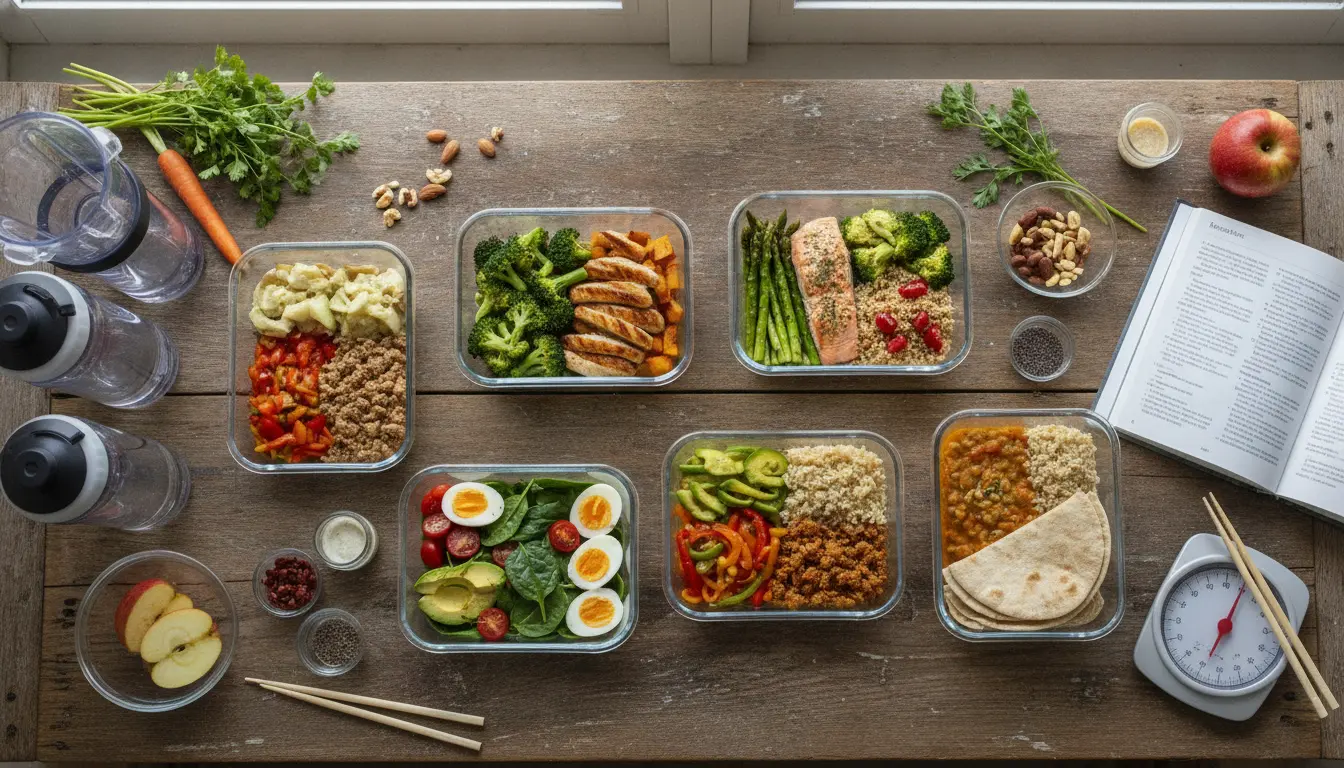
Why Meal Prepping for Busy Professionals Works
Meal prepping reduces daily decision fatigue by preparing multiple meals in advance. It saves time during the workweek and helps maintain consistent nutrition.
For busy professionals, the main benefits are predictable meals, lower cost per meal, and less reliance on takeout. These advantages make meal prep a practical weekly habit.
Basic Principles of Meal Prepping for Busy Professionals

Start with simple, repeatable components that combine into different meals. Focus on a protein, two vegetables, and one grain or starch each week.
Balance variety and repetition: rotate sauces, spices, and herbs to keep meals interesting without increasing prep time.
Plan Once, Execute Fast
Reserve 60–120 minutes on a weekend or shift to one weeknight for prep. Use that block to cook, portion, and store each item.
Create a repeating 2–4 week menu so shopping and cooking become familiar and quicker over time.
Step-by-Step Meal Prepping Process
1. Choose Your Recipes
Select 3–5 base recipes that share ingredients. This reduces waste and shortens grocery trips.
- Example bases: grilled chicken, baked salmon, lentil stew, roasted vegetables.
- Plan two lunches, two dinners, and flexible breakfasts/snacks per week.
2. Make a Smart Shopping List
Organize the list by store sections: produce, proteins, pantry, dairy, frozen. This saves time in-store.

Buy a mix of fresh and long-lasting frozen items to cover the week without spoilage.
3. Batch Cook Efficiently
Use multitasking techniques: roast vegetables while grains cook and proteins sear. Use oven and stovetop simultaneously.
Invest in a slow cooker, pressure cooker, or sheet pans to maximize hands-off cooking time.
4. Portion and Store
Portion meals into containers for grab-and-go access. Label containers with contents and date to avoid confusion.
Store ready-to-eat meals in the fridge for 3–4 days and freeze extras in meal-sized portions for later weeks.
Quick Meal Prepping Tips for Busy Professionals
- Cook double batches of staples like rice, quinoa, or beans and reuse across meals.
- Prep raw veggies and protein, then mix fresh at mealtime to keep texture crisp.
- Use simple seasoning blends to change flavor profiles without new ingredients.
- Keep a running grocery list on your phone to add items as you run out.
Sample Weekly Meal Plan
Below is a compact example you can adapt to your schedule and tastes.
- Breakfasts: Overnight oats (2 days), yogurt and fruit (2 days), egg muffins (1 day).
- Lunches: Grilled chicken + quinoa + roasted broccoli (3 days), lentil salad with spinach (2 days).
- Dinners: Baked salmon + sweet potato + green beans (2 nights), vegetable stir-fry with tofu (2 nights).
- Snacks: Hummus and carrot sticks, mixed nuts, pre-sliced apples with peanut butter.
Meal Prepping Tools and Containers
Choose containers that are microwave- and dishwasher-safe to simplify reheating and cleanup. Glass containers are durable and stain-resistant.
Other helpful tools: sharp chef knife, cutting board, mealscale, reusable silicone bags, and a set of measuring spoons.
Food Safety and Shelf Life
Cool cooked food quickly before refrigerating to limit bacterial growth. Do not leave perishable items at room temperature for more than two hours.
Label frozen meals with the date and use within 2–3 months for best quality. Reheat to at least 165°F (74°C).
Case Study: One Week Saved and Simplified
Sarah, a 34-year-old project manager, started meal prepping for one hour every Sunday. She chose three proteins and two vegetable combos she enjoyed.
After four weeks she reported saving 6 hours a week on cooking and decision-making. She spent 30% less on food and felt less stressed about weekday dinners.
- Time saved: ~6 hours weekly
- Money saved: ≈30% on food costs
- Health benefit: more consistent meals and fewer high-calorie takeout choices
Common Challenges and How to Overcome Them
Challenge: Boredom with repeated meals. Solution: Swap sauces or spices weekly and try one new recipe each month.
Challenge: Lack of time on prep day. Solution: Split prep into two shorter sessions or use a one-pot recipe to reduce active time.
Final Checklist for Meal Prepping for Busy Professionals
- Plan a simple, repeatable menu for the week.
- Create an organized shopping list by store section.
- Set aside a consistent prep block and use time-saving appliances.
- Portion, label, and store meals safely for the week.
- Adjust flavors and pairings to avoid burnout.
Following these steps makes meal prepping practical and sustainable for busy professionals. Start with one small change this week and scale gradually as the habit fits your routine.