
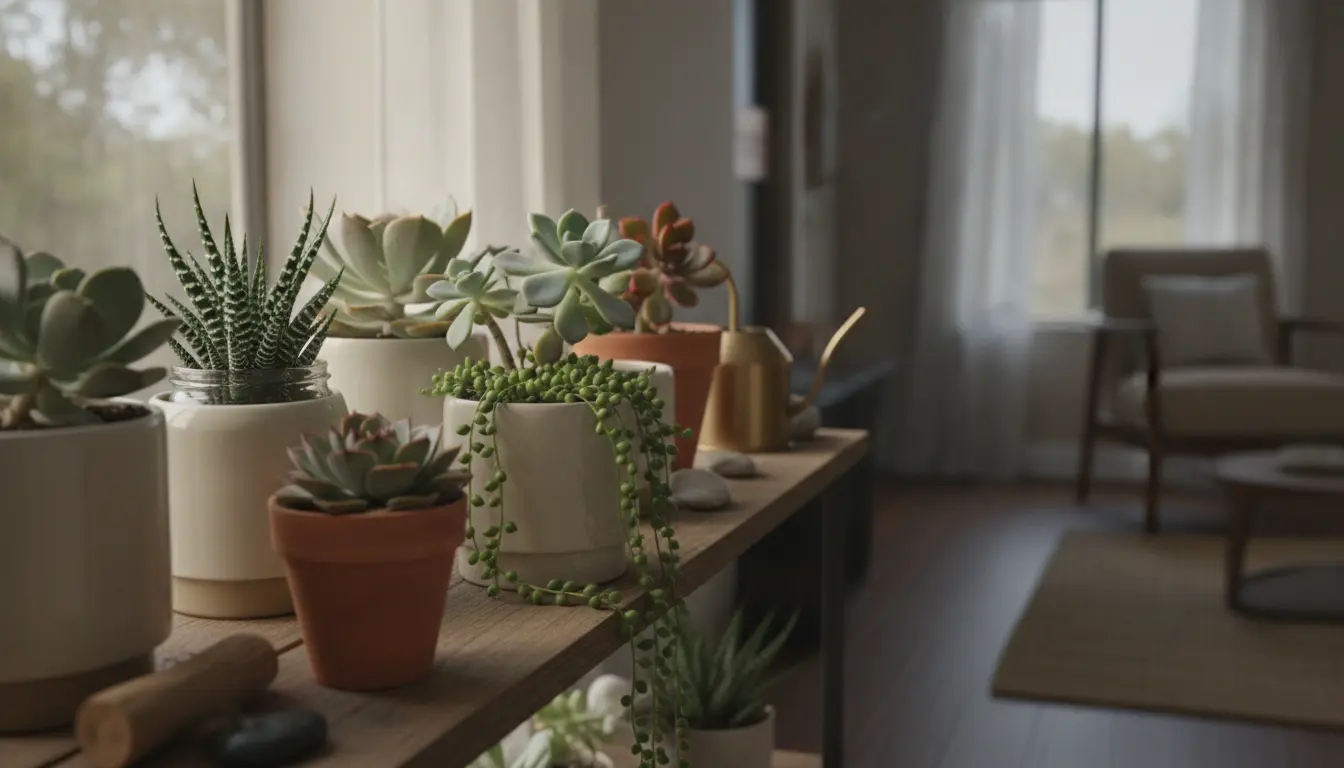
Indoor Succulent Care: Basic Principles
Indoor succulents are low-maintenance but not indestructible. Understanding their basic needs helps you avoid common mistakes and keep plants healthy long term.
Succulents store water in leaves and stems, so their main needs are bright light, well-draining soil, and careful watering. This guide covers practical, step-by-step care for beginners.
Light Requirements for Indoor Succulent Care

Succulents usually need bright light to thrive. Place them near a south- or east-facing window where they receive 4–6 hours of indirect or morning sun.
If light is limited, use a full-spectrum LED grow light for 8–10 hours daily. Rotate pots weekly to encourage even growth and prevent stretching.
Signs of Light Problems
- Too little light: stretched or leggy stems, pale leaves.
- Too much direct afternoon sun: scorched brown patches on leaves.
- Solution: adjust window position or add sheer curtain for filtered light.
Watering Succulents: How Often and How Much
Overwatering is the most common cause of succulent decline indoors. Use the soak-and-dry method: water thoroughly, then allow soil to dry completely before the next watering.

Typical frequency is every 2–4 weeks depending on season, pot size, and indoor humidity. In winter, reduce watering further since growth slows.
Practical Watering Steps
- Check soil with a finger or wooden skewer to confirm dryness 2–3 inches deep.
- Water until it drains from the pot’s drainage holes; empty the catch tray after 30 minutes.
- Use room-temperature water to avoid shocking roots.
Soil and Containers for Indoor Succulent Care
Well-draining soil prevents root rot. Use a commercial cactus/succulent mix or make your own by combining potting soil with coarse sand and perlite in a 2:1:1 ratio.
Choose pots with drainage holes. Terracotta or unglazed ceramic helps wick moisture away from roots and reduces overwatering risk.
Soil Tips and Examples
- Amend heavy potting soil with 30–50% perlite for better drainage.
- Avoid purely decorative pots without drainage, or use them as cachepots with a draining inner pot.
Repotting Succulents
Repot succulents every 1–2 years to refresh soil and check root health. Signs you need to repot include roots growing out of drainage holes or slow growth after the active season.
Repot in spring or early summer when plants are entering active growth. Allow freshly repotted plants a week to recover before resuming regular watering.
Common Pests and Problems
Watch for mealybugs, spider mites, and scale. Early detection makes treatment easier and prevents spread to other houseplants.
Isolate infested plants and treat with insecticidal soap, neem oil, or a cotton swab dipped in isopropyl alcohol for small scale or mealybug spots.
Quick Troubleshooting Checklist
- Yellow, mushy leaves: likely overwatering—check roots and decrease watering frequency.
- Wrinkled leaves: possibly underwatered—water deeply and monitor recovery.
- Brown sunburn spots: move to less direct heat and provide filtered light.
Feeding and Fertilizing
Succulents need minimal fertilizer. Feed lightly during the growing season (spring and summer) using a balanced, water-soluble fertilizer diluted to half strength.
A single feed every 4–6 weeks is sufficient for most indoor succulents. Avoid heavy feeding in fall and winter when plants rest.
Case Study: Studio Apartment Succulents
Sarah, a city renter, kept three mixed succulents on a north-facing shelf and noticed they became leggy and pale. She moved them to a bright east window and started using a grow light for two hours in the evening.
She repotted each in a gritty succulent mix and adjusted watering to every three weeks. Within two months, new compact growth appeared and leaf color improved. Small changes in light and soil fixed the issue.
Some succulents, like Haworthia and Gasteria, tolerate lower light and are ideal for north-facing rooms. Matching species to light conditions reduces stress and care needs.
Practical Routine for Indoor Succulent Care
Follow a simple monthly routine to keep succulents healthy. Regular checks prevent most common problems before they become serious.
- Weekly: inspect for pests, check leaf firmness, and rotate plants.
- Every 2–4 weeks: water using soak-and-dry method based on soil dryness.
- Seasonally: repot if root-bound and adjust watering in winter months.
Final Tips for Successful Indoor Succulent Care
Start with forgiving species like Echeveria, Sedum, or Jade plants when you are new. Learn the specific needs of each species as you expand your collection.
Record watering dates and note any changes in light or temperature to refine your routine. Small, consistent adjustments lead to long-term success with indoor succulents.