
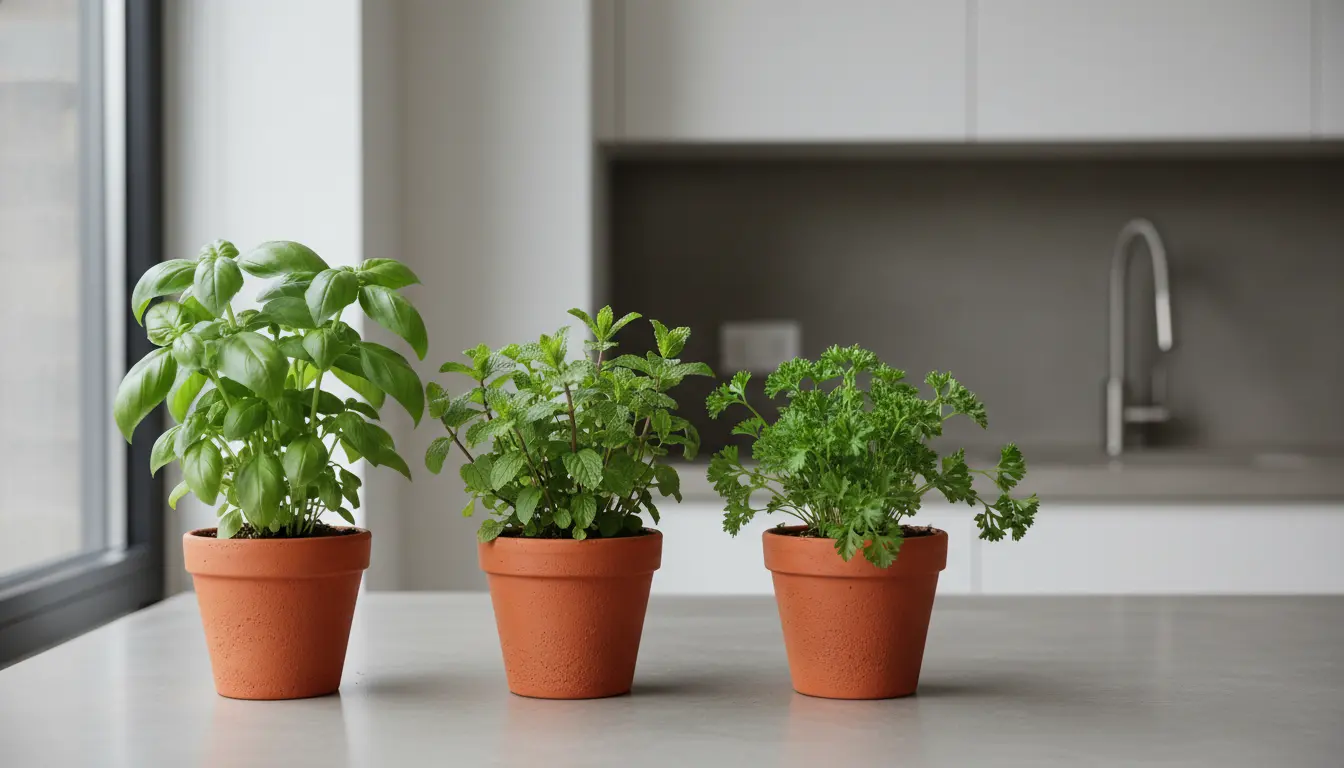
Why Indoor Herb Gardening Works
Indoor herb gardening is a practical way to have fresh flavors year-round. It fits small spaces and can save money on store-bought herbs.
Herbs are forgiving and fast-growing, making them ideal for beginners. With the right light, soil, and routine you can maintain a productive mini-garden on a windowsill or countertop.
Choose the Right Herbs for Indoor Success
Select herbs that tolerate container life and moderate indoor light. Good starter herbs include basil, mint, parsley, chives, thyme, and rosemary.
- Basil: Fast-growing, likes bright light and regular watering.
- Mint: Hardy, tolerates lower light but can spread aggressively.
- Parsley: Slower to start but reliable; prefers consistent moisture.
- Chives: Compact and forgiving; great for small pots.
- Thyme and Rosemary: Mediterranean herbs that prefer drier soil and strong light.
Containers and Soil: Key Choices for Indoor Herb Gardening
Choose containers with drainage holes to avoid root rot. Pots between 4 and 8 inches work well for most individual herbs.
Use a light, well-draining potting mix rather than garden soil. Look for mixes labeled for herbs or vegetables, or amend with perlite for extra drainage.
Container Tips for Indoor Herb Gardening
- Use saucers to protect surfaces from water runoff.
- Group pots with similar water needs together.
- Repot every 12–18 months if roots become crowded.
Light and Placement: Where to Put Your Herbs
Most culinary herbs need 6–8 hours of bright light. A south- or west-facing window offers the best natural light in many homes.
If natural light is limited use LED grow lights. Position the lights 6–12 inches above the plants and run them 12–14 hours per day for best results.
Light Checklist for Indoor Herb Gardening
- South window: Best for sun-loving herbs like basil and rosemary.
- East or west window: Suitable for most herbs with moderate light needs.
- Low light: Choose mint and parsley or use supplemental grow lights.
Watering and Feeding Routine
Watering is the most common mistake for indoor herb gardeners. Overwatering causes root rot; underwatering stresses plants and reduces flavor.
Check soil moisture with your finger. Water when the top 1 inch of soil is dry for most herbs. Herbs like rosemary and thyme prefer to dry slightly between waterings.
Feeding Schedule
- Use a balanced liquid fertilizer diluted to half strength every 4–6 weeks during active growth.
- Slow-release granular fertilizers can be used at potting time for low-maintenance setups.
Pruning and Harvesting for Healthier Plants
Regular pruning encourages bushier growth and delays flowering for herbs like basil and mint. Pinch back the top sets of leaves frequently.
Harvest no more than one-third of a plant at a time to avoid shock. Use sharp scissors and cut just above a leaf node to stimulate new shoots.
Pruning Tips for Indoor Herb Gardening
- Remove flower spikes from basil to keep leaves producing longer.
- Trim mint regularly to prevent legginess and encourage dense growth.
- Thin older outer stems on parsley and chives to allow light into the center.
Pest and Disease Management
Indoor pests are less common but can include aphids, spider mites, and fungus gnats. Inspect leaves regularly and isolate new plants for a week.
For small pest outbreaks, wipe leaves with a damp cloth or use insecticidal soap. Prevent fungus gnats by letting the soil surface dry between waterings and using sticky traps.
Simple Case Study: Three-Plant Windowsill Herb Kit
Anna, a busy home cook, started with three 6-inch pots: basil, parsley, and mint. She placed them on a south-facing windowsill and used an indoor potting mix.
Week 1: Seedlings were kept moist and given 6–8 hours of light. Week 4: Anna began watering when the top inch dried and pinching basil tips weekly.
After two months she harvested fresh basil for pesto and trimmed mint for tea. A small consistent routine gave her steady yields without extra equipment.
Many herbs release stronger aromas and flavors when harvested in the morning after the dew has dried. Regular harvesting can improve plant vigor and flavor concentration.
Troubleshooting Common Problems
Yellowing leaves often mean overwatering or poor drainage. Move plants to better-draining pots and reduce watering frequency.
Leggy, stretched plants indicate insufficient light. Move them to a brighter window or add a grow light and pinch back long stems to encourage branching.
Quick Start Checklist for Indoor Herb Gardening
- Choose 2–4 beginner herbs and pots with drainage.
- Use quality potting mix and position in bright light.
- Water when the top inch of soil is dry; feed lightly every month.
- Prune regularly and inspect for pests weekly.
Final Practical Tips
Start small and expand as you gain confidence. A simple windowsill kit can supply most common culinary herbs for a household.
Keep a short journal of watering, feeding, and harvests for each pot. Small notes help you fine-tune care and improve yields season to season.