
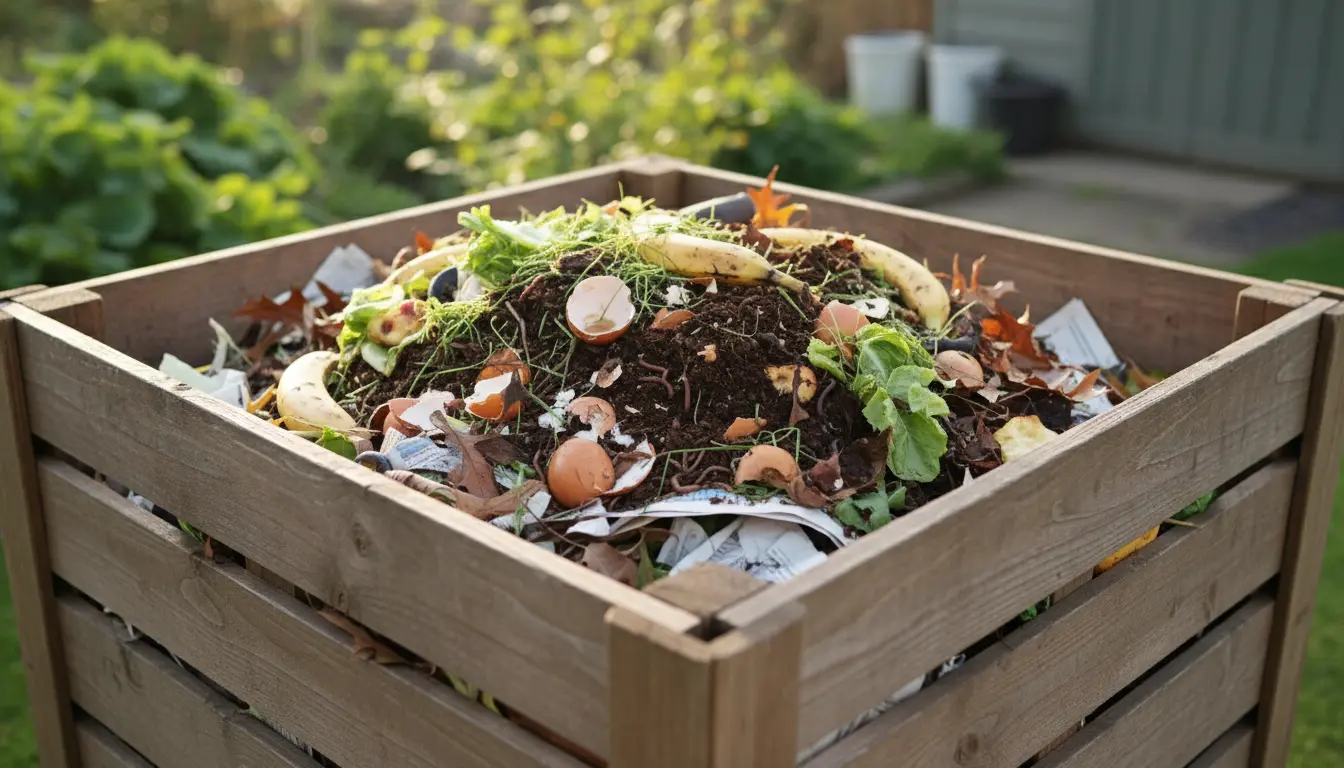
Why Choose Home Composting for Beginners
Home composting for beginners turns kitchen and yard waste into useful soil amendment. It reduces household trash, improves soil structure, and supports plant health.
Starting at home is low cost and flexible. You can use small bins on a balcony or a backyard pile depending on space and needs.
Basic Principles of Home Composting for Beginners
Composting is the controlled decomposition of organic materials by microbes. The process needs the right balance of carbon, nitrogen, moisture, and air.
Many beginners succeed by focusing on a few simple rules rather than trying complex systems at first.
Balance Carbon and Nitrogen
Carbon-rich ‘browns’ and nitrogen-rich ‘greens’ must be combined. A good starting mix is roughly 3 parts browns to 1 part greens by volume.
- Greens: vegetable scraps, coffee grounds, fresh grass clippings.
- Browns: dry leaves, shredded paper, cardboard, straw.
Maintain Moisture and Air
Moisture should feel like a wrung-out sponge. Too wet and the pile becomes smelly; too dry and decomposition slows.
Turning the pile every 1–2 weeks adds oxygen and speeds breakdown. In small bins, simple aeration with a pitchfork or aerator tool works well.
Choosing a Method: Bins, Tumblers, or Piles
Choose a method that fits your space, budget, and time. Each method can produce good compost for beginners.
Stationary Bin
Good for yards and for steady, low-maintenance composting. Build or buy a bin with ventilation and a cover.
- Pros: Simple, inexpensive, scalable.
- Cons: Slower decomposition, needs occasional turning.
Tumbler
Tumblers speed up aeration by making turning easy. They are ideal for people who want faster results and limited effort.
- Pros: Faster, cleaner, no direct contact with pests.
- Cons: Higher upfront cost, smaller capacity.
Open Pile
Large open piles suit gardeners with ample space and lots of yard waste. They require regular turning and attention to moisture.
- Pros: Handles large volumes, inexpensive.
- Cons: Can attract pests if not managed, needs space.
What to Compost and What to Avoid
Knowing what to add improves results and prevents problems. Keep a simple list near your bin to remind household members.
- Do compost: fruit and vegetable scraps, eggshells, coffee grounds, tea bags, yard waste, shredded paper.
- Avoid: meat, dairy, oils, diseased plants, pet waste, and large woody branches without chipping.
Troubleshooting Common Problems
Beginners often face odors, slow breakdown, or pests. These problems usually have straightforward fixes.
- Bad smell: Add more browns, aerate, and check moisture.
- Slow decomposition: Chop materials into smaller pieces and turn more often.
- Pests: Avoid putting meat or oily foods in the pile and use a closed bin if necessary.
Compost can raise soil temperature slightly during active decomposition and can help plants tolerate drought by improving soil water retention.
How to Tell When Compost Is Ready
Finished compost looks dark, crumbly, and earthy-smelling. Most visible bits of original material should be broken down.
Time to maturity varies: small, hot piles can finish in a few months, while passive bins may take a year or more.
Using Your Finished Compost
Use finished compost as a soil amendment, top dressing, or potting mix component. Incorporate a few inches into garden beds or mix 10–30% into potting soil.
Compost improves soil structure, supplies slow-release nutrients, and supports beneficial soil organisms.
Real-World Example: Balcony Composting Case Study
Maria lives in a third-floor apartment with a small balcony. She started with a 20-liter aerobic bin and a bowl for food scraps. Maria followed a 3:1 brown-to-green rule and added shredded newspaper to balance wet kitchen waste.
After six months of regular turning and moisture checks, she had usable compost to mix into container plants. Her herbs grew noticeably healthier and required less watering.
Quick Start Checklist for Home Composting for Beginners
- Choose a bin or pile that fits your space.
- Collect kitchen scraps in a covered container.
- Layer greens and browns, aiming for 3:1 browns to greens.
- Keep moisture like a wrung-out sponge and aerate regularly.
- Be patient and monitor for pests or smells.
Home composting for beginners is a practical habit with environmental and gardening benefits. Start small, learn by doing, and adjust your system to match your lifestyle and waste stream.