
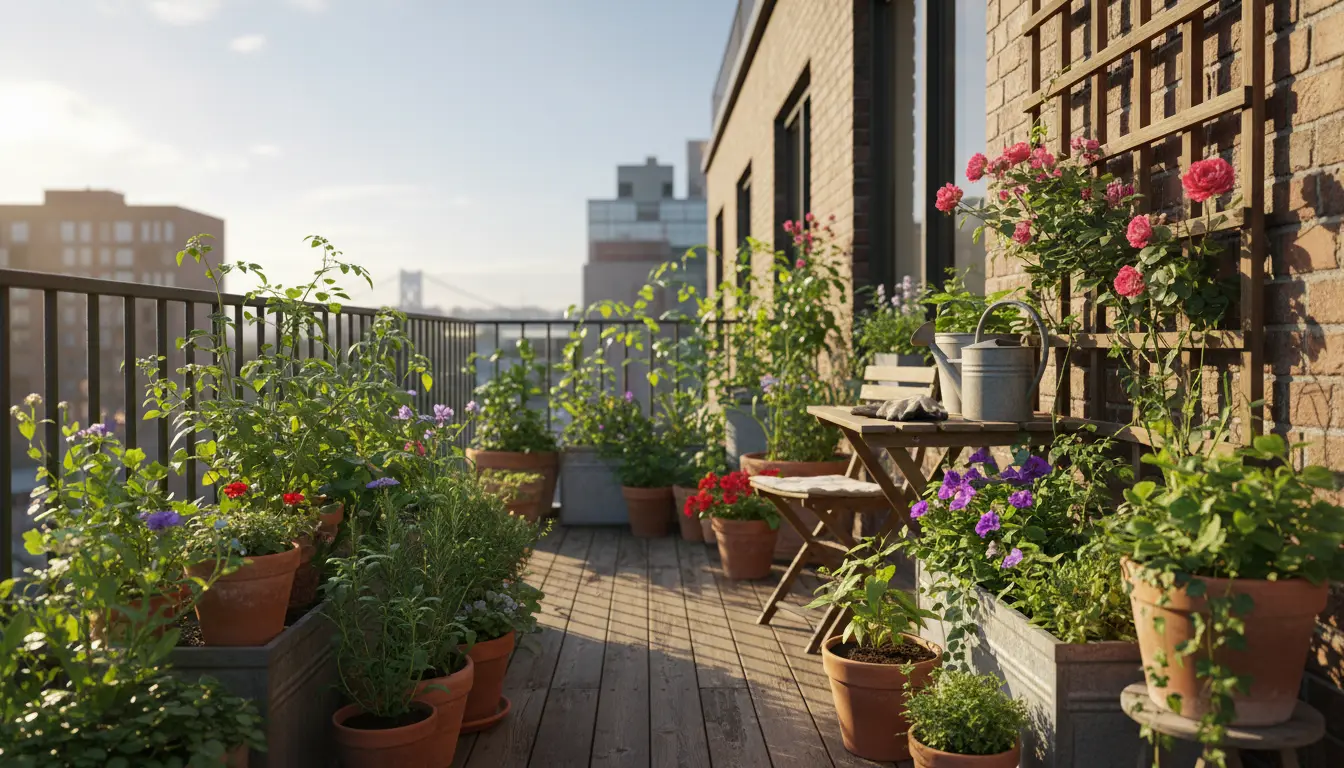
Container gardening lets you grow food and flowers even when space is limited. This guide focuses on practical steps you can use on balconies, patios, and small yards.
Why Choose Container Gardening for Small Spaces
Container gardening is flexible and low-risk. Containers limit soil-borne diseases and allow you to control soil quality and drainage easily.
You can move plants to follow sun patterns, protect them from wind, and fit them into tight layouts. It is ideal for renters and urban dwellers.
Planning Your Container Garden for Small Spaces
Start by mapping available space and noting sunlight. Even a narrow balcony can support vertical setups or railing planters.
Decide what you want to grow: herbs, salad greens, compact vegetables, or ornamental plants. Choose crops that match your available light and time.
Sunlight and Location
Measure hours of direct sun. Most vegetables need 5–8 hours, while many herbs and leafy greens do well with 3–5 hours.
Consider reflectors or a small mirror to increase light on shadowed areas. Move containers seasonally to follow changing sun angles.
Choosing Containers for Small Spaces
Pick containers that suit the plant’s root needs and your space. Deep pots for tomatoes and shallow trays for lettuces are good examples.
Options include plastic pots, clay pots, fabric grow bags, window boxes, and recycled buckets. Ensure each container has drainage holes.
- Small herb pot: 6–8 inches diameter
- Lettuce and greens: 8–12 inches deep
- Tomato or pepper: 12–18 inches deep
- Compact fruit (strawberries): hanging baskets or 6–8 inch shallow pots
Soil, Drainage, and Fertility
Use a high-quality potting mix rather than garden soil. Potting mixes are lighter and hold moisture while providing aeration.
Mix in slow-release fertilizer or use a balanced liquid feed every 2–4 weeks during the growing season. Avoid dense, heavy soils that compact in containers.
Improving Drainage
Place a layer of coarse material like broken pottery or small gravel at the bottom only if you have poor drainage. Better practice is to use a well-draining potting mix.
Elevate pots on small feet or bricks to help excess water drain and to prevent waterlogging.
Watering and Maintenance for Small Space Containers
Containers dry out faster than ground beds. Check moisture daily in hot weather and water when the top inch of soil is dry.
Use self-watering containers or drip irrigation if you travel or want lower maintenance. Mulch the surface to retain moisture and reduce evaporation.
Pest and Disease Control
Inspect plants regularly for aphids, mites, and fungal spots. Remove affected leaves and treat early with soap spray or neem oil.
Rotate plant types between seasons to reduce buildup of pests and pathogens specific to a crop family.
Layout Ideas and Vertical Solutions for Small Spaces
Vertical gardening maximizes tiny footprints by using walls, trellises, and hanging planters. Rail planters and stackable towers increase capacity without taking floor area.
Interplant fast-maturing crops like radishes between slower growers to make full use of limited soil volume.
- Use a trellis for peas or cucumbers against a wall.
- Install a pocket planter for herbs on an exterior wall.
- Stack planters or use tiered shelves to create layers of growing space.
Containers warm up faster than ground soil in spring, which can allow earlier planting. However, they also cool quickly at night, so monitor temperatures for sensitive crops.
Plant Selection for Container Gardening in Small Spaces
Choose compact, dwarf, or patio varieties labeled for containers. Look for determinate tomatoes, compact pepper cultivars, and baby salad greens.
Herbs like basil, thyme, chives, and parsley perform well in small pots and provide ongoing harvests.
Sample Planting Combinations
- Sunny balcony: Compact tomatoes + basil + marigolds
- Partial shade: Leafy greens + radishes + chives
- Herb corner: Basil + parsley + thyme in 6–8 inch pots
Small Real-World Case Study
Case: Nina, an apartment resident with a 6 ft by 3 ft balcony, wanted fresh salad ingredients. She installed three 12-inch pots for mixed lettuce, two 10-inch pots for cherry tomatoes, and a hanging basket for strawberries.
Using a quality potting mix and weekly fertilizer, she harvested continuous salad greens for four months. The cherry tomatoes produced steadily, supplying fresh fruit through summer.
Her approach: prioritize compact varieties, water consistently, and rotate pots to maximize sun exposure.
Seasonal Care and Winter Storage
Prepare containers for winter by removing spent plants and refreshing soil if you plan to reuse pots. Store pots indoors or stack them to prevent cracking from frost.
Consider cold-hardy herbs in place through winter or bring them inside to a sunny window.
Quick Checklist for Container Gardening in Small Spaces
- Measure sunlight and choose plants accordingly
- Select containers with appropriate depth and drainage
- Use quality potting mix and balanced fertilizer
- Water regularly and mulch container surfaces
- Use vertical space and compact varieties to maximize yield
Container gardening for small spaces is achievable with planning, the right containers, and consistent care. Start small, learn how particular plants behave in your microclimate, and expand as you gain confidence.