
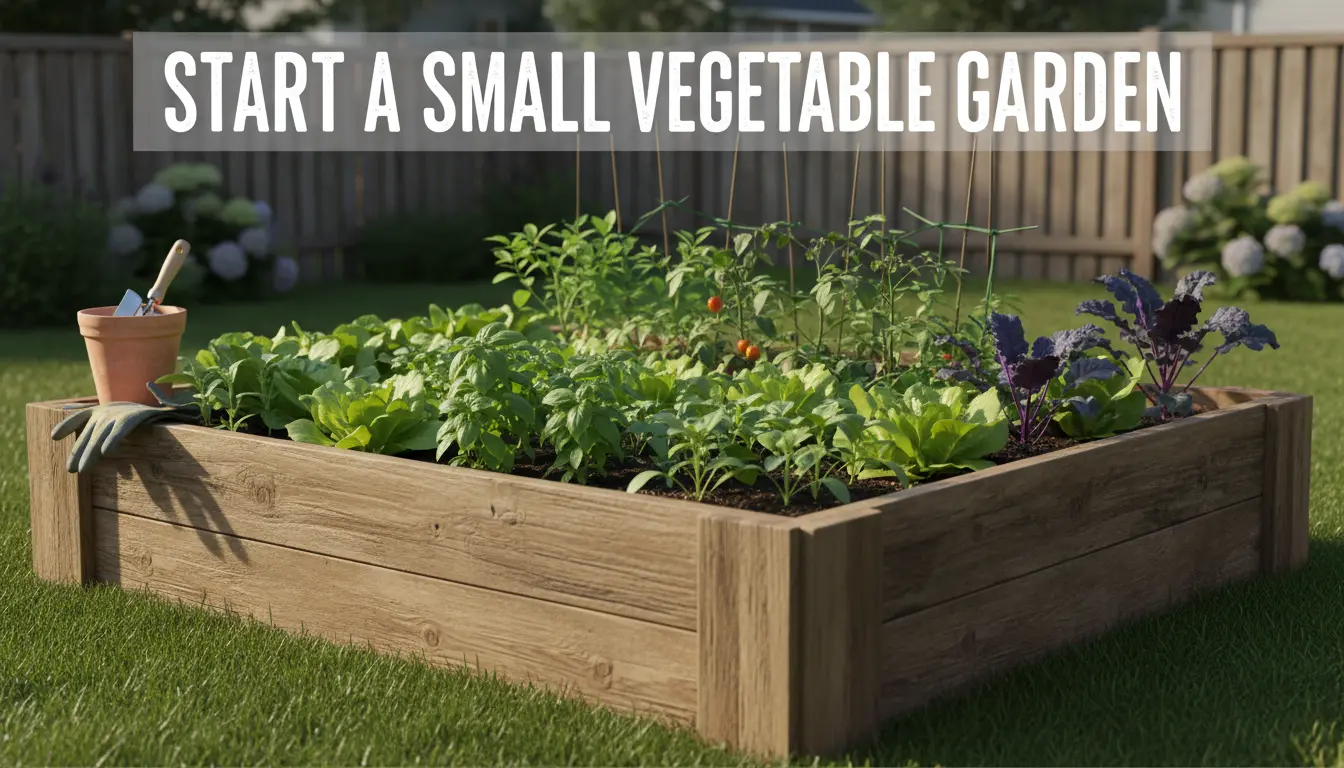
Begin Planning Your Small Vegetable Garden
Starting a small vegetable garden begins with a clear plan. Decide whether you will use containers, raised beds, or a small in-ground plot based on space and sunlight.
Identify your goals: fresh salad greens, herbs, tomatoes, or year-round produce. That focus will shape plant choices and layout.
Choose the Right Location for a Small Vegetable Garden
Sunlight is the most important factor for a small vegetable garden. Most vegetables need 6–8 hours of direct sun daily.
Also consider proximity to water and accessibility. A garden near the kitchen or a faucet will get more attention and better care.
Assessing Soil and Drainage for a Small Vegetable Garden
Test soil texture and drainage by digging a small hole and filling it with water. If water drains within a few hours, drainage is adequate.
If your soil is heavy clay or poor quality, use raised beds or containers to control soil mix and root health.
Choose Containers, Raised Beds, or In-Ground Planting
For very small spaces, container gardening is efficient and flexible. Use pots at least 12 inches deep for most vegetables.
Raised beds offer better soil control and warming in spring, which helps plants establish faster in small vegetable gardens.
Soil Mix Recommendations for a Small Vegetable Garden
Use a mix of compost, high-quality topsoil, and coarse sand or perlite to improve drainage. Aim for a loose, crumbly texture that holds moisture but drains well.
Add 2–3 inches of compost annually to maintain nutrients and structure in your small vegetable garden beds.
Plan What to Plant in a Small Vegetable Garden
Select plants that fit your space and climate. In small gardens, focus on high-value, compact, or vertical crops.
Consider these compact options: cherry tomatoes, bush beans, leaf lettuce, kale, radishes, peppers, and herbs.
- Use succession planting to get continuous harvests from a small area.
- Interplant fast crops (radishes, lettuce) between slower ones (tomatoes) to maximize space.
- Choose determinate or bush varieties labeled as compact for limited space.
Layout Examples for a Small Vegetable Garden
Example layout for a 6×4 ft raised bed: one tomato plant, two pepper plants, a row of bush beans, and staggered lettuce plantings.
Vertical supports (cages, trellises) can add 30–50% more productive space without increasing ground area.
Watering and Feeding a Small Vegetable Garden
Water consistently; small gardens dry out faster than larger beds. Early morning is the best time to water to reduce evaporation and disease risk.
Use drip irrigation or soaker lines for efficient watering. Mulch around plants to conserve moisture and suppress weeds.
- Fertilize with compost tea or balanced organic fertilizer at planting and midseason for heavy feeders.
- Monitor plant leaves for signs of nutrient deficiency and adjust feeding accordingly.
Maintenance Tips for a Small Vegetable Garden
Spend 10–20 minutes several times a week checking plants, watering, and harvesting. Small gardens reward regular attention.
Rotate crops year to year if space allows. Even moving containers or switching bed positions can reduce pest buildup in a small vegetable garden.
Pest and Disease Management in a Small Vegetable Garden
Use row covers, hand-pick pests, and encourage beneficial insects by planting flowers nearby. Good air circulation reduces fungal problems.
Remove and compost diseased foliage away from the garden area to avoid spread.
Harvesting and Storing from a Small Vegetable Garden
Harvest regularly to encourage more production. Many plants produce more when picked frequently, such as beans and greens.
Store a small harvest simply: refrigerate greens, blanch and freeze surplus vegetables, or share excess with neighbors to avoid waste.
Container and raised bed gardens can yield as much food per square foot as larger plots because they allow closer spacing and easier management.
Small Vegetable Garden Case Study
Case Study: A small 8×4 ft raised bed on an urban balcony produced predictable results for a family of two.
They planted two determinate tomatoes, four pepper plants, a row of bush beans, and staggered lettuce. With drip irrigation and weekly compost tea, they harvested fresh salad greens all summer and 30–40 pounds of tomatoes.
The key actions were consistent watering, succession planting, and using vertical trellises to fit more crops into the space.
Quick Checklist to Start a Small Vegetable Garden
- Pick a sunny, accessible location near water.
- Decide on containers, raised beds, or in-ground planting.
- Prepare or buy a quality soil mix with compost.
- Choose compact varieties and plan for vertical space.
- Install efficient watering and mulch to conserve moisture.
- Monitor weekly and harvest often.
With deliberate planning and simple maintenance, anyone can start a productive small vegetable garden and enjoy fresher, cheaper produce.