
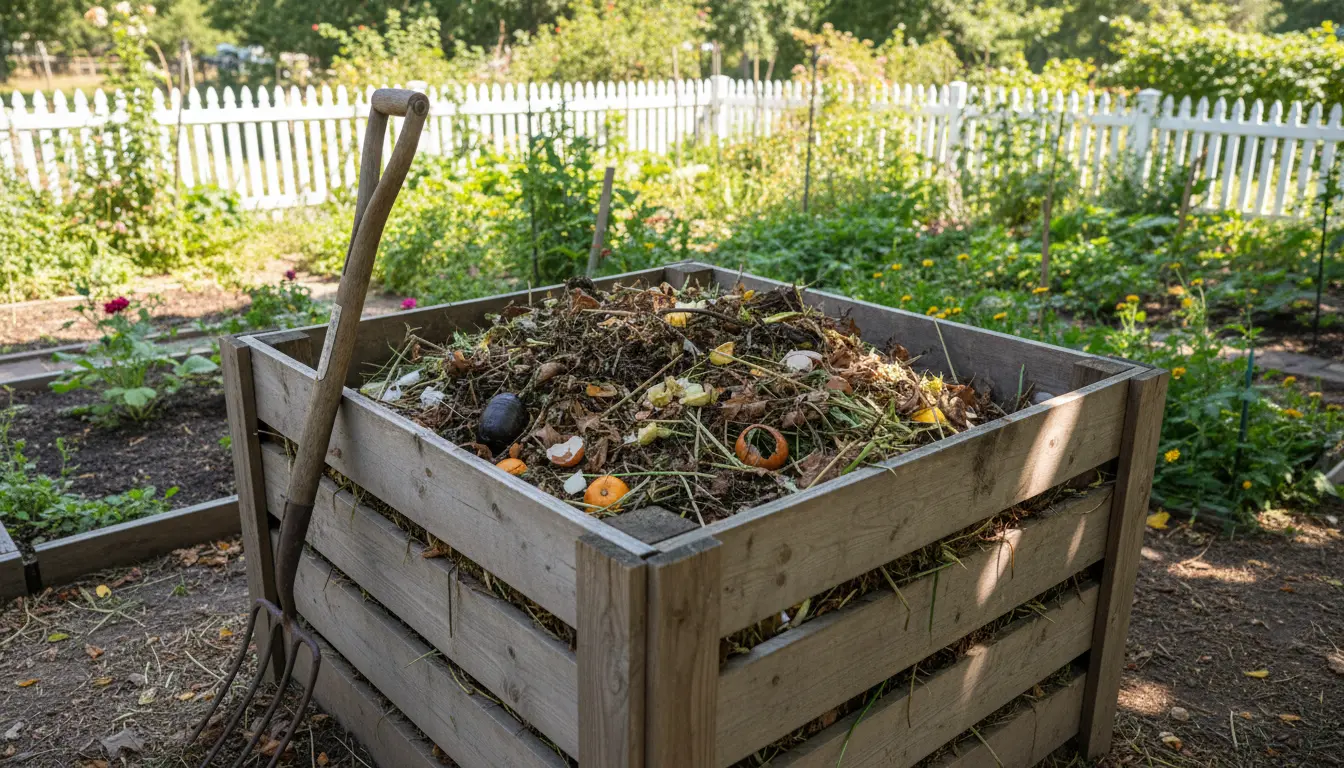
Why Home Composting for Beginners Is Worth Doing
Home composting turns kitchen scraps and yard waste into nutrient-rich soil. It reduces landfill trash, lowers household odors from food waste, and improves garden health.
This guide shows simple, practical steps to start and maintain a compost pile. No advanced tools or experience required.
Choose a Simple Compost System
Pick a method that fits your space and time. For most beginners, a bin or tumbler is easy to manage and keeps the compost tidy.
- Open pile: Good for large yards, least expensive.
- Compost bin: Keeps pests away and looks neater.
- Tumbler: Easier to turn, faster results, works well in small spaces.
Placement and Size
Place the compost bin on soil or grass for drainage and contact with soil organisms. Aim for a pile at least 3 feet wide and 3 feet tall for steady decomposition.
Understand What to Compost
Compost needs a balance of carbon-rich brown materials and nitrogen-rich green materials. Mixing them keeps decomposition active and prevents smells.
- Green materials (nitrogen): vegetable scraps, coffee grounds, fresh grass clippings.
- Brown materials (carbon): dry leaves, shredded paper, cardboard, straw.
Avoid meat, dairy, oily foods, diseased plants, and pet waste in typical home compost systems. These items can attract pests or cause odors.
How to Start a Compost Pile
Follow these steps to start composting at home. Keep each step short and repeatable.
- Layer a base of coarse brown material, such as twigs or straw, for airflow.
- Add alternating layers of greens and browns, aiming for about three parts brown to one part green by volume.
- Moisten the pile so it feels like a wrung-out sponge—damp but not dripping.
- Turn or mix the pile every 1–2 weeks to add oxygen and speed up decomposition.
Temperature and Time
A well-mixed pile will heat up to 120–160°F (50–70°C). High temperatures kill seeds and pathogens and speed composting.
Home compost can be ready in 2–6 months. Smaller piles and less turning slow the process and may take a year.
Common Problems and Fixes
Beginners often face a few predictable issues. Here are quick fixes that work reliably.
- Smelly compost: Add more brown materials and turn the pile to add air.
- Pile too dry: Add water and some green materials to rehydrate microbes.
- Pests: Bury food scraps under 6–8 inches of browns or use a closed bin/tumbler.
- Slow decomposition: Increase surface area by shredding materials and turn more often.
Using Finished Compost
Compost is ready when it looks dark, crumbly, and smells earthy. Use it as a soil amendment or mulch.
- Mix 1–3 inches of compost into garden beds before planting.
- Top-dress lawns and potted plants with a thin layer of compost.
- Create compost tea by steeping compost in water for a mild liquid feed.
Small Real-World Example
Case Study: Sarah from Portland started a 50-gallon tumbler in spring. She added kitchen scraps and shredded leaves in a 1:3 green-to-brown ratio and turned the tumbler weekly.
After four months she had rich, dark compost. Her tomato seedlings grew stronger and needed less store-bought fertilizer. Sarah reports less trash weekly and a healthier vegetable bed.
Practical Tips for Home Composting for Beginners
- Keep a small countertop bucket with a lid to collect kitchen scraps and empty it into the bin every few days.
- Shred or chop large items to speed decomposition.
- Record dates when you start batches to track time to finish.
- Use a kitchen scale for large projects to measure waste reduction if you want data.
Composting can divert up to 30% of household waste from landfills and reduce methane emissions from organic waste.
Final Checklist to Start Composting
- Choose a bin or pile location on soil.
- Gather brown and green materials before you begin.
- Maintain moisture and turn regularly.
- Use finished compost in the garden or houseplants.
Home composting for beginners is straightforward when you stick to simple rules: balance, moisture, and airflow. Start small, observe your pile, and adjust. With a little attention, you’ll produce useful compost and reduce household waste.