
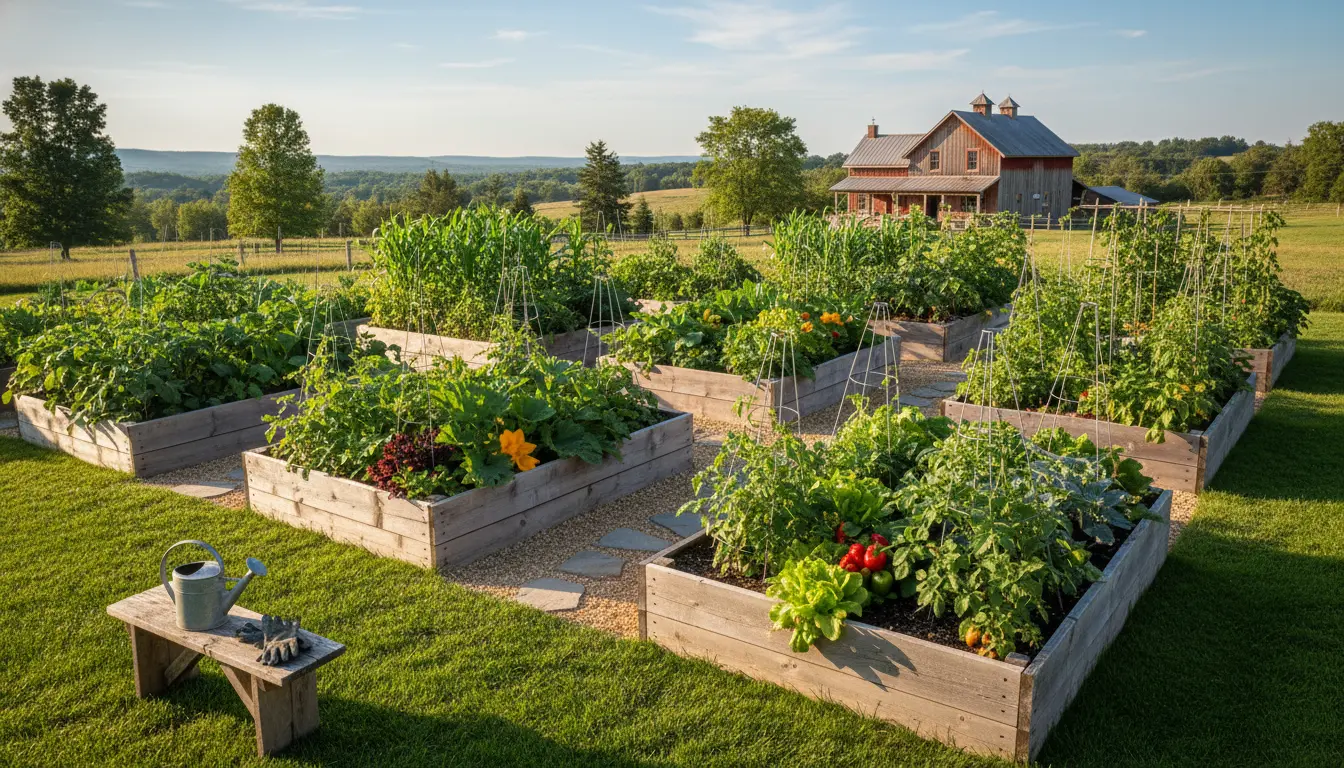
Raised bed vegetable gardens make efficient use of space and improve soil conditions for better yields. This practical guide covers planning, building, planting, and maintaining a raised bed vegetable garden for beginners and busy gardeners.
Why Choose a Raised Bed Vegetable Garden
Raised beds warm faster in spring and drain better than in-ground plots, which helps seeds germinate and roots grow. They reduce soil compaction and let you control soil mix and fertility more easily.
Raised beds are also easier on the back and allow denser planting, which can reduce weeds and increase productivity in small spaces.
Planning Your Raised Bed Vegetable Garden
Planning saves time and money. Start by choosing a sunny, level location with at least 6–8 hours of direct sunlight for most vegetables.
Choose Location and Size
Pick a spot near water and with good access for maintenance. Typical bed sizes are 4 feet wide so you can reach the center from either side, and lengths can be 4–12 feet depending on space.
Consider bed height: 6–12 inches works for many crops, while 12–24 inches is better for deep-rooted plants or if you want wheelchair access.
Soil for Raised Bed Vegetable Garden
Good soil is the most important factor for success. Aim for a light, well-draining mix that retains moisture and supplies nutrients.
A common mix is 40% topsoil, 40% compost, and 20% aeration material like peat moss, coconut coir, or perlite. Adjust based on local soil quality and compost availability.
Building and Filling Raised Beds
Materials include untreated cedar or redwood boards, recycled composite lumber, or stacked stone. Avoid pressure-treated lumber that can leach chemicals into food crops.
Basic tools: saw, drill, level, measuring tape, and screws or nails suitable for outdoor use. Build corners with simple brackets or pocket screws for durability.
Step-by-Step Build
- Measure and mark the area; clean turf or weeds from the footprint.
- Assemble the frame on the ground and level it before securing corners.
- Fill the bed with your prepared soil mix, leaving an inch below the top to prevent overflow when watering.
- Water the soil thoroughly and let it settle for a day before planting.
Planting and Maintenance for a Raised Bed Vegetable Garden
Plant according to your local frost dates and the needs of each vegetable. Use seed packets or plant tags for spacing and depth recommendations.
Mulch with a thin layer of straw or shredded leaves to conserve moisture and suppress weeds. Water deeply 2–3 times a week depending on weather and soil texture.
Fertilizing and Soil Health
Add balanced organic fertilizer or slow-release amendments at planting and again mid-season if plants show deficiency signs. Work in 1–2 inches of compost each season to maintain fertility.
Rotate crops each year to reduce disease and pest pressure. Avoid planting families (like nightshades) in the same bed consecutively.
Pest and Disease Management
Inspect plants weekly for pests and early disease symptoms. Use mechanical controls first: hand-picking, row covers, and pruning affected leaves.
Introduce beneficial insects, plant companion species, and use organic sprays as a last resort. Clean up plant debris in fall to reduce overwintering pest populations.
Raised beds can increase yields by up to 2–3 times per square foot compared with traditional rows because of better soil structure and closer plant spacing.
Small Real-World Example: Backyard Conversion
Case: A homeowner converted a 200 sq ft lawn into three 4 x 8 raised beds using cedar boards. They mixed local topsoil with compost and coconut coir and planted tomatoes, lettuce, carrots, and beans.
In the first season they reported earlier harvests, fewer weeds, and easier watering. The beds produced enough vegetables to supply a family of four for summer and fall with minimal extra cost.
Quick Planting Calendar and Example Combinations
Use this simple calendar as a starting point; adjust for your USDA zone or local climate.
- Spring: peas, lettuce, radishes, spinach
- Late spring to summer: tomatoes, peppers, beans, cucumbers
- Fall: kale, spinach, carrots, beets
Example companion planting: tomatoes with basil and marigolds to deter pests; carrots with onions to reduce carrot fly issues.
Maintenance Checklist for a Healthy Raised Bed Vegetable Garden
- Water deeply in the morning to reduce disease risk.
- Mulch after seedlings are established to retain moisture.
- Monitor for pests weekly and rotate crops annually.
- Add compost each fall and adjust pH if needed (most vegetables prefer pH 6.0–7.0).
Starting a raised bed vegetable garden is a manageable weekend project with lasting benefits. With good planning, soil mix, and simple maintenance, you can enjoy higher yields and easier care compared with traditional in-ground gardening.
Begin with one or two beds, learn from the first season, and expand when you’re ready. Small changes in soil and watering habits pay off quickly in productivity and plant health.