
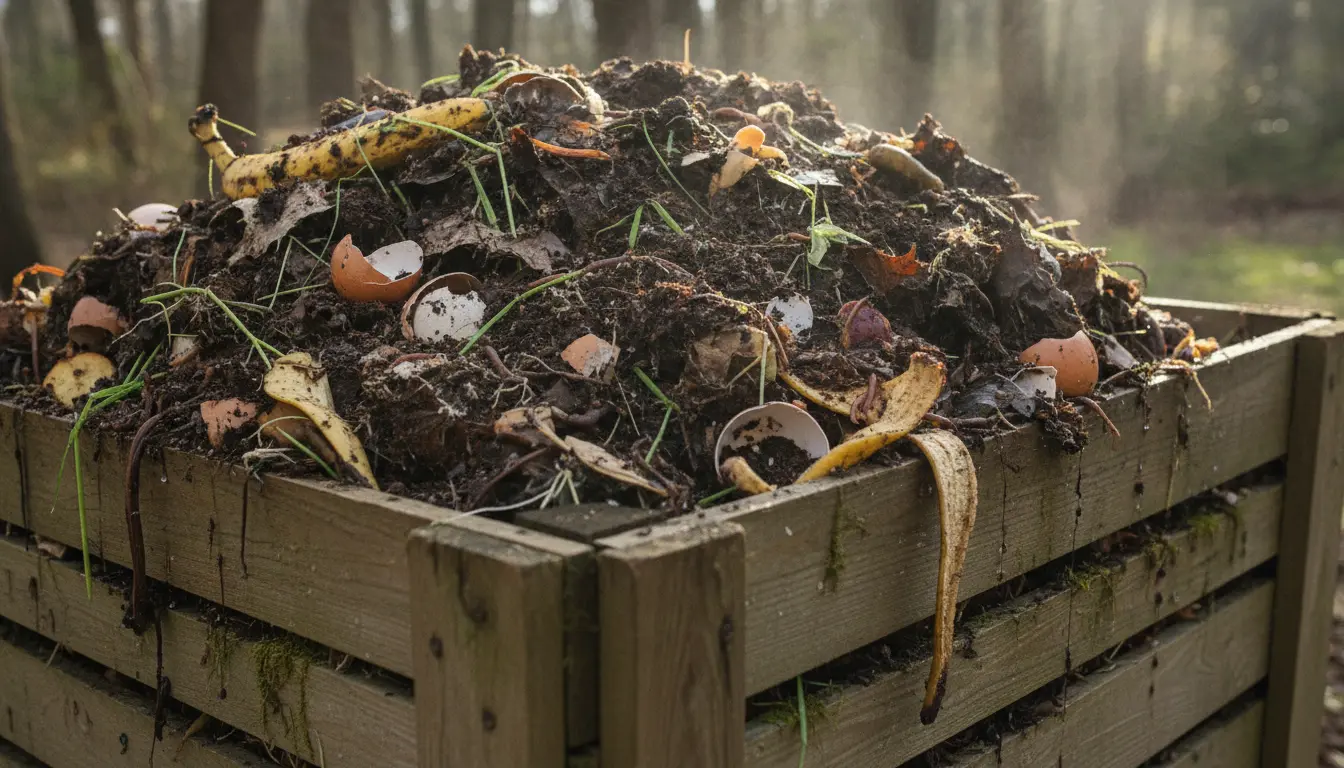
Home composting is a simple, low-cost way to turn kitchen scraps and yard waste into rich soil amendment. This guide shows practical steps to start home composting, maintain a healthy pile, and use the finished compost in your garden.
Why Home Composting Matters
Home composting reduces household waste, lowers methane emissions from landfills, and returns nutrients to soil. It also saves money on store-bought fertilizers and improves soil structure for healthier plants.
Benefits of home composting
- Reduces organic waste sent to landfill
- Creates free, nutrient-rich compost for gardens
- Improves soil water retention and plant growth
- Encourages sustainable habits at home
Choosing a System for Home Composting
Select a composting method that fits your space and lifestyle. Common options include open piles, tumblers, and stationary bins. Each option affects how fast and how easily you can manage the pile.
System pros and cons
- Open pile: cheap and flexible, needs more turning and space
- Tumbler: fast and tidy, better for small yards, costlier
- Stationary bin: low maintenance, good for gradual decomposition
Materials to Use in Home Composting
Successful home composting depends on balancing carbon rich materials (browns) and nitrogen rich materials (greens). Aim for a mix that promotes microbial activity and avoids odors.
What to add
- Greens: fruit and vegetable scraps, coffee grounds, fresh grass clippings
- Browns: dry leaves, shredded paper, straw, cardboard pieces
- Avoid: meat, dairy, oils, diseased plants, pet waste
Step by Step Start for Home Composting
Begin with a small, manageable pile and build layers. Good structure and simple maintenance will produce compost in months rather than years.
- Pick a location: choose a level, shaded spot near water access.
- Prepare the base: lay coarse twigs or straw to help drainage and airflow.
- Layer materials: alternate browns and greens in 4 to 6 inch layers.
- Maintain moisture: keep the pile as damp as a wrung-out sponge.
- Turn regularly: every 1 to 2 weeks for fast compost, or less often for slow decomposition.
Maintenance Tips for Home Composting

Routine checks and small adjustments prevent common problems. With a few habits, a compost pile stays healthy and productive.
Troubleshooting common issues
- Bad smell: add more browns and turn the pile to introduce oxygen.
- Pile too dry: add water and more greens to reactivate microbes.
- Pile too wet or compacted: add dry browns and fluff or turn frequently.
- Pests: avoid adding food scraps like meat and bury fresh scraps deeper in the pile.
Home composting can cut household waste by up to 30 percent and recycle nutrients back into your garden.
How to Know When Compost Is Ready
Finished compost looks dark, crumbly, and smells earthy. Particle size should be small and most original materials unrecognizable. Typical time to finish ranges from three months for hot systems to a year for slow methods.
Using finished compost
- Topdress lawns with a thin layer to improve soil structure
- Mix compost into garden beds at planting time for nutrient boost
- Use as potting mix amendment at a rate of 10 to 30 percent compost
Small Real-World Example
Case study: A two-person household in a suburban yard started a 200 liter compost bin. They added kitchen scraps and yard clippings, kept the pile moist, and turned it every two weeks. After six months they harvested about 120 liters of compost and used it to topdress their vegetable beds. Produce yields increased and weekly trash volume dropped by nearly half.
Tips to Make Home Composting Easier
- Keep a small countertop collection container for kitchen scraps to reduce trips to the bin
- Chop or shred larger items to speed decomposition
- Mix in finished compost occasionally to introduce beneficial microbes
- Record additions and turning dates to track progress
Final Checklist for Starting Home Composting
- Select a compost system that fits your space
- Balance greens and browns for good decomposition
- Monitor moisture and aeration regularly
- Harvest finished compost and apply it in the garden
Home composting is practical and scalable. With basic setup and a few weekly minutes of care, you can transform household waste into a valuable soil resource and make your garden healthier and more resilient.