
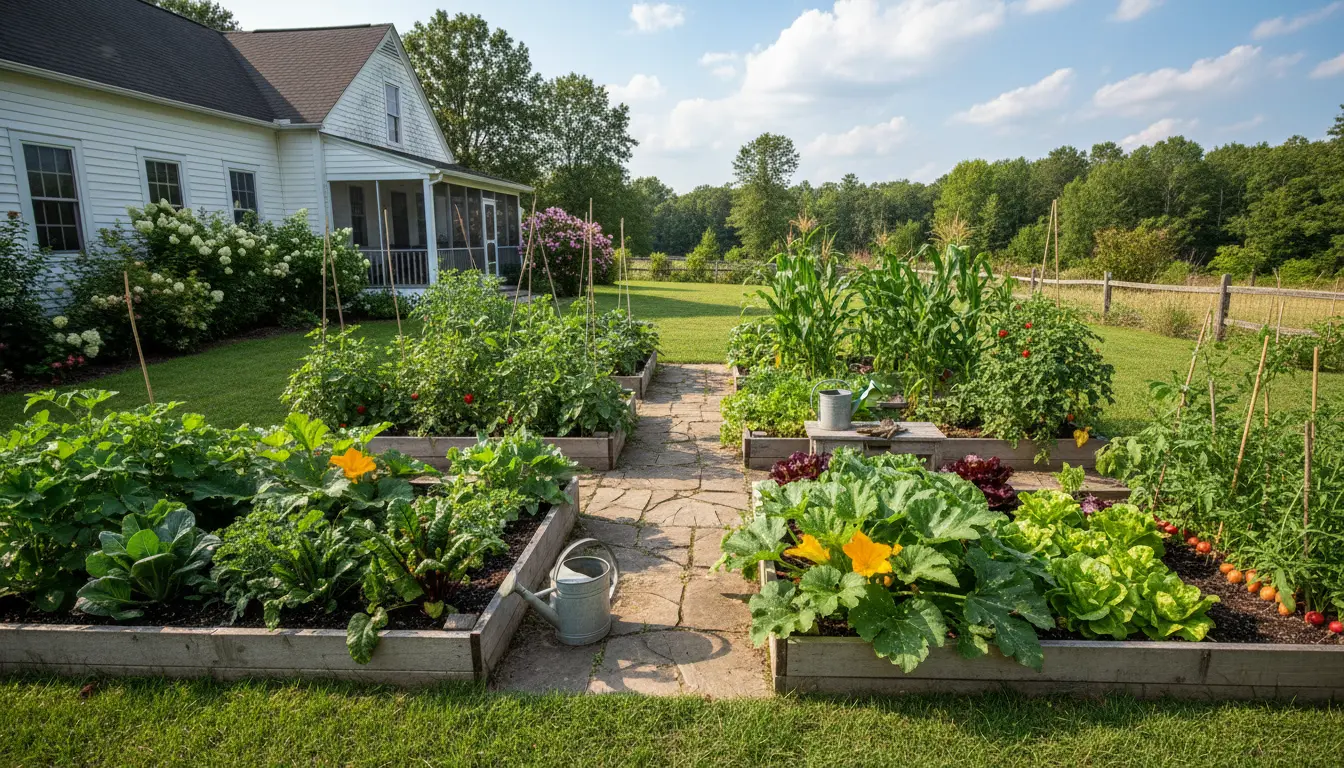
Start a Vegetable Garden: Quick Overview
Starting a vegetable garden is a practical project you can complete in stages. This guide covers site selection, soil preparation, planting, care, and a short real-world example.
Choose the Best Site to Start a Vegetable Garden
Location determines daily success. Pick a spot that gets at least six hours of direct sun for most vegetables.
Consider access to water, protection from strong wind, and convenience for daily checks. A flat or gently sloping area reduces erosion and watering issues.
Soil and Drainage When You Start a Vegetable Garden
Good soil drains well and holds moisture. Avoid compacted clay or permanently waterlogged areas.
Perform a simple drainage test: dig a hole 12 inches deep, fill with water, and see how fast it drains. If water remains after 24 hours, you may need raised beds or soil amendments.
Plan What to Plant First
Begin with easy, high-reward vegetables like tomatoes, lettuce, radishes, and bush beans. These crops establish quickly and teach basic garden rhythms.
Match plants to your climate and season. Use seed packets or plant tags to check days to maturity and frost sensitivity.
Choosing Varieties for Success
Look for disease-resistant and compact cultivars if space is limited. Heirloom varieties offer flavor, while hybrids often offer uniform yields and resistance.
Start with a small, manageable list of 6–8 crops to avoid overload in your first season.
Prepare Soil to Start a Vegetable Garden
Soil preparation is the most important step. Test your soil pH and nutrient levels with an inexpensive kit or local extension service.
Most vegetables prefer a soil pH between 6.0 and 7.0. Add lime to raise pH or elemental sulfur to lower pH as needed.
- Amend with compost to improve structure and nutrients.
- Incorporate aged manure sparingly for fertility.
- Aim for 2–4 inches of compost worked into the top 6–8 inches of soil.
Planting: Seeds vs. Transplants
Decide whether to start from seed or buy transplants. Seeds are cheaper and offer more variety, while transplants jump-start the season.
Plant seeds at the depth listed on the packet and thin seedlings to the recommended spacing to prevent crowding.
Timing and Succession Planting
Stagger plantings of lettuce and fast crops every 2–3 weeks to prolong harvest. For warm-season crops, wait until after your last frost date.
Use a simple calendar: record frost dates and expected days to maturity so you can time sowing and transplanting accurately.
Watering and Mulching
Consistent watering encourages steady growth and reduces disease. Aim for deep, infrequent watering rather than frequent shallow sprinkling.
Install soaker hoses or drip irrigation where possible to conserve water and reduce leaf wetness.
- Mulch with straw or wood chips to retain moisture and suppress weeds.
- Maintain a 2–3 inch layer of organic mulch, keeping it a few inches from plant stems.
Pest and Disease Basics
Start with prevention: rotate crops, avoid overcrowding, and remove diseased plants promptly. Monitor weekly for signs of pests or fungal disease.
Use physical controls first—row covers, hand-picking, and traps—before considering organic sprays like neem oil or insecticidal soap.
Common Troubleshooting Tips
Yellow leaves often indicate nutrient imbalance or poor drainage. Inspect roots and soil moisture before adding fertilizer.
Holes in leaves usually point to beetles or caterpillars. Identify the pest and choose targeted control methods to avoid harming beneficial insects.
Harvesting and Seasonal Care
Harvest early and often to encourage more production. Pick tomatoes when they are fully colored and firm; harvest leafy greens at the outer leaves to allow regrowth.
At season end, remove spent plants and add them to your compost pile to reduce pest and disease carryover.
Many common garden vegetables can be grown in containers or raised beds, making it possible to start a productive vegetable garden in small yards, balconies, or patios.
Small Case Study: One Seasonal Start
Emma, a beginner in Portland, started a 6×4 foot raised bed in spring. She chose tomatoes, lettuce, radishes, and basil for easy care and frequent harvests.
She improved local soil with two wheelbarrows of compost, used drip irrigation, and mulched with straw. By mid-summer she harvested daily salad greens and three varieties of tomatoes, learning to rotate beans and leafy greens the following year.
Simple Checklist to Start a Vegetable Garden
- Choose sunny site with access to water.
- Test soil and amend with compost.
- Plan a short list of beginner crops.
- Decide on seeds vs transplants.
- Set up watering and apply mulch.
- Monitor for pests and harvest regularly.
Final Tips for New Gardeners
Start small and expand as you gain confidence. Keep a garden journal to note planting dates, varieties, and problems for future seasons.
Use local resources like extension services, community gardens, and seed swap groups to learn region-specific advice and varieties that perform well near you.
With simple planning and consistent care, you can start a vegetable garden that supplies fresh produce and practical experience season after season.