
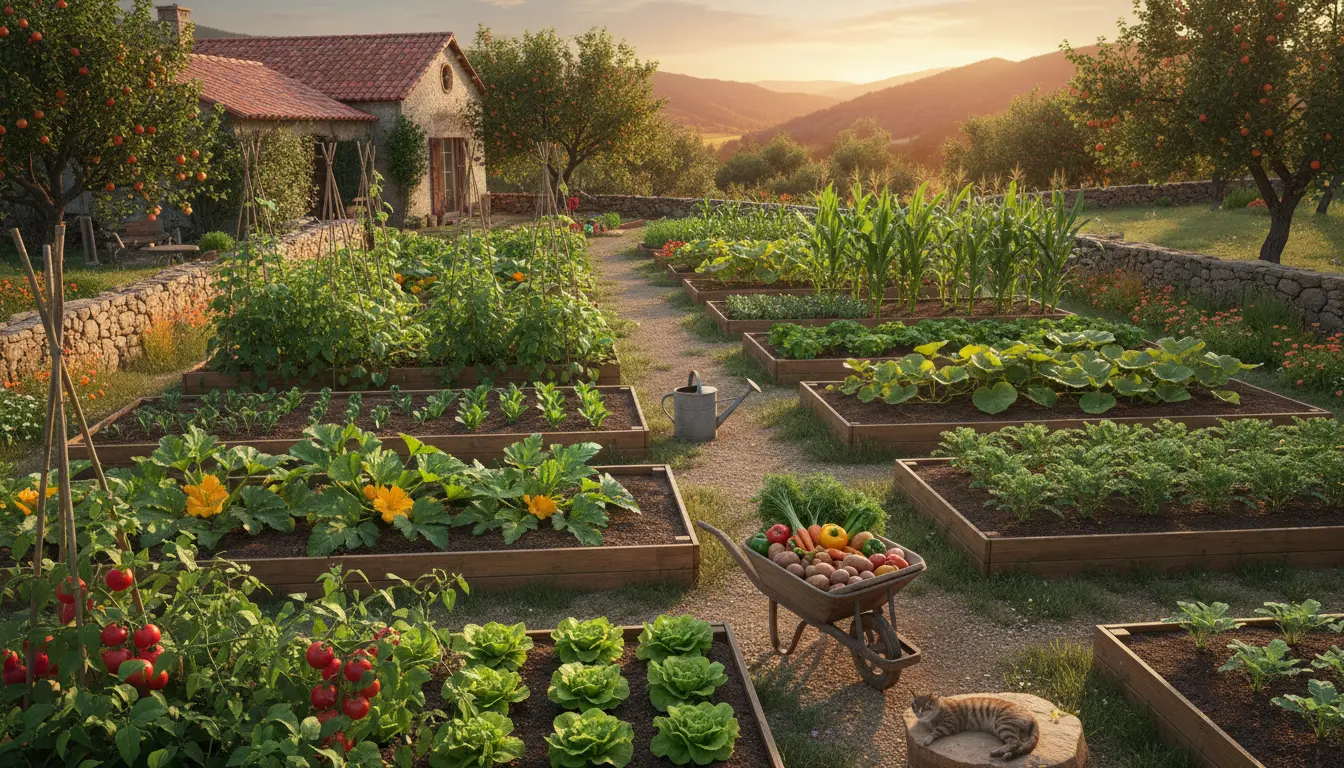
Why Start a Vegetable Garden
Growing your own vegetables saves money, improves meals, and connects you to the seasons. A small, well-planned garden can supply fresh produce through much of the year.
This guide shows practical steps to create a productive vegetable garden, even if you have limited space or experience.
Planning Your Vegetable Garden
Good planning reduces wasted time and increases yields. Start by listing the vegetables you eat most and those that are costly at the store.
Decide whether you want in-ground beds, raised beds, or containers. Each option has different soil and drainage needs.
Choosing a Location for Your Vegetable Garden
Vegetables need sunlight; choose a spot that gets at least 6 hours of direct sun daily. Morning sun is ideal to dry dew and reduce disease risk.
Consider proximity to water and ease of access for maintenance. Avoid low spots that collect cold air or water after rain.
Size and Layout Tips for Your Vegetable Garden
For beginners, start small: a 4×8 foot raised bed or a few containers is manageable and productive. You can expand once you learn timing and care.
- Use rectangular beds for easy planting rows and access.
- Keep paths narrow but accessible—about 18 inches wide.
- Group plants by water needs to simplify irrigation.
Preparing Soil for a Vegetable Garden
Healthy soil is the foundation of a productive vegetable garden. Test soil pH and nutrient levels using a simple kit or local extension service.
Most vegetables prefer slightly acidic to neutral soil (pH 6.0–7.0). Amend soil based on test results to correct pH and nutrient deficiencies.
Soil Amendments and Compost
Add organic matter such as compost to improve texture, water retention, and fertility. For raised beds, aim for a mix of native soil, compost, and a light mineral component like sand or perlite.
Apply 2–3 inches of compost on top and work it into the top 6–8 inches of soil before planting.
Choosing Plants for Your Vegetable Garden
Select vegetables suited to your climate and season. Start with reliable, easy-to-grow varieties like lettuce, radishes, tomatoes, and bush beans.
Consider maturity days: quick-maturing crops give satisfaction and continuous harvests in small spaces.
Companion Planting and Crop Rotation
Rotate crop families yearly to reduce pest and disease buildup. Avoid planting the same family (e.g., tomatoes, peppers, eggplants) in the same spot each year.
Use companion plants like marigolds, basil, and nasturtiums to deter pests and attract beneficial insects.
Planting and Watering Your Vegetable Garden
Plant according to seed packet or label directions for spacing and depth. Thinning seedlings early prevents crowding and increases airflow.
Water deeply and less frequently to encourage deep root growth. Most vegetables need about 1 inch of water per week, more in hot weather.
- Use drip irrigation or soaker hoses to minimize evaporation.
- Water at the base of plants in the morning to reduce leaf wetness at night.
- Mulch with straw or shredded leaves to retain moisture and suppress weeds.
Pest and Disease Management in a Vegetable Garden
Inspect plants regularly to catch problems early. Remove diseased leaves and use row covers for young plants to prevent insect damage.
Favor cultural controls and physical barriers before chemical options. Introduce beneficial insects, like ladybugs, and avoid broad-spectrum pesticides that kill them.
Common Problems and Quick Fixes
- Aphids: Spray with strong water stream or use insecticidal soap.
- Fungal leaf spots: Improve spacing and remove affected foliage.
- Slugs: Use traps or handpick at dusk.
Harvesting and Extending the Season
Harvest vegetables when they reach recommended size for best flavor and to encourage more production. Pick regularly—many crops produce more when harvested often.
Use succession planting to extend harvests: sow small amounts of lettuce or radishes every 2–3 weeks for continuous supply.
Planting taller crops on the north side of beds prevents shading of shorter plants in northern hemisphere gardens.
Small Case Study: Urban Backyard to Table
Mary converted a 10×12 foot urban backyard into two 4×8 raised beds and a few containers. She chose tomatoes, Swiss chard, bush beans, and basil.
After soil testing and adding compost, Mary planted in late spring. By mid-summer she harvested weekly and saved over $300 in produce compared with store prices. Pests were controlled with handpicking and neem spray when needed.
Her key wins were scalable effort, continuous harvests from succession planting, and improved flavor over store-bought produce.
Quick Checklist to Start Your Vegetable Garden
- Choose a sunny location with easy water access.
- Decide between in-ground, raised beds, or containers.
- Test and amend soil; add compost.
- Select easy, high-value crops for your diet and climate.
- Plant, water deeply, mulch, and monitor pests weekly.
Final Tips for a Successful Vegetable Garden
Start small and expand as you gain confidence. Keep a simple journal of planting dates, varieties, and harvests to improve planning next season.
Enjoy experimentation. Even small gardens offer learning and reward through fresh, home-grown vegetables.