
Home Composting Basics
Home composting turns kitchen scraps and yard waste into nutrient-rich soil. It reduces household trash and improves garden health.
This guide is practical and step-by-step. You will learn options that fit apartments, small yards, and larger gardens.
Why Choose Home Composting
Composting lowers waste sent to landfills and cuts methane emissions. It creates valuable compost you can use to improve soil structure and fertility.
Compost retains moisture, supports beneficial microbes, and reduces the need for chemical fertilizers. These are tangible benefits for any gardener.
How to Start Home Composting
Decide on a method that fits your space and time. Common methods include a compost bin, compost tumbler, or vermicomposting with worms.
Choose a dry, shaded spot for outdoor bins. For indoor or small-space options, use a sealed container or worm bin under a countertop or balcony.
Home Composting Materials
Balance green (nitrogen) and brown (carbon) materials to speed decomposition. Aim for a rough 2:1 ratio of browns to greens by volume.
- Greens: vegetable scraps, coffee grounds, fresh grass clippings.
- Browns: dry leaves, shredded paper, straw, small wood chips.
- Do not add: meat, dairy, oily foods, diseased plants, or pet waste.
Simple Home Composting Steps
Layer materials starting with coarse browns at the bottom for air flow. Add a mix of greens and browns as you collect scraps.
Turn or aerate the pile every 1–2 weeks to introduce oxygen. Keep the pile moist, similar to a wrung-out sponge.
Methods: Bin, Tumbler, and Worms
Choose a method based on maintenance and speed. Each method has pros and cons for beginners.
Compost Bin
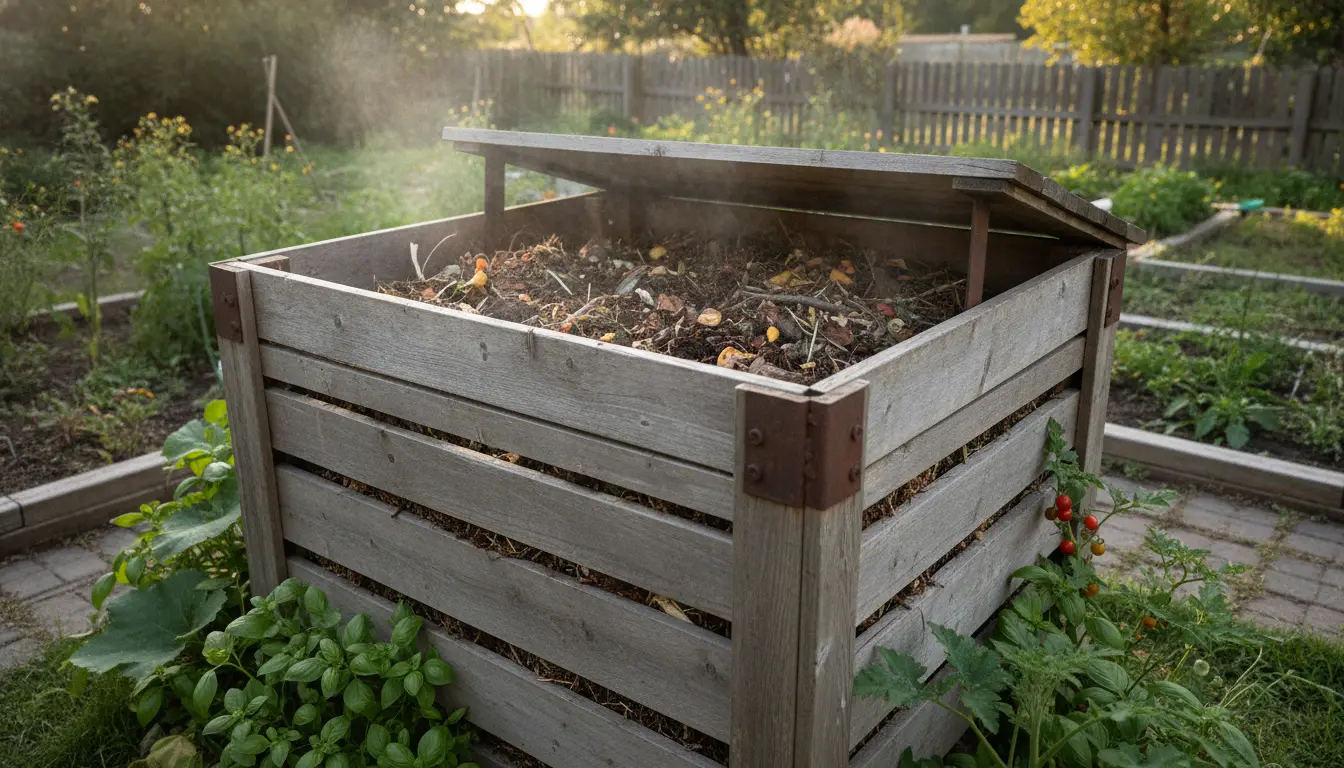
Standard bins are inexpensive and simple. They work well for yard trimmings and mixed kitchen waste.
Bins require occasional turning and monitoring of moisture. Expect finished compost in 3–12 months depending on conditions.
Compost Tumbler
Tumblers reduce manual turning; you rotate the drum every few days. They accelerate decomposition and are neater for small yards.
Tumblers can dry out faster, so check moisture and add water if needed. They are good for regular kitchen scrap volume.
Vermicomposting (Worm Bin)
Worm bins use red worms to process food scraps quickly indoors or outdoors. They produce rich worm castings prized by gardeners.
Keep temperature between 55–77°F (13–25°C) and avoid citrus overload. Worm bins require less turning but regular feeding and drainage checks.
Troubleshooting Home Composting Problems
Bad smells often mean too much green or moisture. Add dry browns and mix the pile to introduce air.
Slow decomposition can result from compacting or low temperatures. Chop materials smaller and add more greens to raise temperature.
Pests and Rodents
Use closed bins or tumblers to keep pests out. Avoid adding meat or oily foods which attract animals.
For worm bins, ensure the bin is sealed and drains properly. Use bedding like shredded cardboard to keep conditions stable.
How to Know When Compost Is Ready
Mature compost is dark, crumbly, and smells earthy. Most recognizable bits of the original material should be gone.
Screen the compost through a simple mesh to separate finished compost from larger pieces. Return large pieces to the bin for further breakdown.
Using Finished Compost
Mix finished compost into garden beds at 1–3 inches for general improvement. Use as a top dressing for lawns or potted plants.
Make compost tea by steeping compost in water for a mild liquid feed for plants. Avoid overapplication by using small, regular doses.
Small Real-World Case Study
Case: A two-person household in a suburban home started home composting with a 200-liter bin. They collected kitchen scraps and yard waste for 12 months.
Result: Their weekly trash volume dropped by about 30 percent. They produced roughly 40 liters of finished compost in a year, which they mixed into their vegetable beds.
Learning: Regular turning and maintaining the moisture level were key. Adding shredded paper during winter prevented odor and kept the pile balanced.
Food waste makes up about 20 to 30 percent of household trash in many countries. Composting at home can significantly cut that number and return nutrients to the soil.
Quick Checklist to Start Home Composting
- Choose a compost method: bin, tumbler, or worm bin.
- Collect greens and browns in separate containers.
- Layer materials and keep the pile moist and aerated.
- Turn the pile regularly and monitor for pests or odors.
- Harvest finished compost and use it in your garden.
Final Tips for Successful Home Composting
Keep things simple at first and scale up as you learn. A well-managed compost system is low-cost and low-maintenance after the first few weeks.
Join local gardening groups for tips and to source materials like leaves or straw. Composting is practical and beneficial for both waste reduction and plant health.