
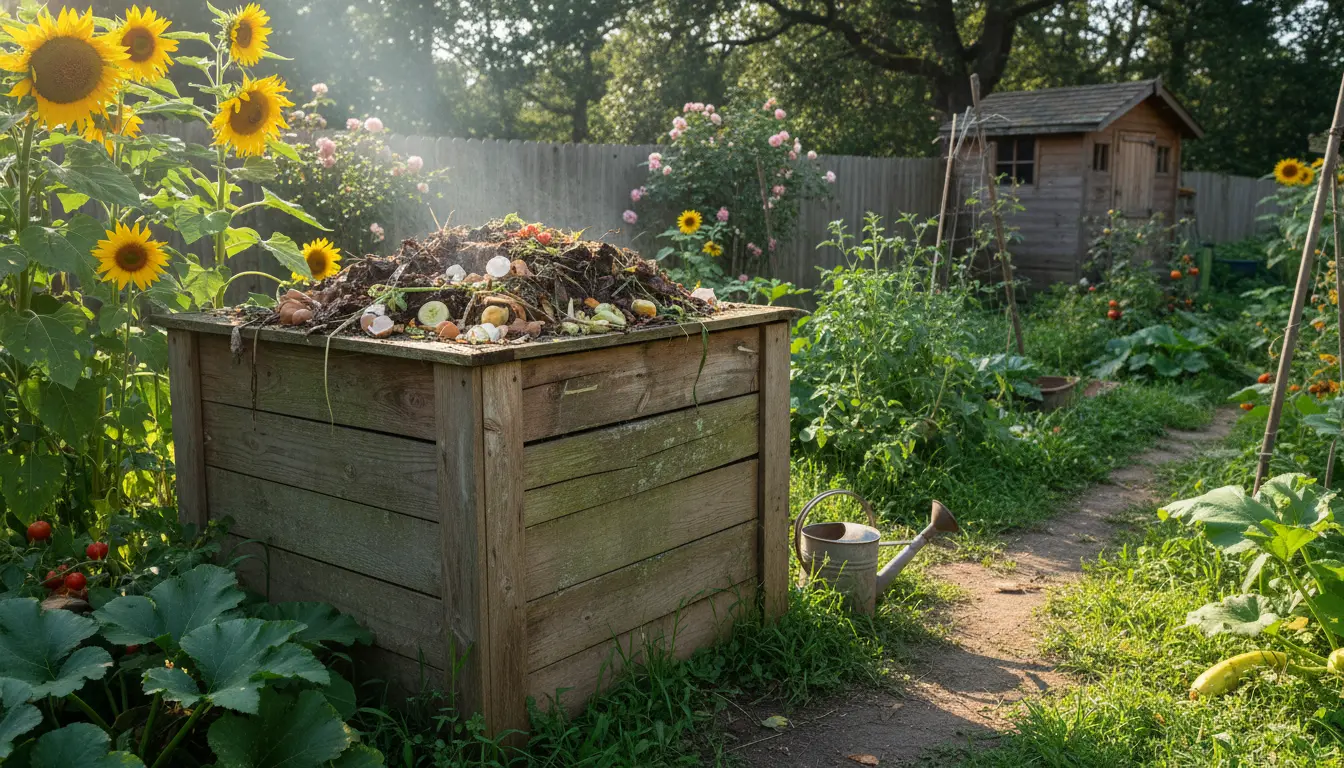
Home Composting for Beginners: Getting Started
Home composting turns kitchen scraps and yard waste into useful soil amendment. It reduces landfill waste and improves garden soil structure.
This guide gives clear steps to set up a simple compost system, maintain healthy decomposition, and solve common problems.
Why choose home composting
Composting reduces waste transport and greenhouse gas emissions from landfills. It returns nutrients to soil and supports water retention in garden beds.
Beginners can start with low-cost methods and scale up as experience grows.
Essential Materials and Tools
Start with a container, basic tools, and a balance of organic inputs. Containers can be a purchased bin, a DIY pallet bin, or a simple heap on the ground.
Useful tools include a garden fork, a small shovel, and a thermometer for active piles.
What to add and what to avoid
Healthy compost needs a mix of carbon rich and nitrogen rich materials. Aim for a roughly 25:1 to 30:1 carbon to nitrogen ratio by volume.
- Greens (nitrogen): vegetable scraps, fruit peels, coffee grounds, fresh grass clippings
- Browns (carbon): dry leaves, shredded paper, cardboard, straw
- Avoid: meat, dairy, oily foods, diseased plants, pet waste
Setting Up a Compost Bin
Choose a shady, well-drained spot near the kitchen for convenience. Keep the base in contact with soil to allow worms and microbes to enter.
Layer materials as you add them rather than trying to build a perfect pile from the start.
Step-by-step setup
Start with coarse browns to promote airflow at the bottom. Add a layer of greens, then a thin layer of browns to cover odors and flies.
Maintain moisture like a wrung-out sponge, and turn the pile every 1 to 2 weeks for faster decomposition.
Maintenance and Troubleshooting
Regular checks prevent common issues. Smells, slow breakdown, and pests are typical and usually easy to fix.
Common problems and fixes
- Bad odor: add dry browns and turn the pile to aerate it.
- Pile too dry: add water and more greens or kitchen scraps.
- Slow decomposition: chop materials smaller and increase turning frequency.
- Pests: avoid meat and pet waste, and cover fresh scraps with a layer of browns.
How to Tell When Compost Is Ready
Mature compost is dark, crumbly, and smells earthy. Most home systems produce usable compost in 3 to 12 months depending on management.
Screen or sift the finished compost to remove large pieces that need more time.
Composting can divert up to 30 percent of household waste from the trash. Even small apartment systems reduce landfill contributions significantly.
Using finished compost
Work finished compost into garden beds, mix it with potting soil, or use as a top dressing for lawns. It improves fertility and soil structure without chemical fertilizers.
Small Scale Options for Different Homes
Not everyone has a backyard, but apartment dwellers can still compost effectively. Choose a method that fits space, odor tolerance, and time availability.
Methods by living situation
- Backyard: enclosed tumbler or stationary bin for larger volumes.
- Small yard: three-bin system or compost tumbler for faster turnover.
- Apartment: vermicomposting with worms or bokashi fermentation for indoor-friendly processing.
Case Study: Apartment Composting Success
In a mid-size apartment building, residents started a shared vermicompost bin in a common utility area. They collected kitchen scraps in small sealed containers kept in units.
Within six months the system processed fruit and vegetable scraps into rich worm castings used by residents for balcony plants. The project reduced residents’ organic trash by 40 percent and fostered a community gardening group.
Quick Start Checklist for Home Composting for Beginners
- Select a bin type and site
- Gather tools and initial brown materials
- Add greens and browns in layers
- Maintain moisture and aeration
- Turn regularly and monitor progress
- Harvest finished compost and reuse
Practical tips
Chop or shred larger pieces to speed decomposition. Use a kitchen caddy with compostable liners to make collecting scraps easy.
Label bins and keep a simple log to track turning dates and observations until you know your system’s rhythm.
Get Started Today
Home composting for beginners is low cost and adaptable. Start small, learn by doing, and adjust inputs and turning frequency based on how your compost behaves.
With consistent care, most households will produce usable compost within a few months and see immediate benefits in reduced waste and healthier plants.