
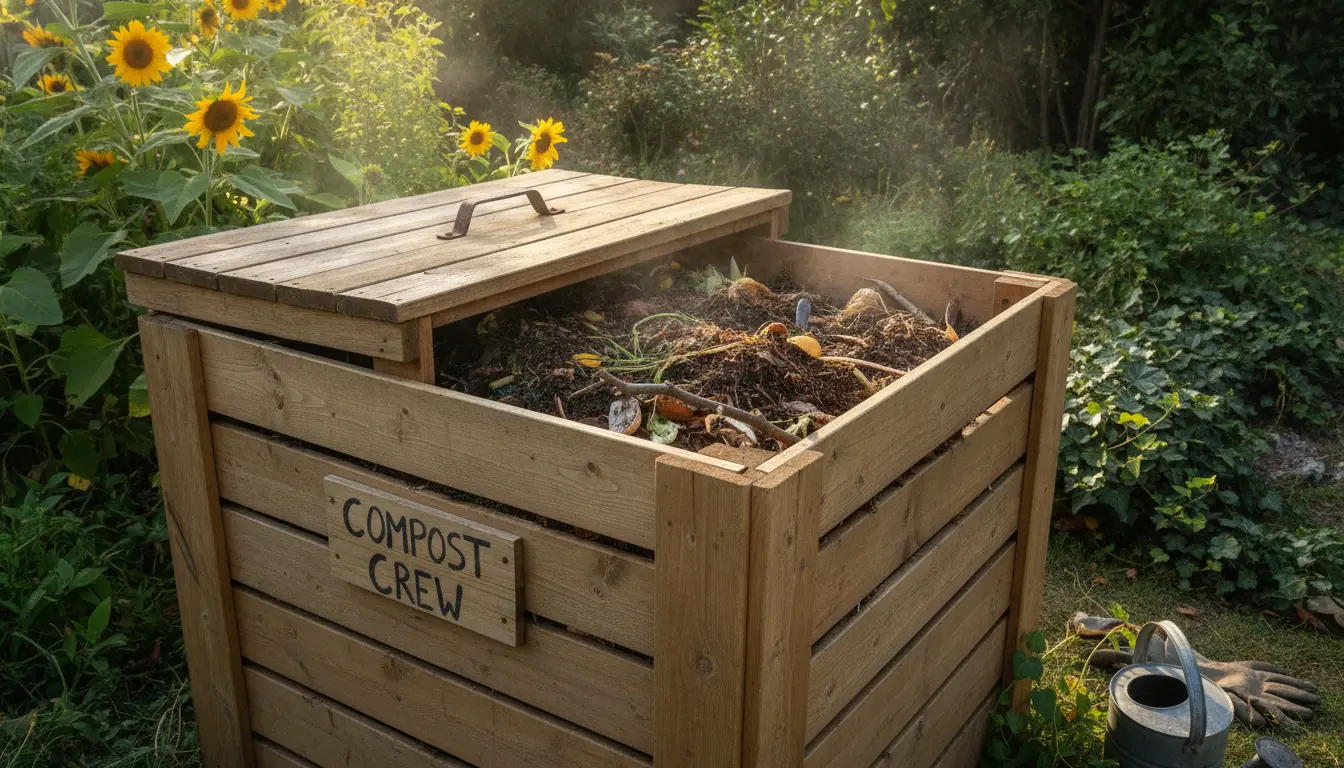
Why Home Composting Matters
Home composting turns food scraps and yard waste into a valuable soil amendment. It reduces landfill waste and gives gardens nutrient-rich compost.
For beginners, composting is a practical, low-cost way to improve soil health and save money on fertilizers.
Basic Principles of Home Composting
Composting relies on balancing carbon rich and nitrogen rich materials, moisture, aeration, and time. These elements let microbes break organic matter into humus.
Understanding the basics makes the process predictable and reduces common problems like bad smells or pests.
What to Add: Browns and Greens
Browns are carbon-rich items such as dry leaves, shredded paper, and straw. Greens are nitrogen-rich items like vegetable scraps, coffee grounds, and fresh grass clippings.
Aim for roughly a 3:1 ratio of browns to greens by volume for a balanced pile.
Moisture and Aeration
The compost pile should be as damp as a wrung-out sponge. Too dry and decomposition slows; too wet and it becomes anaerobic and smelly.
Turn the pile every 1–2 weeks to add oxygen and speed up decomposition. A pitchfork or garden aerator tool works well.
Choose a Method That Fits Your Space
There are several beginner-friendly options: simple heap, bin systems, tumblers, and vermicomposting with worms. Choose based on available space and how hands-on you want to be.
Bins and tumblers keep the area tidy and can accelerate decomposition for small yards or balconies.
Backyard Bin Composting
Use a plastic or wooden bin with drainage holes. Layer browns and greens, keep it moist, and turn regularly. Expect finished compost in 3–6 months with consistent care.
Small Space and Apartment Composting
Vermicomposting uses red wigglers in a stacked tray system and works well indoors. A small tumbler or sealed bin can also work on a balcony.
Collect kitchen scraps in a sealed container and empty it into your worm bin or outdoor bin every few days.
Step by Step: A Simple Composting Routine
- Choose a container and place it on soil or grass to allow organisms in.
- Add a 3–4 inch layer of browns as a base.
- Add greens in small batches and cover with browns to avoid flies.
- Keep the pile moist and turn every 1–2 weeks.
- Harvest finished compost from the bottom after 3–6 months.
Tips to Avoid Problems
To prevent odors, add more browns and improve aeration. To deter pests, avoid meat, dairy, and oily foods, and use a closed bin or bury scraps in the pile.
If the pile is slow, chop materials smaller, add some fresh greens, and ensure moisture is adequate.
Compost can reduce household waste by up to 30 percent and return nutrients to the soil, improving water retention and plant health.
How to Use Finished Compost
Finished compost is dark, crumbly, and earthy-smelling. Use it as a top dressing, mix into potting soil, or blend into garden beds at a rate of 10–25 percent by volume.
Compost improves soil structure, feeds beneficial microbes, and slowly releases nutrients to plants.
Simple Tools and Materials
- Compost bin or tumbler
- Pitchfork or turning tool
- Kitchen scrap container with lid
- Shredder or scissors for chopping bulky items
Small Case Study: Composting in a City Garden
Anna, a homeowner in Portland, started a 50-liter tumbling composter on her small lot. She collected kitchen scraps and yard trimmings, alternating layers of browns and greens and turning weekly.
Within four months she had usable compost and reported a 30 percent reduction in weekly trash. Her vegetable beds showed improved growth the next season.
Common Questions for Beginners
How long until compost is ready?
Typically 3–6 months for a well-maintained pile. Cold composting can take a year or more.
Can I compost citrus and onions?
You can compost them, but in large amounts citrus and onion peels may slow microbial activity or deter worms. Chop and mix with other materials.
Final Practical Checklist
- Collect kitchen scraps in a sealed container.
- Keep a stock of dry browns like shredded paper or leaves.
- Maintain moisture and turn the pile regularly.
- Use finished compost in garden beds or containers.
Home composting for beginners is achievable with small daily habits and basic tools. Start small, observe, and adjust — your soil and local environment will benefit.