
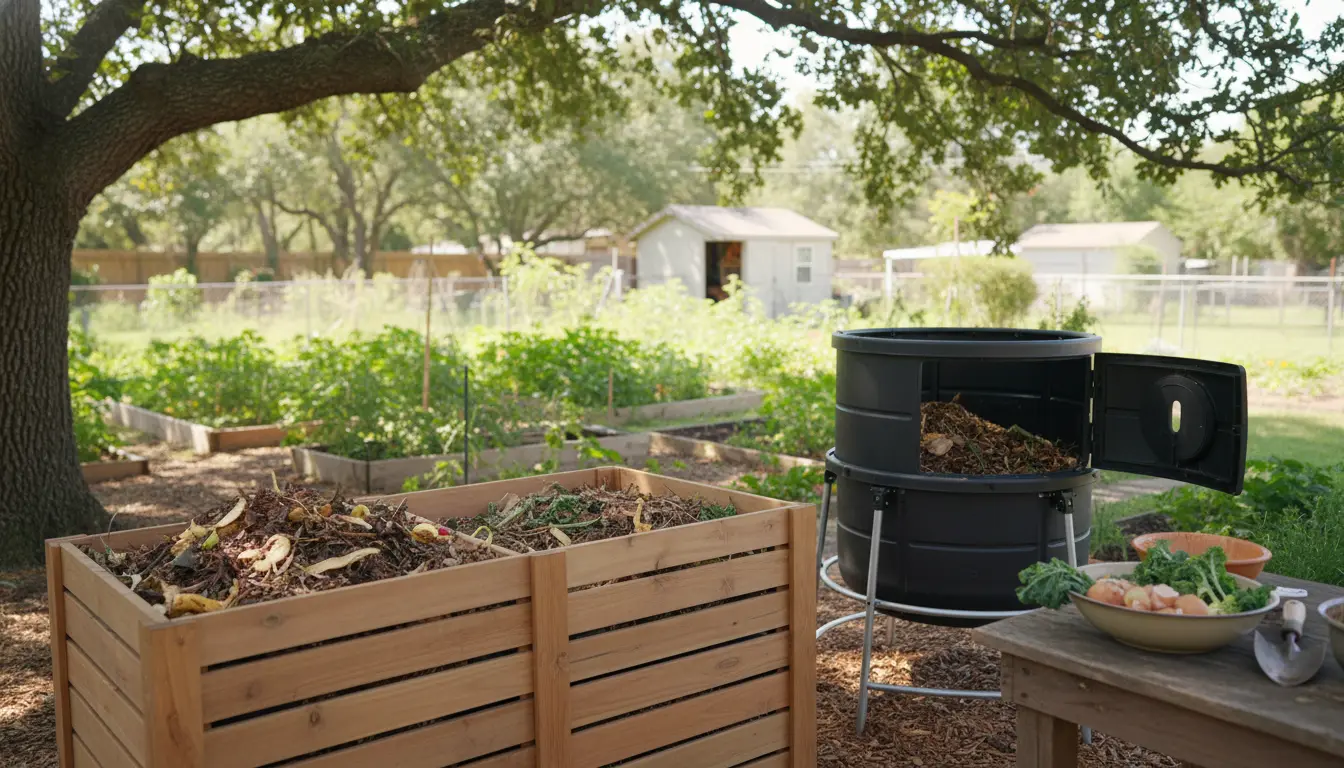
Home Composting for Beginners: Start Here
Composting at home turns food scraps and yard waste into rich soil. This guide explains the basic steps, materials, and common problems for beginners.
Why Home Composting for Beginners Matters
Composting reduces landfill waste and supplies nutrients to plants. Even small efforts like a kitchen bin or balcony composter make a meaningful difference.
Choose a Composting Method
Select a method that fits your space and schedule. Common options include outdoor bins, tumblers, vermicompost (worms), and small indoor bokashi systems.
Quick comparison
- Outdoor bin: Low maintenance, larger volume.
- Compost tumbler: Faster turning, contained and tidy.
- Vermicompost: Good for apartments, produces nutrient-rich castings.
- Bokashi: Ferments food waste, works indoors, needs finishing composting outdoors.
Materials for Home Composting for Beginners
Compost needs a balance of carbon (browns) and nitrogen (greens). Browns provide structure and slow decomposition; greens add nitrogen and moisture.
Common Browns and Greens
- Browns: Dry leaves, shredded paper, cardboard, straw.
- Greens: Vegetable peels, coffee grounds, green yard clippings.
Aim for a rough ratio of 3 parts browns to 1 part greens by volume. Adjust if your pile is too wet or too slow.
Setting Up Your Compost Pile
Location matters: place a bin or pile on soil where possible to allow organisms to move in. Keep it accessible but out of direct extremes of sun or wind.
Step-by-step setup
- Start with a 4–6 inch layer of coarse browns like twigs to help drainage.
- Add alternating layers of greens and browns, keeping them relatively even.
- Moisten as you build; the pile should feel like a wrung-out sponge.
- Turn the pile every 1–2 weeks to introduce air and speed decomposition.
Maintenance Tips for Home Composting for Beginners
Regular attention keeps compost active and odor-free. Small adjustments solve most issues quickly.
Routine tasks
- Turn or mix the pile to add oxygen every 1–2 weeks.
- Monitor moisture; add water if dry and browns if too wet.
- Chop large items to increase surface area and speed breakdown.
Troubleshooting Common Problems
Problems are usually signs of imbalance. Use simple corrections rather than restarting.
Problem and fix examples
- Bad smell: Add more browns and turn the pile to aerate.
- Pile not heating: Add more greens or smaller pieces and insulate with straw or a tarp.
- Fruit flies: Cover food scraps with a layer of browns or use a closed indoor container.
Composting can cut household waste by up to 30 percent. Properly managed compost reaches internal temperatures that kill many weed seeds and pathogens.
Using Finished Compost
Finished compost is dark, crumbly, and earthy-smelling. It typically takes 2–12 months depending on method and care.
How to apply finished compost
- Top-dress lawns with a thin layer to improve soil structure.
- Work compost into garden beds at a 1–2 inch depth before planting.
- Mix with potting soil for container plants to boost fertility.
Small Real-World Case Study
Case Study: A two-person household in Portland started a 50-liter tumbler and a small worm bin for kitchen scraps. Within six months they reduced trash volume by 40 percent.
The tumbler handled yard waste and larger scraps while the worm bin processed coffee grounds and soft vegetables. They used finished compost on balcony planters and saw noticeably healthier herbs and tomatoes the next season.
Tips for Long-Term Success with Home Composting for Beginners
Consistency and observation matter more than perfection. Start small and expand your system as you learn.
Practical tips
- Keep a small countertop bin with a lid to collect scraps and reduce trips to the main pile.
- Save fallen leaves and shred cardboard for a steady supply of browns.
- Label turning days on a calendar to maintain a routine.
With a basic setup and a few simple habits, home composting is accessible to almost anyone. Start with one container, learn the signs of imbalance, and scale as you gain confidence.