
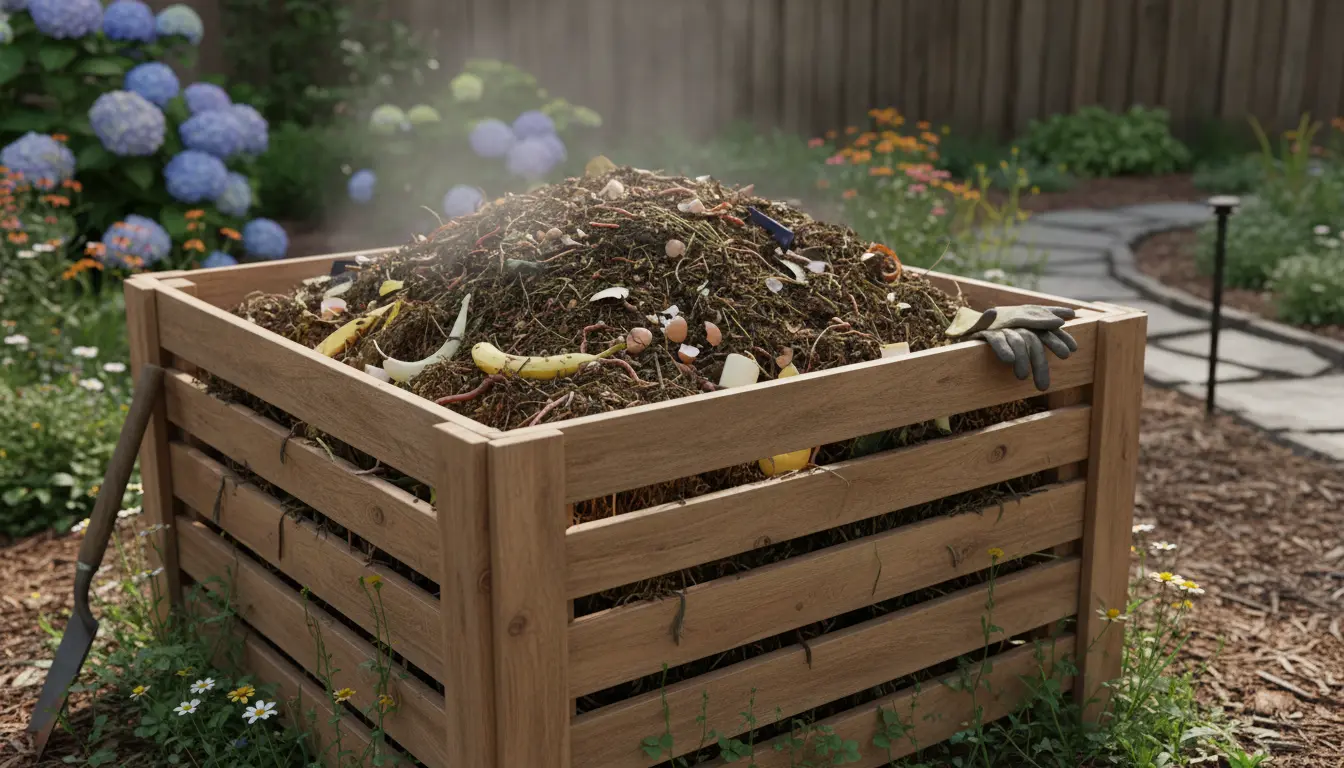
Why Home Composting for Beginners Matters
Composting turns kitchen scraps and yard waste into nutrient-rich material for soil. For beginners, it is an affordable way to reduce household waste and improve garden health.
This guide gives practical steps you can use today, whether you have a backyard, a balcony, or a small indoor setup.
Choose a Compost System for Your Space
Selecting the right system is the first step in home composting for beginners. Options fit different spaces, budgets, and time commitments.
- Open bin: Simple and cheap for backyard use.
- Closed tumbler: Faster decomposition and fewer pests.
- Bokashi: Fermentation for indoor kitchens and apartments.
- Vermicomposting: Worm bins for small spaces and fast breakdown of food scraps.
What to Add: Greens and Browns
Home composting for beginners is easiest when you balance “greens” (nitrogen-rich) and “browns” (carbon-rich). This balance supports microbial activity and avoids odors.
- Greens: fruit and vegetable scraps, coffee grounds, fresh grass clippings.
- Browns: dry leaves, shredded paper, small wood chips, straw.
A simple rule of thumb is to aim for a mix with more browns than greens by volume—about 3 parts browns to 1 part greens—or a carbon:nitrogen ratio near 25–30:1.
Layering and Maintenance
Layering materials helps air circulate and speeds composting. Alternate thin layers of greens and thicker layers of browns.
Turn or aerate the pile every 1–2 weeks for aerobic composting. Tumblers make turning easier and can shorten composting time.
Moisture and Aeration Tips
Compost should feel like a wrung-out sponge — moist but not soggy. Too wet piles become anaerobic and smell bad.
If the pile is too wet, add dry browns and turn it. If it’s too dry, add a handful of water and more greens.
Troubleshooting Common Problems
Beginners often run into a few predictable issues. Fixes are usually straightforward.
- Bad smells: Add more browns and increase turning to add oxygen.
- Slow decomposition: Chop materials smaller, increase surface area, and maintain moisture.
- Pests: Avoid meat, dairy, and oily foods; use a closed bin or bury scraps in the pile.
When Is Compost Ready?
Finished compost is dark, crumbly, and earthy-smelling with no recognizable food pieces. Time depends on method, particle size, and activity—anywhere from 2 months to a year.
Use finished compost as a top dressing, mixed into potting soil, or as a soil amendment in garden beds.
Small Case Study: Suburban Kitchen to Garden Soil
Jasmine, a homeowner with a small backyard, started a 200-liter tumbler. She added kitchen scraps and shredded leaves in a 1:3 green-to-brown volume mix.
By turning the tumbler twice a week and maintaining moisture, she produced usable compost in six months. Her vegetable yields improved and household waste to landfill dropped by about 40%.
Practical Weekly Checklist for Home Composting for Beginners
- Add kitchen scraps and garden waste as they accumulate.
- Layer with browns if adding lots of wet greens.
- Turn or aerate the bin once or twice weekly for faster breakdown.
- Check moisture and adjust—moist but not drenched.
- Harvest finished compost and replace with fresh materials.
Tools and Supplies
You don’t need fancy gear to start home composting for beginners. Basic tools speed the process and improve results.
- Pitchfork or garden fork for turning
- Shredder or scissors for cutting large materials
- Thermometer (optional) to monitor internal heat
- Compost bin or tumbler suited to your space
Composting can reduce household waste by up to 30-50% depending on your food and yard habits, and it helps return nutrients to local soil systems.
Quick Start Plan for the First Month
- Week 1: Choose a bin and collect a week of kitchen scraps. Add a 2–3 inch layer of browns to the bin base.
- Week 2: Add greens and a thicker layer of browns. Monitor moisture and start turning weekly.
- Week 3: Chop larger items before adding. Continue turning and check for pests or odors.
- Week 4: Assess progress. If warm and active, keep turning. If slow, add more greens and water or smaller particles to increase activity.
Final Tips for Success
Start small and learn by doing. Composting is forgiving, and most mistakes are easy to fix.
Keep records of what you add and how often you turn the pile to find the rhythm that works for your climate and materials.
With a little attention, home composting for beginners becomes a routine that benefits both garden and planet.