
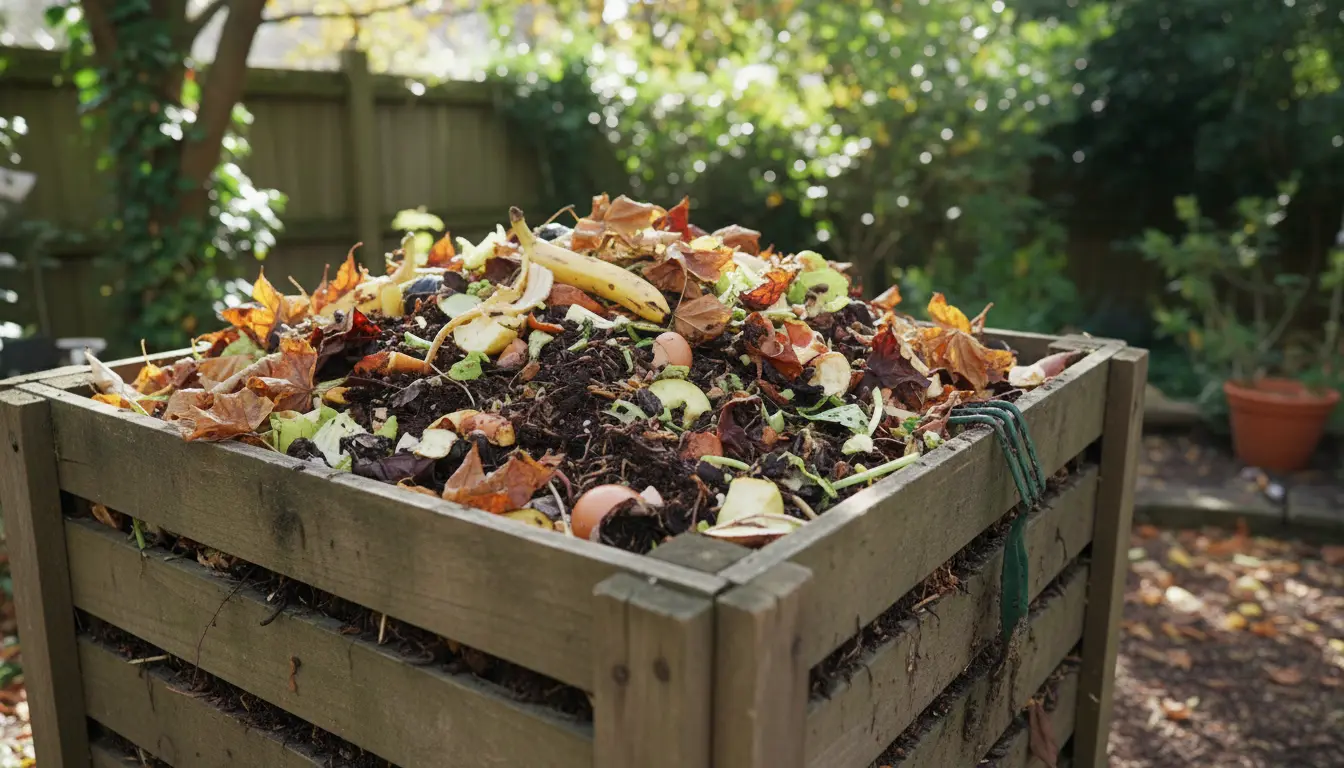
Why Home Composting Matters
Home composting turns food scraps and yard waste into a valuable soil amendment. It reduces household waste and improves soil structure for gardens and potted plants.
For beginners, composting is a low-cost way to support local sustainability and cut trash volume. You do not need special skills to get started.
About 30% of household waste is compostable. Composting at home can cut your trash output and reduce methane emissions from landfills.
Getting Started with Home Composting for Beginners
Choosing a simple, reliable system helps new composters succeed. Start with a small bin, a tumbler, or a simple pile depending on space and preference.
Set realistic goals: produce compost for container plants or a small garden bed. Expect the first usable compost in 2–6 months with basic care.
Choosing a Compost System
Pick a method that fits your yard and routine. Common options include a stationary bin, rotating tumbler, and an open pile.
- Stationary bin: Low cost, needs turning with a pitchfork.
- Rotating tumbler: Easier to aerate, slightly higher cost.
- Open pile: Good for large yards, less tidy but effective.
What to Compost
Balance green and brown materials for steady decomposition. Greens add nitrogen; browns add carbon.
- Greens: fruit and vegetable scraps, coffee grounds, fresh grass clippings.
- Browns: dry leaves, shredded paper, straw, small twigs.
- Avoid: meat, dairy, oily foods, diseased plants, and pet waste.
Setting Up Your First Pile
Start with a 6–12 inch layer of coarse browns for drainage. Alternate layers of greens and browns as you add material.
Keep the pile roughly the size of a small dog house (about 3x3x3 feet) to retain heat and moisture. Smaller piles work but decompose more slowly.
Maintaining Balance and Turning
Moisture and aeration are the two factors that control compost speed. The pile should be damp like a wrung-out sponge.
Turn the pile every 1–2 weeks with a pitchfork or tumble the bin. Turning introduces oxygen and mixes materials for even breakdown.
Signs of a Healthy Compost
Good compost smells earthy and has a dark, crumbly texture. Temperature will rise in active piles; use a simple compost thermometer or feel the center carefully.
- Warm center: Active decomposition
- Earthy smell: Healthy breakdown
- Few large recognizable scraps: Progress toward finished compost
Troubleshooting Common Problems in Home Composting
Beginner mistakes are easy to fix with small adjustments. Check moisture, balance, and aeration first when problems appear.
Problem: Bad Odor
Cause: Too wet or too many greens. Fix: Add dry browns, turn the pile, and reduce fresh greens until it stabilizes.
Problem: Slow Decomposition
Cause: Pile is too dry, too cold, or lacks surface area. Fix: Add water, more greens, or chop materials into smaller pieces to speed the process.
Problem: Pests Are Visiting
Cause: Food scraps like meat or oily items attract animals. Fix: Remove offending items, bury scraps in the center, or use a secure bin with a lid.
Practical Tips for Success
- Chop or shred kitchen waste to increase surface area and speed decomposition.
- Keep a kitchen caddy with a lid to collect scraps and reduce trips outside.
- Mix in finished compost occasionally to inoculate new material with microbes.
- Use finished compost as a soil amendment, top dressing, or potting mix ingredient.
Small Real-World Example
Case study: Maria, a small-plot gardener, started a compost bin on her apartment balcony. She used a compact tumbler and collected kitchen scraps for three months.
By month four she harvested dark, crumbly compost and mixed it into potting soil for her tomatoes. Her plants were healthier and she reduced weekly trash by a small bag.
How to Use Finished Compost
Finished compost can be mixed into garden beds at 10–20% by volume, used as mulch, or added to potting mixes. It improves water retention and nutrient availability.
Apply a thin layer around plants or mix it into the top 6–8 inches of soil before planting for best results.
Final Checklist for Home Composting for Beginners
- Choose a bin type that suits your space and routine.
- Keep a balance of greens and browns and maintain moisture.
- Turn regularly and monitor smell and temperature.
- Use finished compost to enrich soil and reduce waste.
Home composting is a practical, low-cost habit that benefits your garden and the environment. With basic care and a small routine, beginners can produce rich compost in months rather than years.