
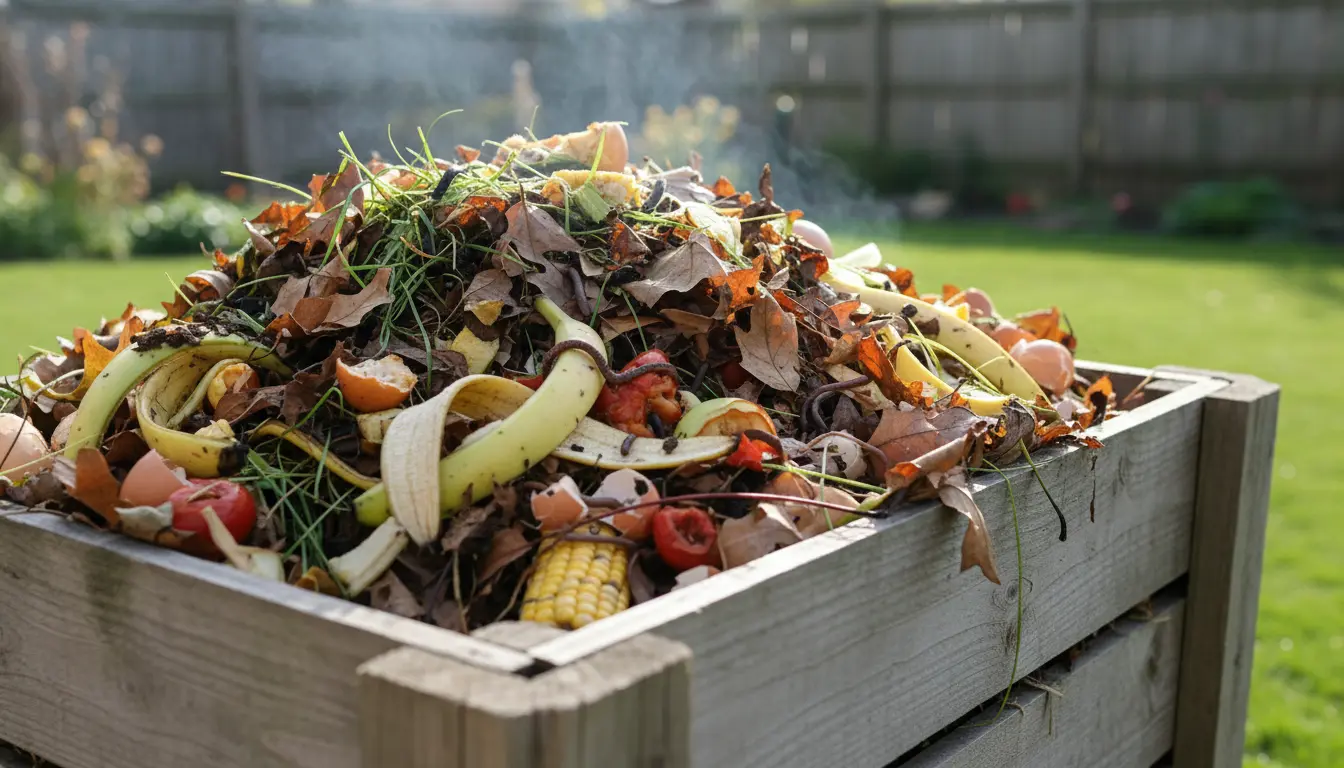
Why Home Composting Matters
Home composting turns kitchen scraps and yard waste into useful soil amendment while reducing household waste. It improves soil structure, retains moisture, and feeds plants with natural nutrients.
Composting is practical and affordable for most households. You do not need a large yard or special equipment to start.
What Is Home Composting
Home composting is a natural process where microbes break down organic matter into humus-like material. The result is nutrient-rich compost that can be added to garden beds, pots, or lawn areas.
There are several methods, including hot composting, cold composting, and vermicomposting. Each method suits different needs and space limits.
Basic Materials for Home Composting
Successful compost needs a mix of carbon and nitrogen materials. Balance these to encourage microbial activity without bad smells.
- Greens (Nitrogen): Vegetable scraps, fruit peels, coffee grounds, grass clippings.
- Browns (Carbon): Dry leaves, shredded paper, cardboard, straw.
- Water: Keep the pile as damp as a wrung-out sponge.
- Air: Turn or aerate to supply oxygen.
Materials to Avoid
Do not add meat, dairy, oily foods, diseased plants, or pet waste to typical home compost. These items attract pests or introduce pathogens.
Choosing a Bin for Home Composting
Select a bin that fits your space and composting method. Bins range from simple piles to tumblers and indoor worm bins.
- Open pile: Best for large yards and cold composting.
- Compost bin: Neat and contained; works for most households.
- Tumbler: Easier to turn; good for faster composting in small spaces.
- Vermicompost bin: Uses worms to break down kitchen waste indoors or on a balcony.
Simple Steps to Start Home Composting
Follow these basic steps to build a healthy compost pile that breaks down efficiently.
- Choose a location with partial shade and good drainage.
- Start with a layer of coarse browns (twigs or straw) to aid airflow.
- Add alternating layers of greens and browns. Aim for about 2:1 browns to greens by volume.
- Keep the pile moist but not soaked. Water occasionally if dry.
- Turn the pile every 1–2 weeks for faster decomposition; less often for cold composting.
How Often to Turn and What to Expect
Turning adds oxygen and accelerates breakdown. Hot composting with regular turning can produce finished compost in 6–12 weeks. Cold composting may take 6–12 months.
Look for dark, crumbly material with an earthy smell as the sign of finished compost.
Troubleshooting Common Problems in Home Composting
Most issues are easy to fix with small adjustments. Smells usually mean too many greens or poor aeration. Add browns and turn the pile.
- Pests: Avoid meat and dairy, use secure bins, and bury fresh food under browns.
- Too dry: Add water and more greens.
- Too wet or slimy: Add dry browns and increase turning.
- Slow breakdown: Chop materials smaller and increase surface area, or turn more frequently.
Compost can increase soil microbial activity and store carbon in the soil, helping reduce greenhouse gases from organic waste.
Using Finished Compost in Your Garden
Finished compost can be used as a top dressing, mixed into potting soil, or added to garden beds. Apply a 1–3 inch layer around plants, or mix 10–30% compost into planting soil.
Compost improves soil structure, drainage, and nutrient retention while supporting beneficial microbes.
Small Real-World Case Study
Case: Julie, a homeowner with a small yard, began a tumbler compost system. She used kitchen scraps and shredded leaves and turned the tumbler twice a week.
In three months Julie had rich compost she mixed into her vegetable beds. Her tomatoes showed fuller foliage and better fruit set the next season, while weekly kitchen waste dropped by nearly half.
Quick Tips for Busy Beginners
- Collect kitchen scraps in a small counter container and empty daily into the outdoor bin.
- Keep a supply of dry browns like shredded paper or leaves on hand.
- Chop large items to speed decomposition.
- Start small and scale up as you learn what works.
Summary: Start Home Composting Today
Home composting is a practical way to reduce waste and build healthy garden soil. With a few simple materials and regular attention, most households can produce useful compost in months.
Choose a method that fits your space, balance greens and browns, keep the pile moist, and turn periodically. Small changes yield big benefits for your garden and the planet.