
Why Home Composting Matters
Home composting turns kitchen and yard waste into a valuable soil amendment. It reduces trash, lowers methane emissions from landfills, and feeds plants with nutrient-rich compost.
This guide focuses on practical, simple steps for home composting for beginners. You will learn materials to use, methods to try, and common problems to avoid.
Basic Principles of Composting for Beginners
Composting is a natural process where microorganisms break down organic matter. The main requirements are carbon, nitrogen, water, and air.
Balance these elements and microbes will do the rest. You do not need special skills—just consistent care and the right mix of materials.
Key Ingredients
- Greens (Nitrogen): fruit and vegetable scraps, coffee grounds, fresh grass clippings.
- Browns (Carbon): dry leaves, shredded paper, cardboard, straw.
- Air: oxygen needed for aerobic decomposition; avoid compacting the pile.
- Moisture: damp like a wrung-out sponge; too wet causes odors, too dry slows breakdown.
Simple Compost Systems for Home Composting
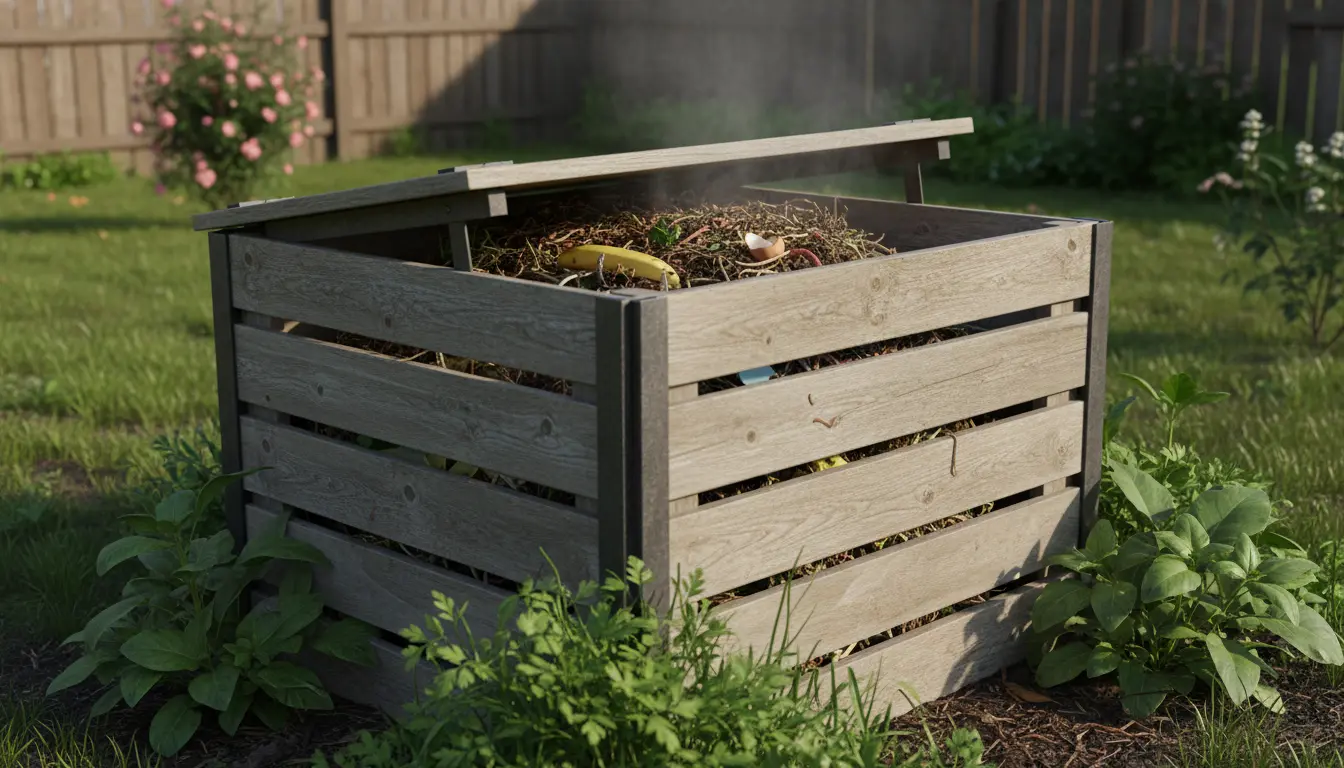
Choose a system that fits your space and time. Small households often do well with a compost bin or worm composter. Larger yards can use a compost pile.
Compost Bin
A bin keeps materials contained and neat. Use a plastic or wooden bin with ventilation holes.
Layer greens and browns, turn every 1–2 weeks, and expect usable compost in 3–6 months depending on conditions.
Compost Pile
A simple pile works where space allows. Build layers of browns and greens and occasionally turn with a pitchfork.
Hot piles (larger, insulated) decompose faster and can reach temperatures that kill weed seeds.
Worm Composting (Vermicomposting)
Worm bins are ideal for small kitchens or apartments. Red wigglers process food scraps quickly and produce rich castings.
Keep the bin in a cool, shaded area and feed small amounts regularly to avoid odors.
Step by Step Start for Home Composting
Follow this simple sequence to begin home composting for beginners:
- Choose a location: level, partially shaded, near a water source.
- Select a system: bin, pile, or worm bin based on space and waste volume.
- Gather materials: keep a small kitchen caddy for scraps and a supply of dry browns.
- Build an initial layer: 6–8 inches of browns, then add greens and a bit of soil.
- Maintain: monitor moisture, turn or aerate, and add a balance of browns and greens.
Troubleshooting Common Problems
Beginners often worry about smells, pests, or slow decomposition. These issues are usually easy to fix.
- Bad Odor: pile too wet or too much green material. Add dry browns and turn the pile.
- Pests: bury food scraps deeper, use a closed bin, and avoid meat/dairy.
- Slow Breakdown: not enough nitrogen or moisture. Add green material and water lightly.
- Flies: cover fresh food with a layer of browns or finished compost.
How to Use Finished Compost
Finished compost looks dark, crumbly, and earthy. Use it to improve garden soil, potting mixes, or as a top dressing for lawns.
Apply a 1–3 inch layer around plants or mix into beds at a rate of about 20% compost to soil for new planting areas.
Composting at home can reduce household waste by up to 30 percent. Even small apartments can compost with a worm bin or bokashi system.
Small Real World Example: Case Study
Sarah, a city homeowner, started a 3-foot compost bin in her backyard. She collected kitchen scraps in a small caddy and layered them with shredded leaves from fall cleanup.
After six months of turning the bin every two weeks and keeping it moist, she produced several buckets of dark compost. Sarah used it to enrich her vegetable bed and reported healthier tomatoes and reduced watering needs.
Practical Tips for Success
- Keep a small countertop container to reduce trips to the outdoor bin.
- Shred or chop large pieces to speed decomposition.
- Save dry leaves or shredded paper to maintain brown material supply.
- Record what you add for a few months to learn your ideal balance.
Summary: Start Composting Today
Home composting for beginners is low cost and flexible. With basic materials and a consistent routine, anyone can convert organic waste into a useful soil amendment.
Pick a simple system, balance greens and browns, and monitor moisture and air. Over time you will develop a rhythm that fits your household and garden needs.