
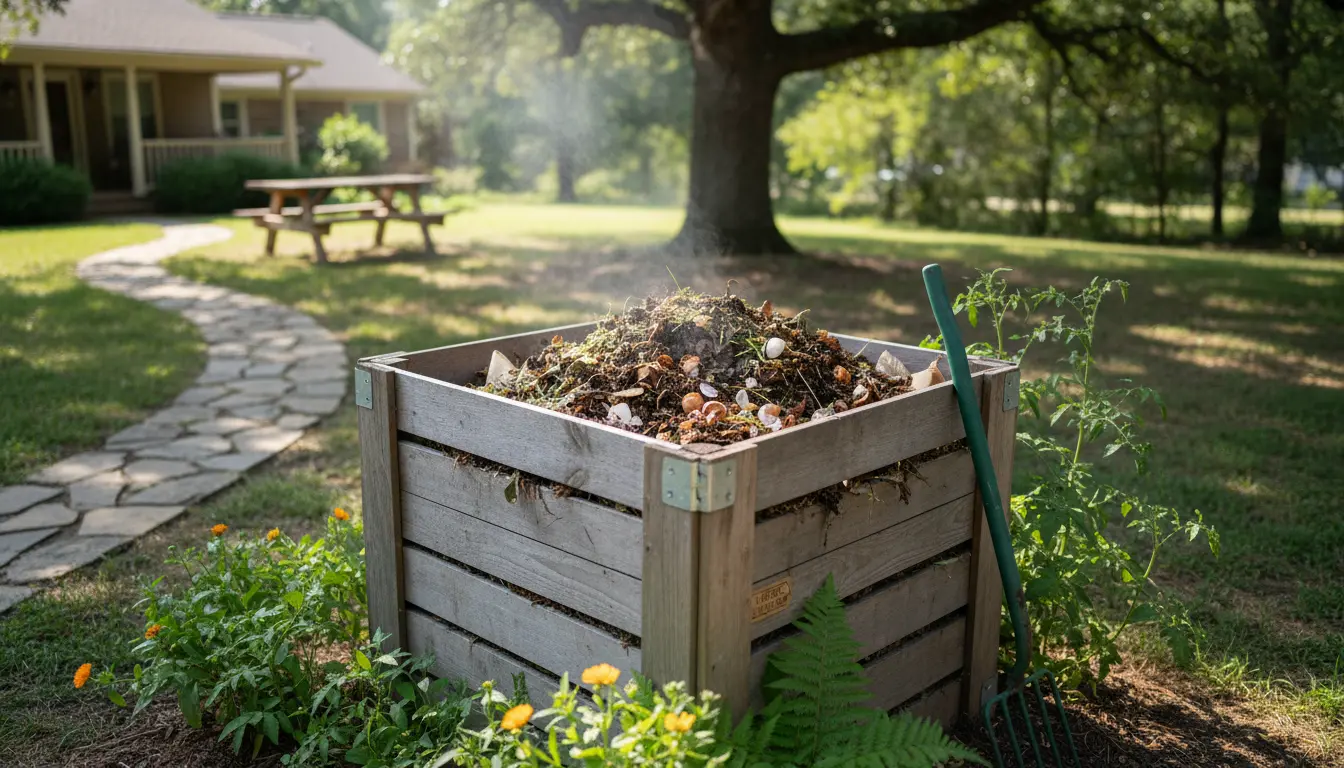
Home Composting for Beginners: Why Compost?
Composting turns kitchen and yard waste into nutrient-rich soil. It reduces waste sent to landfills and improves garden health.
For beginners, composting is a low-cost, low-risk way to recycle organic matter at home. This guide gives clear, practical steps you can follow today.
Key Concepts for Home Composting for Beginners
Start with two core ideas: balance and airflow. A good compost pile mixes carbon-rich browns and nitrogen-rich greens, and it needs oxygen to decompose efficiently.
Understanding these basics helps you avoid common problems like bad smells or slow breakdown.
What to Compost
Use a mix of materials to keep the process balanced and healthy. Avoid recent meat, dairy, and diseased plants.
- Greens (nitrogen): vegetable scraps, coffee grounds, fresh grass clippings.
- Browns (carbon): dry leaves, shredded paper, straw, cardboard.
- Moisture: compost should feel like a wrung-out sponge.
What to Avoid
Some items slow decomposition or attract pests. Keep these out of a home compost bin.
- Meat, fish, bones, and dairy products.
- Oils, greasy foods, and large woody branches.
- Invasive weeds, seed heads, pet waste, and treated wood.
How to Start Home Composting for Beginners
Choose a container or spot, gather materials, and maintain the pile. You can start with a simple bin or a small heap in a corner of the yard.
Follow these practical steps for a reliable start.
Step-by-Step Setup
- Select a bin or designated pile area. Options include tumblers, wire cages, or a simple heap.
- Add a base layer of coarse browns (small twigs or straw) to help airflow.
- Alternate layers of greens and browns, aiming for about two to three parts brown to one part green by volume.
- Keep the pile moist but not soggy; water lightly if it dries out.
- Turn or aerate the pile every 1–2 weeks to speed decomposition and prevent odors.
Maintaining Your Compost
Regular maintenance prevents problems and speeds up composting. Simple checks keep the pile healthy.
- Smell test: a healthy pile smells earthy. Foul odors mean too wet or too many greens.
- Temperature check: active piles warm up in the center. Cooling means activity has slowed.
- Turning: use a pitchfork or a tumbler to mix oxygen into the pile. This helps microbes work faster.
Troubleshooting Common Issues
Problems are usually easy to fix once you identify the cause. Use small adjustments rather than major changes.
- Smell of rot: add more browns and turn the pile to add air.
- Pile too dry: add water and more greens, then cover during hot weather.
- Slow decomposition: chop materials smaller and ensure moisture and oxygen levels are adequate.
Harvesting and Using Finished Compost
Compost is ready when it looks dark, crumbly, and smells earthy. This typically takes three months to a year, depending on conditions.
Use finished compost to improve soil structure, add nutrients, and help retain moisture.
- Top-dress: spread a thin layer on garden beds and around trees.
- Mix into potting soil: replace part of the potting mix with finished compost.
- Use as mulch: keep soil temperature steady and suppress weeds.
Small Real-World Example
Case study: A family of four in a suburban yard started a 3-bin system. They fed in kitchen scraps and yard trimmings for six months and turned the middle bin every two weeks.
After six months they harvested two buckets of rich compost and reduced their weekly trash by one bag. The garden showed visible improvement in plant vigor the next season.
Practical Tips for Success
Keep the routine simple and consistent. Small, steady efforts produce reliable compost over time.
- Chop or shred large items to speed decomposition.
- Balance materials rather than counting exact ratios; visual checks work fine.
- Use kitchen collection bins to make daily composting easy.
Conclusion: Make Composting Part of Your Routine
Home composting for beginners is approachable and beneficial. With a basic bin, a mix of materials, and a little maintenance, anyone can produce useful compost.
Start small, monitor the pile, and adjust as needed. Over time you will reduce waste and build healthier soil for plants.