
Succulents are popular for indoor gardeners because they are forgiving and decorate small spaces well. This guide covers the essential steps for growing succulents indoors, from light needs to troubleshooting common problems.
Growing Succulents Indoors: Light Requirements
Light is the most important factor for indoor succulents. Most succulents need bright, indirect light for at least 6 hours a day to maintain compact form and color.
If natural light is limited, place succulents near a south- or east-facing window. Rotate pots weekly to prevent leaning toward the light.
Grow Lights for Growing Succulents Indoors
When window light isn’t enough, use a full-spectrum LED grow light. Mount it 6–12 inches above plants and run it 10–12 hours daily to mimic daylight.
- Choose full-spectrum LEDs with 4000–6500K color temperature.
- Use timers to keep a consistent light schedule.
- Monitor plant spacing so all foliage receives similar light.
Growing Succulents Indoors: Watering Strategy
Succulents store water in their leaves, so overwatering is the most common indoor mistake. Use a soak-and-dry approach: water thoroughly, then allow soil to dry before watering again.
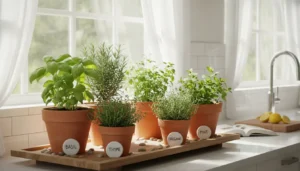
Check the top 2 inches of soil before watering. In winter, reduce watering frequency because growth slows and evaporation drops.
Practical Watering Tips
- Water at the base, avoiding wetting leaves to reduce rot risk.
- Use pots with drainage holes to prevent standing water.
- When in doubt, wait a few extra days—succulents tolerate drought better than soggy roots.
Growing Succulents Indoors: Soil and Potting
Use a fast-draining soil mix designed for succulents or cacti. Standard potting mix retains too much moisture and increases rot risk.
Commercial cactus mixes are a good choice, or amend regular potting soil with coarse sand, perlite, or pumice (about 50–70% gritty material).
Selecting Pots for Growing Succulents Indoors
Terracotta or unglazed ceramic pots help soil dry faster because they wick moisture. Ensure pots have drainage holes and choose a size slightly larger than the root ball.
Growing Succulents Indoors: Temperature and Humidity
Most succulents prefer daytime temperatures between 65–80°F (18–27°C) and cooler nights around 50–60°F (10–15°C). Avoid placing plants near drafts or heating vents.
Succulents generally prefer low to moderate humidity. In high-humidity homes, increase airflow and ensure faster-drying soil to prevent fungal issues.
Growing Succulents Indoors: Fertilizing and Feeding
Feed succulents sparingly during the active growing season (spring and summer). Use a balanced, diluted fertilizer formulated for succulents or a general houseplant fertilizer diluted to half strength.
Fertilize once a month during growth periods and stop feeding in late fall and winter when growth slows.
Common Problems When Growing Succulents Indoors
Watch for these frequent issues and their fixes.
- Leggy growth: Increase light or use supplemental grow lights.
- Yellowing or soft leaves: Often caused by overwatering—check soil and drainage.
- Pests like mealybugs and spider mites: Remove pests with a cotton swab dipped in isopropyl alcohol and isolate the plant.
Propagation Tips for Growing Succulents Indoors
Propagation is easy and rewarding. Use leaf or stem cuttings for many common succulents.
- Allow cut ends to callus for a few days to prevent rot.
- Place cuttings on top of gritty soil and water sparingly until roots form.
- Transplant when new roots are established and growth resumes.
Many succulents use CAM photosynthesis, opening stomata at night to reduce water loss. This adaptation helps them thrive in dry indoor conditions.
Simple Case Study: Growing Succulents Indoors in a Small Apartment
Maria, a city renter, kept three succulents on a north-facing windowsill and struggled with leggy plants. She moved them to an east-facing shelf and added a small LED grow light for four hours each morning.
Within six weeks, the succulents developed firmer, compact leaves and brighter colors. Maria switched to a cactus mix, used terracotta pots with drainage, and adopted a soak-and-dry watering routine.
Result: Healthier plants, less pest activity, and a low-maintenance indoor display that fits her space and schedule.
Quick Checklist for Growing Succulents Indoors
- Provide 6+ hours of bright light or use a grow light.
- Use fast-draining soil and pots with drainage holes.
- Water thoroughly, then allow soil to dry before re-watering.
- Fertilize lightly during the growing season.
- Watch for pests and signs of overwatering.
Growing succulents indoors is straightforward when you prioritize light, drainage, and conservative watering. With the right setup, even beginners can enjoy healthy, attractive succulents that brighten indoor spaces with minimal effort.