
Why composting at home matters
Composting at home turns food scraps and yard waste into a valuable soil amendment. It reduces household waste, saves money on fertilizer, and improves garden soil structure.
This guide shows practical steps to set up a system, maintain it, and avoid common problems. You do not need specialized equipment to start.
Choose the right composting method for your home
There are several simple ways to compost at home. Pick a method that fits your available space and time.
- Cold pile — Pile scraps in a corner and let them break down slowly. Low effort, slower results.
- Hot compost — Combine greens and browns in a compact pile and turn regularly for faster breakdown.
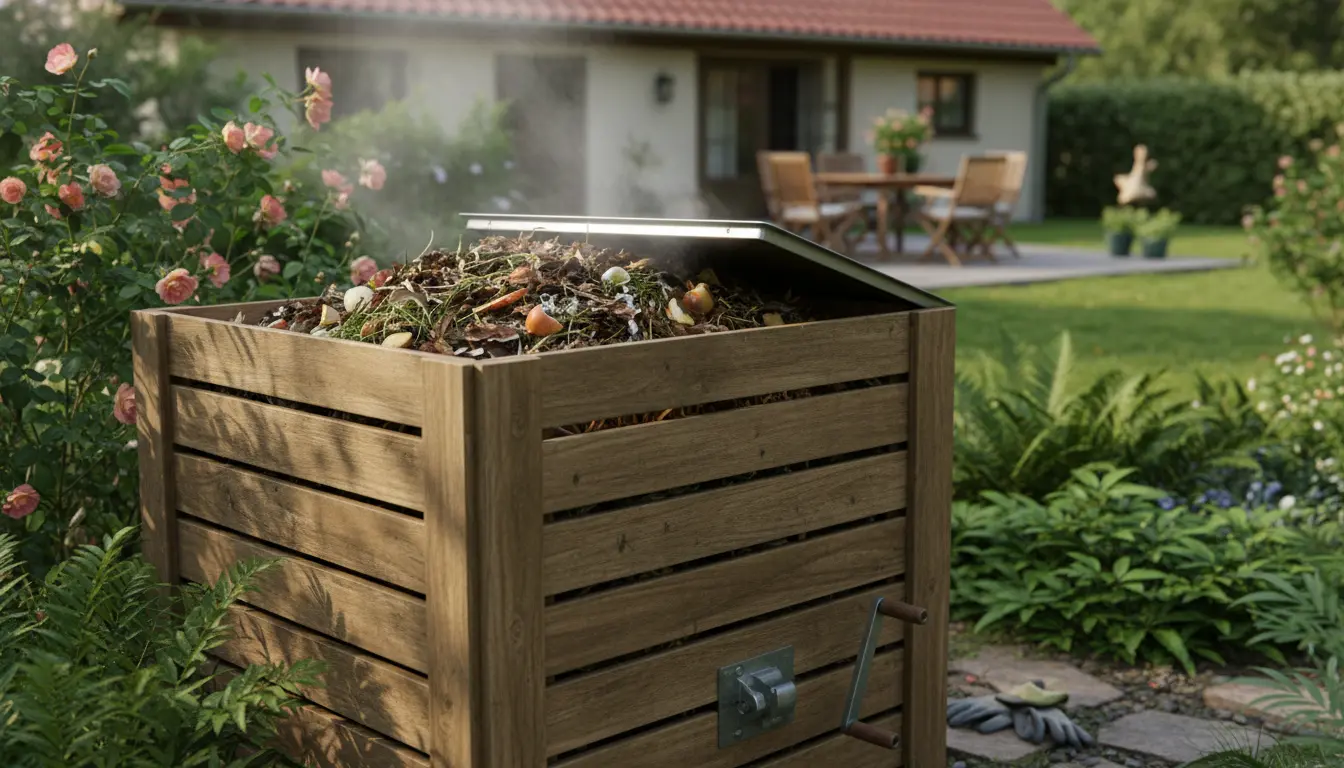
- Compost bin — Enclosed bin keeps pests out and looks tidy. Good for small yards.
- Vermicomposting — Use worms in a bin for apartment or balcony composting of kitchen scraps.
Basic materials and ratios for composting at home
Successful composting needs a balance of carbon-rich “browns” and nitrogen-rich “greens.” Aim for about 25–30 parts carbon to 1 part nitrogen by weight, or a simple mix of 2–3 parts browns to 1 part greens by volume.
- Greens: fruit and vegetable scraps, fresh grass clippings, coffee grounds.
- Browns: dry leaves, shredded paper, cardboard, straw.
- Avoid: meat, dairy, oily foods, and diseased plant material in typical backyard systems.
Practical mix example
If you add a bucket of kitchen scraps, add two buckets of shredded leaves or paper. Keep the pile moist like a wrung-out sponge and turn it every 1–2 weeks for faster results.
How to build and maintain a hot compost pile
Hot composting is a reliable method to kill seeds and pathogens. It requires a larger pile and routine maintenance but produces finished compost in 2–3 months.
- Layer materials: Start with coarse browns for airflow, then alternate greens and browns in 6–12 inch layers.
- Moisture: Keep the pile damp but not waterlogged.
- Turning: Use a pitchfork to turn the pile every 7–14 days to add oxygen.
- Temperature: An internal temperature of 130–160°F (55–70°C) shows active decomposition.
Troubleshooting common problems with composting at home
Problems can be simple to fix once you know the signs. Check these basic troubleshooting tips to keep your system healthy.
- Bad smell: Add more browns and turn the pile to add air.
- Slow breakdown: Chop materials smaller, add nitrogen-rich greens, and increase moisture.
- Pests: Use a closed bin, bury food scraps in the center, and avoid meat or dairy.
- Too dry: Add water and some greens to rehydrate the pile.
When to harvest finished compost
Compost is ready when it is dark, crumbly, and has an earthy smell. Small pieces of undecomposed material are normal and can be screened out and returned to the pile.
Small real-world example: A quick case study
Case study: Sarah, a homeowner in Portland, started a 3×3 foot compost bin in her backyard. She added kitchen scraps and shredded leaves in a 1:2 ratio and turned the pile every two weeks.
After four months, she produced about 30 liters of finished compost and reduced her weekly garbage by one kitchen bag. She used the compost in her vegetable beds and saw improved soil moisture retention.
Tips for apartment and small-space composting at home
Even without a yard, you can compost food scraps effectively. Vermicomposting is the most common option for small spaces.
- Use a small worm bin under the sink or on a balcony.
- Feed worms only appropriate scraps: fruit and vegetable peelings, coffee grounds, and crushed eggshells.
- Rotate and harvest worm castings every few months for indoor plants or shared community gardens.
How to use finished compost in your garden
Finished compost can be used as a top dressing, worked into planting beds, or mixed into potting soil. Start with 1–2 inches of compost on beds or mix 10–20% compost into potting mixes.
Compost will slowly release nutrients, improve structure, and support beneficial microbes in the soil.
Next steps: Start your first compost pile this weekend
Gather a simple bin or designate a corner of your yard, collect kitchen scraps and dry browns, and begin layering. Monitor moisture and temperature, and adjust as needed.
Composting at home is a low-cost, high-impact habit that benefits gardens and reduces waste. Start small and scale your system as you gain experience.