
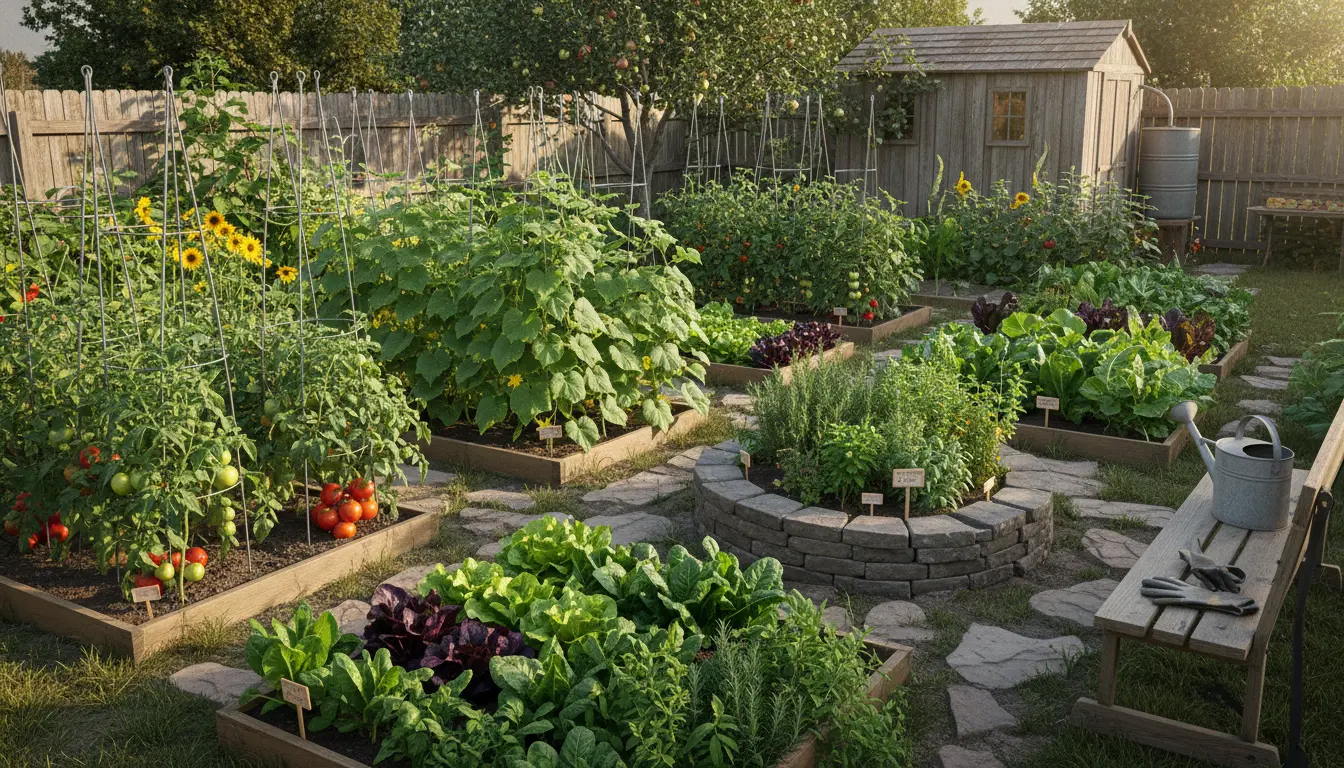
Why start a small vegetable garden
Growing a small vegetable garden is a practical way to get fresh produce, save money, and connect with nature. It suits beginners and people with limited space, such as balconies, patios, or small yards.
This guide explains clear, actionable steps to set up and maintain a productive small vegetable garden.
Plan before planting: key choices for a small vegetable garden
Good planning makes the difference between a patch of weeds and a reliable food source. Start with simple choices and expand as you gain experience.
Decide garden type and size
Options include containers, raised beds, or in-ground plots. Containers are best for balconies or patios, while raised beds are ideal for small yards and give better soil control.
A 4×4 or 4×8 raised bed fits most beginner needs and is easy to manage.
Choose the right location for a small vegetable garden
Sunlight is the most important factor. Most vegetables need at least 6 hours of direct sun daily. Observe your chosen spot for sun patterns across a day.
Also consider access to water, wind protection, and proximity to the house for convenience.
Prepare soil and containers for healthy plants
Healthy soil supports strong roots and better yields. If using containers, choose sizes that suit the plants—deeper pots for tomatoes, medium pots for herbs and lettuce.
Soil mix and amendments
Use a loose, well-draining mix. For raised beds and containers, combine quality topsoil with compost and a little coarse sand or perlite for drainage.
- Basic container mix: 40% compost, 40% topsoil, 20% perlite or sand.
- Test soil pH if possible; most vegetables prefer pH 6.0–7.0.
- Add a slow-release organic fertilizer at planting time for steady nutrients.
Pick easy plants for a small vegetable garden
Start with fast-growing, forgiving vegetables. This builds confidence and provides quicker harvests.
Recommended beginner plants
- Lettuce and salad greens — quick harvests and great for containers.
- Radishes — very fast and reliable.
- Cherry tomatoes — compact varieties suit pots and raised beds.
- Herbs like basil, parsley, and chives — useful and space-efficient.
- Green beans — bush types are space-friendly and productive.
Planting schedule and spacing in a small vegetable garden
Follow seed packet or plant tag instructions for spacing and planting depth. Overcrowding reduces airflow and increases disease risk.
Use succession planting for continuous harvests: sow lettuce every 2–3 weeks and stagger tomato or pepper transplants.
Watering and maintenance
Consistent moisture is essential. Most vegetables prefer evenly moist soil rather than cycles of dry and soaked.
- Water early morning to reduce evaporation and fungal risk.
- Use drip irrigation or a soaker hose for efficiency in raised beds.
- Mulch with straw or wood chips to retain moisture and suppress weeds.
Feeding and pruning
Feed vegetables with a balanced fertilizer every 4–6 weeks or follow the product directions. Remove dead leaves and pinch back leggy growth to focus energy into fruiting plants.
Pest and disease basics for a small vegetable garden
Watch for common pests like aphids, slugs, and caterpillars. Many problems are easier to prevent than treat.
- Use row covers early in the season to protect seedlings.
- Handpick larger pests and use organic controls like insecticidal soap if needed.
- Rotate crops each season to reduce soil-borne diseases.
Planting taller crops on the north side of a small bed prevents shade from blocking shorter crops. This simple layout trick maximizes sunlight for all plants.
Harvesting and saving seeds
Harvest regularly to encourage more production. Pick lettuce leaves frequently, and harvest tomatoes when they are fully colored for best flavor.
To save seeds, choose open-pollinated varieties, let fruits fully ripen, and dry seeds in a cool, dry place before storing.
Simple case study: A balcony container success
Maria, a city resident with a small balcony, started a container garden in a 4-square-foot area. She used three 12-inch pots and one 2×2 raised planter, filling them with a compost-rich mix.
Her plant list included two cherry tomato plants, a pot of basil, mixed salad greens, and a pot of radishes. Within eight weeks she had regular salad harvests and three rounds of radishes.
Key actions that helped: choosing compact varieties, watering daily in the morning, and using a small trellis for tomatoes. This simple setup delivered fresh produce and motivated her to expand the next season.
Quick checklist to start your small vegetable garden
- Choose location with 6+ hours sun and water access.
- Select containers or build a raised bed sized to your space.
- Use good quality soil mixed with compost and drainage material.
- Pick beginner-friendly plants and follow spacing guidelines.
- Water consistently, mulch, and monitor for pests weekly.
Next steps and final tips
Start small and keep records of planting dates, varieties, and results. Note what worked and what didn’t to refine your plan for the next season.
With simple care and a little planning, a small vegetable garden can provide fresh food, reduce grocery bills, and deliver a satisfying hobby year after year.