
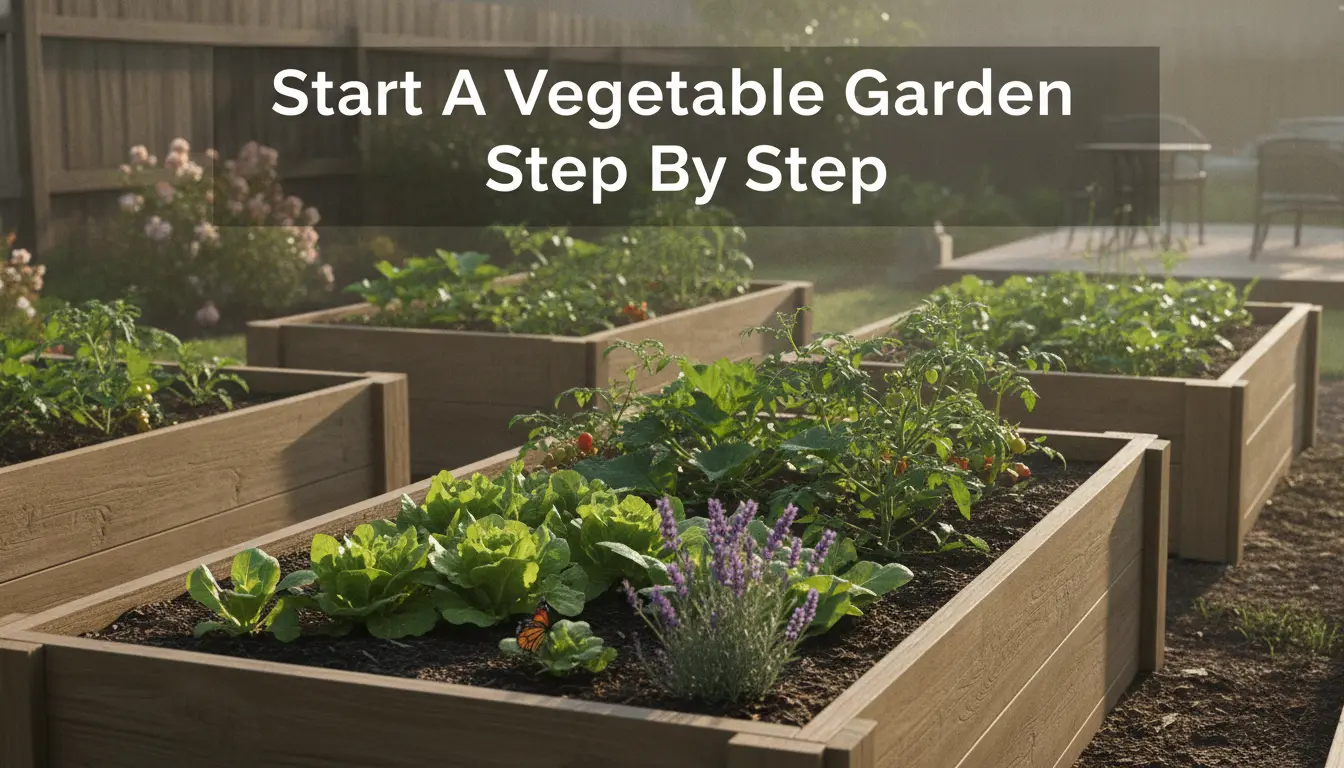
Why Start a Vegetable Garden
Starting a vegetable garden gives you fresh produce, saves money, and connects you with seasonal food. It can fit any space from a balcony to a backyard and be scaled to your time and budget.
How to Start a Vegetable Garden: Plan Your Space
Choose a site with at least 6 hours of direct sunlight a day for most vegetables. Consider wind exposure, proximity to a water source, and ease of access for planting and harvesting.
Decide on the garden type: in-ground rows, raised beds, or containers. Raised beds warm faster in spring and can be easier on your back, while containers are ideal for patios and balconies.
Essential planning checklist
- Measure available space and sketch a simple layout.
- List vegetables you want to grow and their space needs.
- Plan for paths, irrigation, and storage for tools.
How to Start a Vegetable Garden: Prepare Soil and Beds
Good soil is the foundation of a productive garden. Test the soil pH with a simple kit; most vegetables prefer pH 6.0–7.0. Improve soil structure by adding organic matter like compost or well-rotted manure.
If using raised beds, fill them with a mix of topsoil, compost, and a drainage-friendly amendment like coarse sand or perlite. For containers, use a high-quality potting mix formulated for vegetables.
Soil preparation steps
- Clear weeds and debris from the planting area.
- Spread 2–4 inches of compost and mix into the top 6–8 inches of soil.
- Level beds and add mulch to conserve moisture and suppress weeds.
How to Start a Vegetable Garden: Choose Plants Wisely
Select vegetables suited to your climate and growing season. Beginners should start with reliable, low-maintenance crops that offer quick rewards and build confidence.
Best first vegetables
- Leafy greens: lettuce, spinach, arugula
- Root crops: radishes, carrots, beets
- Fast fruiters: cherry tomatoes, bush beans, zucchini
Use seed packets or plant tags to track days to maturity and spacing. Plant successive sowings of quick crops like lettuce and radishes to extend harvests.
How to Start a Vegetable Garden: Watering and Feeding
Consistent moisture is critical, especially during germination and fruiting. Water deeply and less often to encourage strong root systems rather than frequent shallow watering.
Consider installing a drip irrigation line or soaker hose to deliver water directly to the root zone and reduce evaporation.
Feeding schedule
- Apply a balanced organic fertilizer at planting time.
- Side-dress with compost or a slow-release fertilizer midseason for heavy feeders like tomatoes and corn.
- Adjust feeding based on plant vigor and leaf color.
How to Start a Vegetable Garden: Pest and Disease Basics
Start with prevention: rotate crops each year, maintain good air circulation, and remove plant debris in fall. Healthy plants resist pests and disease better than stressed plants.
Use simple organic controls first: hand-pick pests, use row covers for early-season protection, and apply insecticidal soap for soft-bodied insects when needed.
Common problems and solutions
- Slugs: use traps or copper barriers at night.
- Aphids: spray with water or insecticidal soap.
- Blight: remove infected foliage and avoid overhead watering.
How to Start a Vegetable Garden: Season Extension and Succession Planting
Extend your harvest by using cold frames, cloches, or row covers in spring and fall. Start seedlings indoors 4–8 weeks before the last frost for a head start on the season.
Practice succession planting: sow small amounts every 2–3 weeks for continuous harvest of lettuces, radishes, and beans.
Small Real-World Example
Case study: Maria converted a 10×6 foot sunny patch into two raised beds. She planted tomatoes, bush beans, lettuce, and carrots. In the first season she harvested regular salad bowls and three times the store cost in tomatoes by late summer.
Her simple strategies—weekly deep watering, compost top-dressing in June, and staking tomatoes—kept plants productive and reduced pest pressure. The beds produced enough for weekly salads and gave her confidence to expand next year.
How to Start a Vegetable Garden: Quick Tips for Busy People
- Start small: one or two beds or a few containers to learn without overwhelm.
- Choose low-maintenance varieties labeled disease-resistant.
- Mulch heavily to cut weeding time and retain moisture.
- Set a 15-minute weekly maintenance routine for watering, harvesting, and checking pests.
Companion planting can reduce pests and improve yields. For example, planting basil near tomatoes can improve flavor and may help deter tomato hornworms.
Next Steps: Keep Learning and Adjusting
Track what works each season: planting dates, varieties, yields, and problems encountered. This simple garden journal will make your next season more productive.
Join a local gardening group or read regional growing guides to fine-tune plant choices for your climate. Gardening is iterative—small improvements add up fast.
Summary checklist
- Pick a sunny site and decide the garden type.
- Prepare soil with compost and test pH if possible.
- Start with easy vegetables and plan for succession plantings.
- Water deeply, mulch, and monitor pests regularly.
With a bit of planning and weekly care, you can start a vegetable garden that produces fresh food and practical rewards. Begin small, learn from each season, and scale up as you gain confidence.