
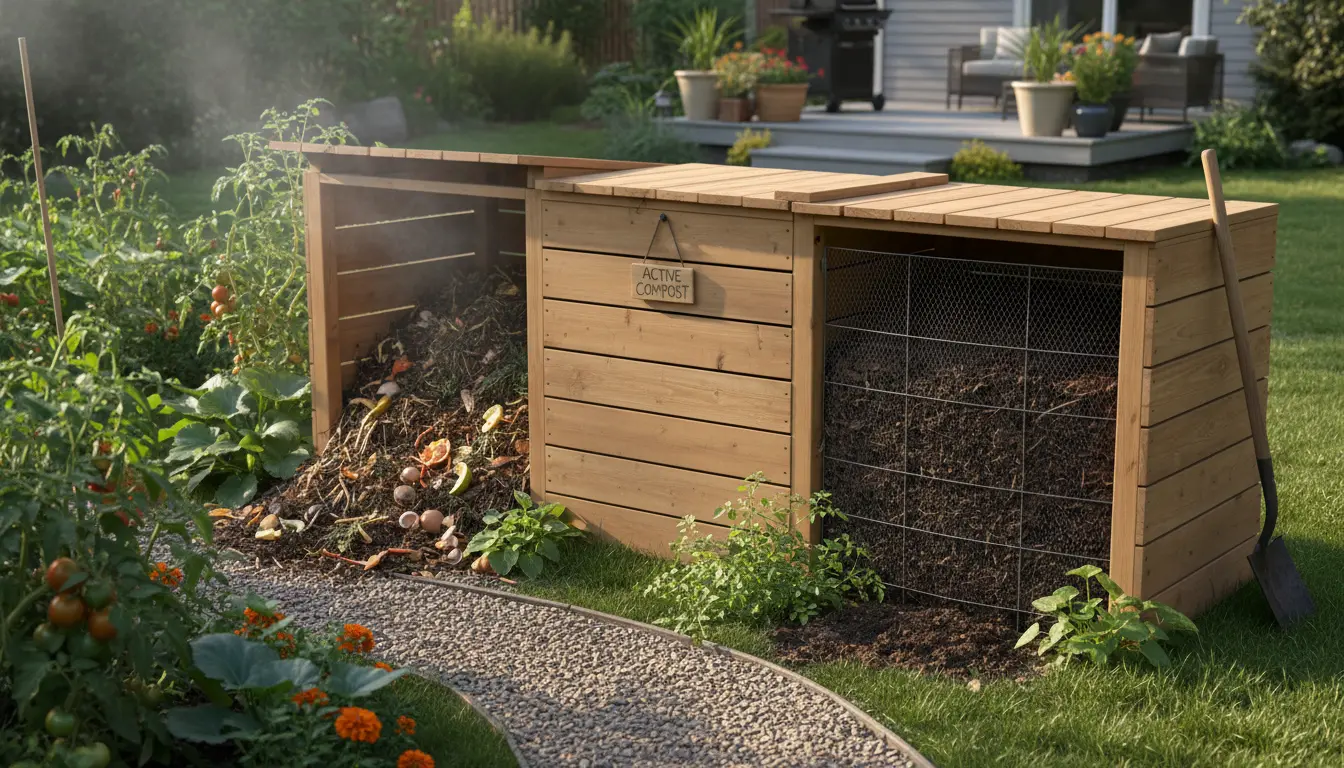
What Is Home Composting?
Home composting breaks down organic waste into nutrient-rich material you can add to soil. It reduces household trash and improves garden health.
This guide shows practical steps to start a compost bin, maintain it, and use finished compost safely.
Composting can divert up to 30% of household waste from the trash when you include kitchen scraps and yard trimmings.
How to Start Home Composting
Begin with a simple plan: pick a location, choose a container type, and collect the right materials. You do not need special tools to get started.
Follow these basic steps to set up a successful compost system at home.
Choose a Composting Method
Select a method that fits your space and time. Common options include:
- Compost bin: Enclosed container for small yards or patios.
- Compost tumbler: Easier turning and faster composting for small batches.
- Open pile: Good for larger yards with room to manage turning.
- Vermicomposting: Indoor worm bin for kitchen scraps and small spaces.
Choose one based on how much waste you produce and how often you can manage the pile.
Collect Materials: Greens and Browns
Successful home composting depends on mixing “greens” and “browns.” Greens supply nitrogen; browns provide carbon.
- Greens: vegetable peels, fruit scraps, fresh grass clippings, coffee grounds.
- Browns: dry leaves, shredded paper, cardboard, straw, wood chips.
A good rule of thumb is roughly 2–3 parts browns to 1 part greens by volume. Adjust as needed to control moisture and smell.
Build and Maintain Your Bin
Layer materials to encourage airflow and decomposition. Start with a layer of coarse browns to help drainage.
Add alternating layers of greens and browns, keeping the pile moist like a wrung-out sponge. Turn or aerate regularly.
- Turning: Use a pitchfork or tumbler to aerate every 1–2 weeks for faster compost.
- Moisture: If dry, add water; if soggy, add more browns and increase turning.
- Size: Aim for a pile at least 1 cubic meter for hot composting, but smaller bins work too.
Troubleshooting Home Composting Problems
Some common issues can be fixed with simple adjustments. Watch for smell, pests, and slow decomposition.
Bad Smell
A strong ammonia or rotten smell usually means too many greens or poor aeration. Add more browns and turn the pile to introduce oxygen.
Pests and Rodents
To reduce pests, avoid adding meat, dairy, or oily foods. Use a closed bin or add a wire mesh barrier around the pile if needed.
Slow Breakdown
Slow composting can result from low temperatures, too little moisture, or large pieces of material. Chop large items and keep the pile moist and aerated.
How to Tell When Compost Is Ready
Finished compost is dark, crumbly, and has an earthy smell. Most home systems produce usable compost in 2–12 months depending on method and effort.
Screen or sift compost if you prefer a fine texture. Larger pieces can return to the bin for more breakdown.
Using Finished Compost
Use finished compost to improve garden soil, potting mixes, and lawn topdressing. Apply in spring or fall for best results.
- Vegetable beds: Work 1–2 inches into the topsoil before planting.
- Potted plants: Mix 10–30% compost into potting mixes.
- Lawn: Lightly spread compost to improve soil structure and water retention.
Small Case Study: Suburban Family Reduces Waste
A family of four in a suburban home started a 60-gallon compost bin and a small vermicompost tub in their garage. They collected kitchen scraps and yard waste for six months.
Results: weekly trash volume dropped by 25 percent, and they produced roughly 1 cubic foot of compost every two months. Their tomato plants showed stronger growth after adding compost to the planting holes.
Practical Tips for Consistent Success
- Keep a sealed kitchen container for scraps to prevent pests.
- Chop or shred materials to speed up decomposition.
- Monitor temperature if you want hot composting; aim for 120–150°F (49–66°C) for faster breakdown.
- Start small and scale up when you gain confidence.
Home composting is a low-cost, practical way to reduce waste and feed your garden. With basic materials and regular attention, almost anyone can create nutrient-rich compost at home.