
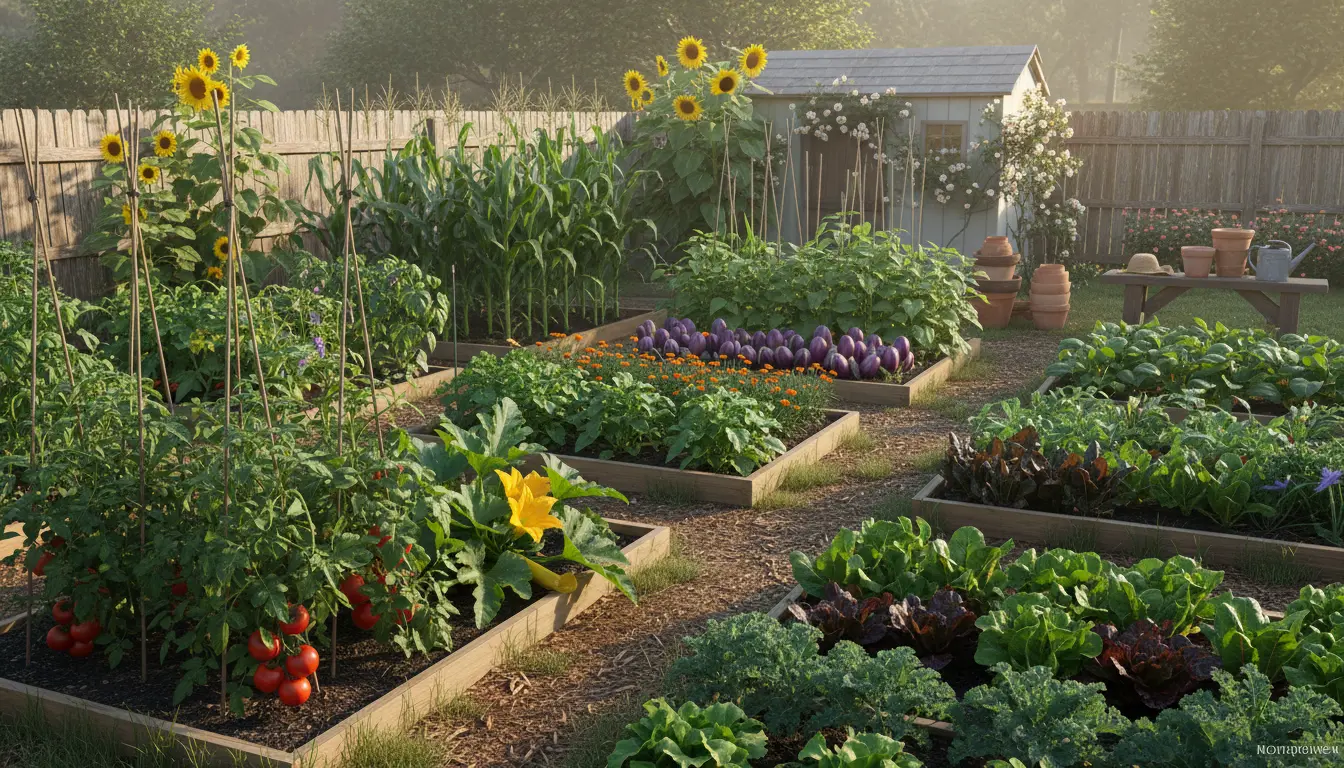
Starting a small vegetable garden is a manageable way to grow fresh food and learn basic gardening skills. This guide gives practical, step-by-step instructions you can use in a backyard, balcony, or small plot.
How to Start a Small Vegetable Garden: Step-by-Step
Choose the Right Location for Your Small Vegetable Garden
Pick a spot that gets at least 5–6 hours of direct sunlight each day. Sunlight is the most important factor for most vegetables, so observe the site during midday before you decide.
Consider proximity to water and ease of access. A location near a hose or tap makes daily care simpler and reduces the chance of neglect.
Prepare Soil and Beds for a Small Vegetable Garden
Good soil means healthy plants. For a small vegetable garden, either improve existing soil or build raised beds filled with a mix of topsoil, compost, and well-draining material.
Test soil pH if possible; most vegetables prefer a pH between 6.0 and 7.0. Add compost and organic matter to improve texture and fertility.
Select Plants for a Small Vegetable Garden
Choose compact, high-yield varieties that suit small spaces. Examples include bush tomatoes, mini peppers, leaf lettuce, radishes, and herbs.
Plan for successive planting: sow quick crops (radishes, lettuce) between slower crops (tomatoes, peppers) to maximize harvest in a small garden.
Planting and Spacing Tips for a Small Vegetable Garden
Follow seed packet or plant tag spacing but use intercropping to make efficient use of space. Plant tall crops on the north side to avoid shading smaller plants.
Use vertical supports like trellises for vining crops to free bed space. This is especially useful in a small vegetable garden where horizontal area is limited.
Watering and Maintenance in a Small Vegetable Garden
Water deeply and less frequently to encourage strong roots. In most climates, 1–1.5 inches of water per week is sufficient, given soil conditions and weather.
Mulch beds to reduce evaporation and suppress weeds. Regularly check for pests and remove affected leaves early to prevent spread.
Many common vegetables like lettuce, spinach, and radishes mature in 30–60 days, making them ideal for quick harvests in a small vegetable garden.
Small Vegetable Garden: Practical Examples and Case Study
Here are simple layout ideas for a small vegetable garden: raised bed 4×8 feet, three to four container pots on a balcony, or vertical planters along a fence. Each option suits different spaces and maintenance levels.
Mini Case Study: Urban Balcony Small Vegetable Garden
A first-time gardener converted a 6-foot balcony into a small vegetable garden using three 12-inch containers and one 4×2-foot raised trough. They planted bush tomatoes, mixed lettuce, basil, and a few radishes.
Within three months the garden produced enough salad greens for two people twice a week and three pounds of tomatoes. Regular watering, weekly compost tea, and staking the tomatoes minimized problems.
Common Mistakes When Starting a Small Vegetable Garden
- Overcrowding plants — reduces air flow and increases disease risk.
- Ignoring sunlight — planting in shade limits yields.
- Inconsistent watering — can cause blossom end rot and poor growth.
- Using poor soil — container mixes and raised beds need quality growing medium.
Quick Checklist to Start Your Small Vegetable Garden
- Choose a sunny spot with good access to water.
- Decide on containers, raised beds, or in-ground plots.
- Amend soil with compost and ensure proper drainage.
- Select compact vegetable varieties and plan spacing.
- Set up supports for vining plants and add mulch.
- Water regularly and monitor for pests and disease.
Final Tips for a Successful Small Vegetable Garden
Start small and expand gradually as you learn what works in your microclimate. Keep a simple journal of dates, varieties, and results to improve each season.
Use companion planting and succession sowing to keep beds productive. Small vegetable gardens can be low-cost, high-reward projects with the right planning and care.