
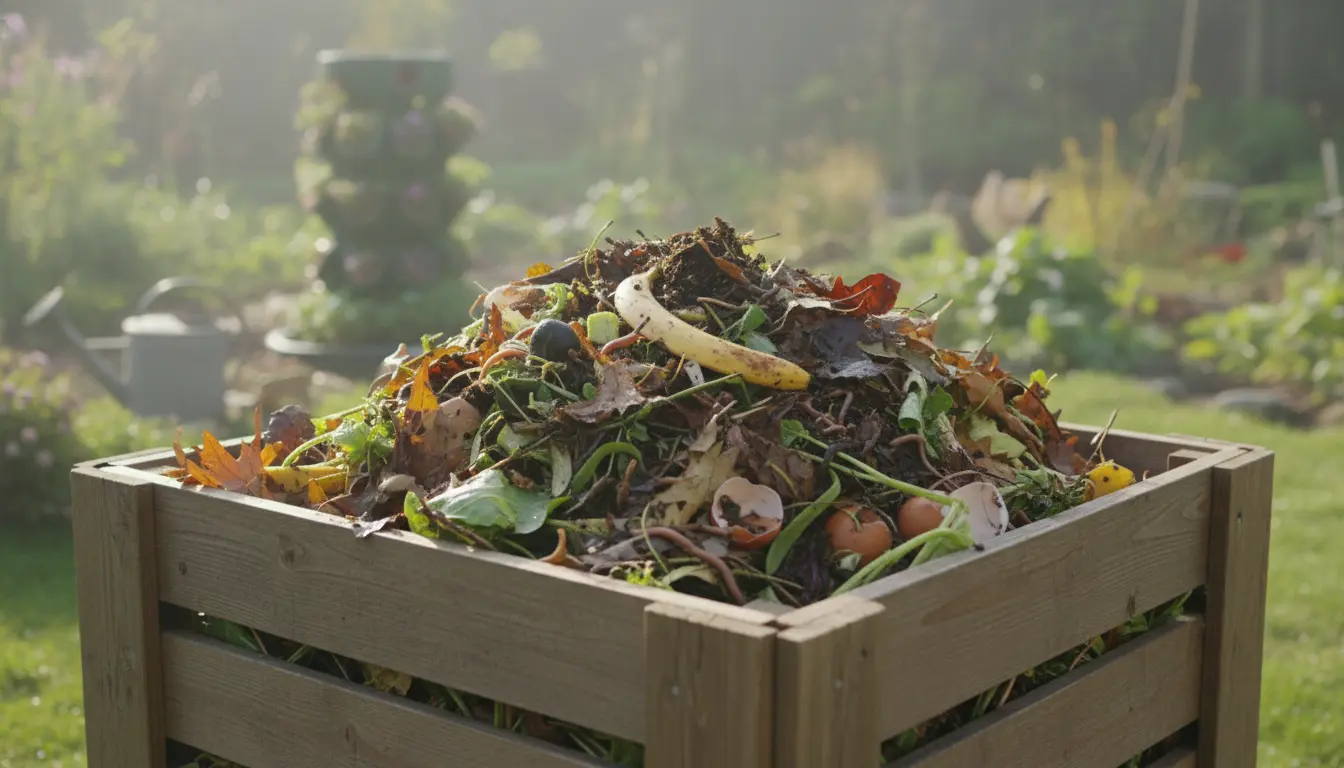
What Is Home Composting and Why It Matters
Home composting is the process of turning food scraps and yard waste into a nutrient-rich soil amendment. It reduces landfill waste, cuts methane emissions, and improves garden soil naturally.
This guide gives simple, actionable steps for beginners to set up and maintain a home compost system that works.
Choose the Right Home Composting Method
Pick a composting method that fits your space and schedule. The most common options are backyard bins, tumblers, and vermicomposting (worms).
Consider these factors: available space, what waste you generate, and how much effort you want to invest.
Backyard Bin
Good for yards and larger volumes of yard waste. It requires occasional turning and monitoring moisture.
Compost Tumbler
Faster decomposition and less effort to turn. Tumblers are ideal if you want a neater setup and quicker results.
Vermicomposting
Uses worms to break down kitchen waste indoors or in small outdoor bins. Great for apartment dwellers or gardeners wanting rich castings.
Essential Materials for Home Composting
Balance carbon-rich ‘browns’ and nitrogen-rich ‘greens’ for healthy compost. Aim for a rough 3:1 or 4:1 ratio of browns to greens by volume.
- Greens: fruit and vegetable scraps, coffee grounds, fresh grass clippings.
- Browns: dry leaves, shredded paper, straw, cardboard pieces.
- Aeration: use a pitchfork or turner for backyard piles; tumblers provide built-in aeration.
- Moisture: compost should be damp like a wrung-out sponge.
Step-by-Step: How to Start Home Composting
- Choose a location with partial shade and good drainage for outdoor bins or a stable indoor spot for worm bins.
- Start with a base layer of coarse browns to improve airflow.
- Add alternating layers of greens and browns, covering greens with browns to reduce odors and pests.
- Maintain moisture and turn the pile every 1–2 weeks to introduce oxygen.
- When material looks dark and crumbly with an earthy smell, it is ready to use.
Maintenance Tips for Ongoing Home Composting
Regular checks and small adjustments keep compost healthy. Use simple signals to guide actions.
- If it smells bad, add more browns and turn to add air.
- If it is dry and slow, add water and more greens.
- If pests appear, cover fresh scraps with a layer of browns and secure the bin.
- For faster compost, chop materials into small pieces and keep the pile warm by insulating if needed.
Troubleshooting Common Home Composting Problems
Some common issues are slow decomposition, bad odors, and pests. Each has simple fixes.
- Slow decomposition: add water, increase surface area, and turn more often.
- Bad odors: too many greens or poor aeration—add browns and turn the pile.
- Pests: avoid adding meat, dairy, and oily foods; use closed bins or bury scraps in the pile.
Composting cuts household waste volume by up to 30% and returns nutrients like nitrogen and phosphorus to the soil, improving plant health without chemical fertilizers.
When Is Compost Ready and How to Use It
Finished compost is dark, crumbly, and smells earthy. Particle size and temperature stabilize when active decomposition ends.
Use finished compost as a top dressing, mix into potting soil, or add to garden beds to improve water retention and nutrient availability.
Small Case Study: A City Balcony to Better Soil
Maya, an apartment gardener, started a small worm bin on her balcony using a plastic tote. She fed the bin vegetable peels and coffee grounds and added shredded newspaper as browns.
Within three months she harvested nutrient-rich worm castings. Her container tomatoes showed stronger growth and needed less fertilizer, and her food waste dropped by nearly half.
Key steps she followed: regular small feedings, maintaining moisture, and harvesting castings every 8–12 weeks.
Practical Checklist for Starting Home Composting
- Decide on a method: bin, tumbler, or worm farm.
- Gather browns and greens before starting.
- Place your system in an accessible location.
- Monitor moisture and aeration weekly.
- Use finished compost in garden beds or containers.
Final Notes on Home Composting
Start small and learn by doing. Composting is forgiving—small adjustments solve most problems. Over time you will refine your balance of materials and maintenance routine.
With a simple setup and regular checks, home composting becomes an easy, eco-friendly habit that benefits both your garden and the planet.