
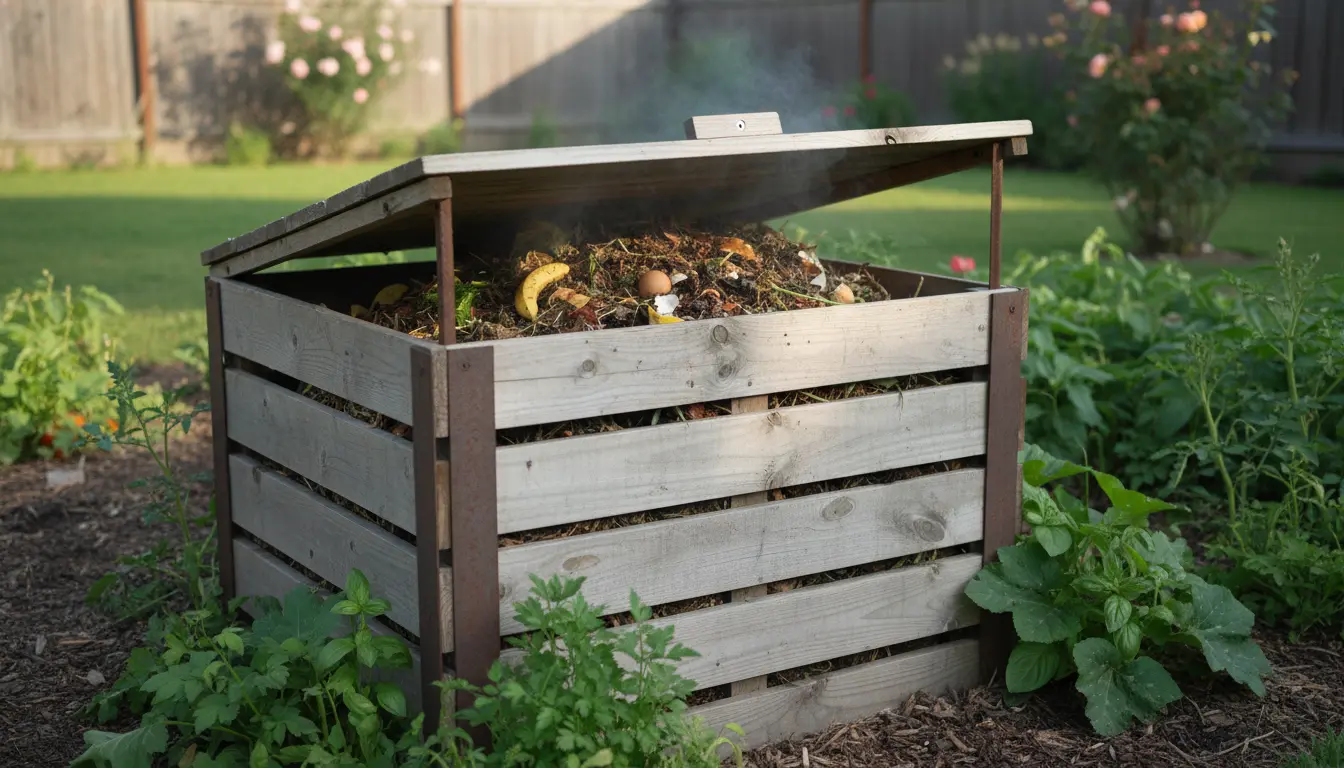
Why Start Home Composting
Home composting turns kitchen scraps and yard waste into nutrient-rich soil you can use for plants. It also reduces landfill waste and the greenhouse gases associated with trash transport.
This guide focuses on simple, practical steps you can use whether you have a backyard, balcony, or only a small kitchen bin.
Home Composting Basics
Compost is created by mixing carbon-rich materials (browns) with nitrogen-rich materials (greens) and allowing microbes to break them down. The right balance and regular maintenance produce compost quickly and without bad odors.
Key elements are airflow, moisture, and the correct mix of materials. With a basic bin and weekly checks you can maintain a healthy compost system.
Choosing a Bin for Home Composting
Select a bin based on space, budget, and how quickly you want compost. Options include open piles, tumblers, and closed bins for balconies.
Tumblers are good for small spaces and faster composting, while simple bins or piles work well if you have backyard room.
What to Compost
Keep a balance between greens (nitrogen) and browns (carbon). A good rule is roughly 2–3 parts browns to 1 part greens by volume.
- Greens: vegetable scraps, coffee grounds, fresh grass clippings, tea bags.
- Browns: dry leaves, shredded paper, cardboard, straw.
- Avoid: meat, dairy, oils, diseased plants, and pet waste for a typical home system.
Step-by-Step Home Composting Setup
Follow these steps to set up a reliable home composting system. Each step is simple and practical.
- Pick a bin and location: choose a shaded, level spot or a balcony-safe container.
- Layer the base: start with coarse browns to aid drainage and airflow.
- Add scraps: alternate greens and browns in layers and chop large pieces to speed decomposition.
- Moisten: aim for the texture of a wrung-out sponge—moist but not soggy.
- Turn or mix: every 1–2 weeks for active systems; less often for slower, passive piles.
Monitoring Your Compost
Check temperature, moisture, and smell. A healthy pile will be warm in the middle and smell earthy.
If the pile smells sour or like ammonia, add more browns and turn the material to increase airflow.
Compost can reach temperatures of 130–160°F (55–70°C) in active systems, which helps kill seeds and pathogens. Small backyard piles often stay cooler but still produce excellent compost given time.
Troubleshooting Common Problems in Home Composting
Most issues can be fixed by adjusting moisture, adding more of the right materials, or improving airflow. Identify the symptom and apply the relevant fix.
- Bad odor: add dry browns and turn the pile to introduce oxygen.
- Too dry and slow: add water and fresh greens to re-activate microbes.
- Fruit flies: cover fresh food scraps with browns and close gaps; use a closed bin if flies persist.
Speeding Up Compost
To accelerate decomposition, shred materials, maintain proper moisture, and turn regularly. A compost thermometer helps you track active microbial heat.
Adding finished compost or garden soil introduces beneficial microbes and speeds the process.
Using Finished Compost
Finished compost is dark, crumbly, and smells like earth. Use it as a soil amendment, top dressing, or potting mix component.
- Mix 10–30% finished compost into garden beds to improve soil structure.
- Top-dress lawns and container plants to add nutrients slowly.
- Use as seed-starting mix when blended with sterile materials at a lower percentage.
Real-World Example: Small Space Success
Case study: Maria lives in a third-floor apartment and started a small tumbler on her balcony. She used a 2:1 ratio of shredded cardboard to kitchen scraps and turned it every 5 days.
Within six months she produced enough compost to feed three large potted herbs and significantly reduced her weekly trash. Her key steps were regular turning and maintaining moisture.
Practical Tips for Long-Term Home Composting
Keep tools handy: a small scoop, garden fork, and compost thermometer help maintain the pile. Label bins if you manage multiple stages of composting.
Start small and scale up. If an aggressive system feels like too much work, switch to a slower, low-maintenance method and accept a longer timeline for finished compost.
Final Checklist for Home Composting
- Choose the right bin for your space and needs.
- Balance browns and greens; aim for moisture like a wrung-out sponge.
- Turn regularly for faster compost or use passive methods for low maintenance.
- Monitor smell and temperature to troubleshoot issues early.
With minimal equipment and a weekly routine, home composting becomes an easy, rewarding habit that benefits your plants and reduces waste.