
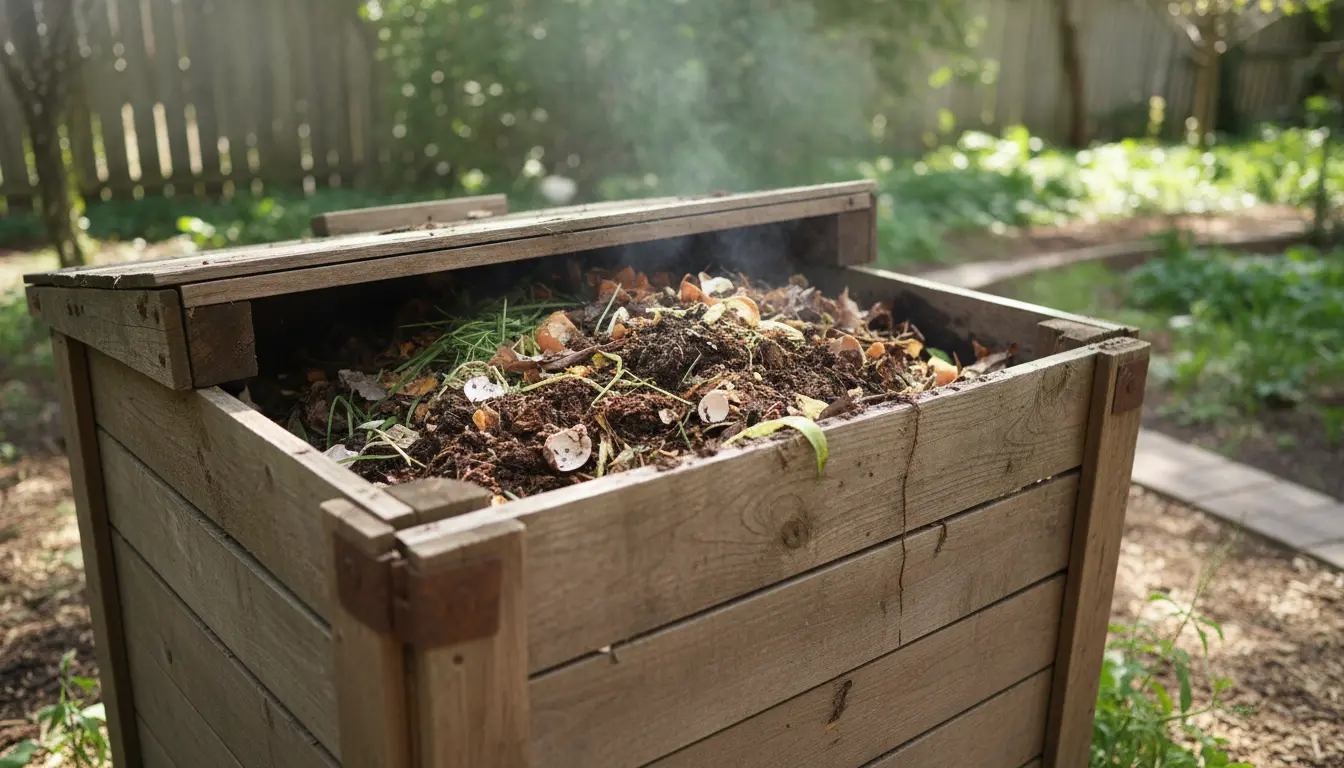
Composting at home turns kitchen scraps and yard waste into rich soil that improves plant growth and reduces trash. This guide explains practical steps you can follow this weekend to start composting at home with minimal cost and effort.
Why Composting at Home Matters
Composting reduces what you send to the landfill and lowers household greenhouse gas emissions. It also returns nutrients to garden soil, improving water retention and plant health.
By learning how to start composting at home, you save on store-bought soil amendments and create healthier beds for vegetables and flowers.
Basic Materials to Start Composting at Home
Compost needs a balance of carbon-rich and nitrogen-rich materials. Aim for a mix rather than only one type of material.
- Greens (nitrogen): vegetable scraps, fruit peels, coffee grounds, fresh grass clippings.
- Browns (carbon): dry leaves, shredded paper, cardboard, straw.
- Water: keeps the pile moist but not soggy.
A good rule is roughly 2 to 3 parts browns to 1 part greens by volume. Small pieces break down faster, so chop large items before adding them.
What to Avoid When Composting at Home
Avoid meat, dairy, oils, diseased plants, and pet waste in simple backyard compost systems. These can attract pests or spread pathogens.
Choosing a Bin or Pile
You can use a free pile, a purchased bin, or a DIY wooden or wire enclosure. The choice depends on space, aesthetics, and how quickly you want compost.
Bins retain heat and look tidy. Open piles are cheaper and work well in larger yards.
A Simple Step-by-Step Process to Start Composting at Home
Follow these core steps to begin a functioning compost system this week.
- Pick a spot: Choose a level, well-drained area with partial sun. Near a garden or kitchen door is convenient.
- Build a base: Lay coarse materials like twigs or straw to improve airflow at the bottom.
- Layer materials: Alternate browns and greens. Start with a layer of browns, then add greens, then a thin soil layer to introduce microbes.
- Maintain moisture: Keep the pile like a wrung-out sponge. Water during dry times and cover if heavy rain is expected.
- Turn the pile: Every 1–2 weeks turn with a pitchfork to introduce oxygen and speed decomposition.
- Harvest mature compost: After a few months to a year, finished compost will be dark, crumbly, and smell earthy. Use it in beds or as a top dressing.
Speeding Up Composting at Home
To accelerate decomposition, chop materials into small pieces, maintain good moisture, and turn frequently. Adding finished compost or garden soil introduces helpful microbes.
Common Problems and Quick Fixes
Even simple compost systems can encounter problems. Here are quick diagnostics and fixes.
- Smells bad: Add more browns and turn the pile. Bad odors mean too much nitrogen or poor aeration.
- Pile is dry: Add water and more greens. Mulch the top to retain moisture.
- Pile attracts pests: Bury food scraps under browns and avoid meat or oily foods. Use a closed bin if necessary.
- Too slow: Chop materials, turn more often, or add a compost activator (garden soil or finished compost).
Small Case Study: Apartment Balcony Compost Success
Maria, a renter with a small balcony, started composting at home using a 20-liter tumbler. She collected coffee grounds and vegetable peels in an indoor container and transferred them daily.
Within four months of regular turning and mixing in shredded paper, she produced usable compost for her potted herbs. Her plants grew stronger, and she reduced kitchen waste by nearly half.
This shows even limited space can support effective composting with the right tools and routine.
Tools and Extras That Help When Composting at Home
Basic tools make maintenance easier but are not strictly required. Consider these items:
- Pitchfork or compost aerator
- Compost thermometer (optional)
- Shredder or scissors for chopping materials
- Compost tumbler for easier turning
Quick Checklist to Start Composting at Home Today
- Choose a bin or pile location near the garden or kitchen.
- Collect a mix of browns and greens before you start.
- Layer materials and add a small amount of soil.
- Monitor moisture and turn the pile every 1–2 weeks.
- Watch for pests and odors and adjust ratios as needed.
Learning how to start composting at home is a practical way to cut waste and improve your garden. Start small, keep a routine, and within months you will have rich compost to feed plants and reduce your environmental footprint.