
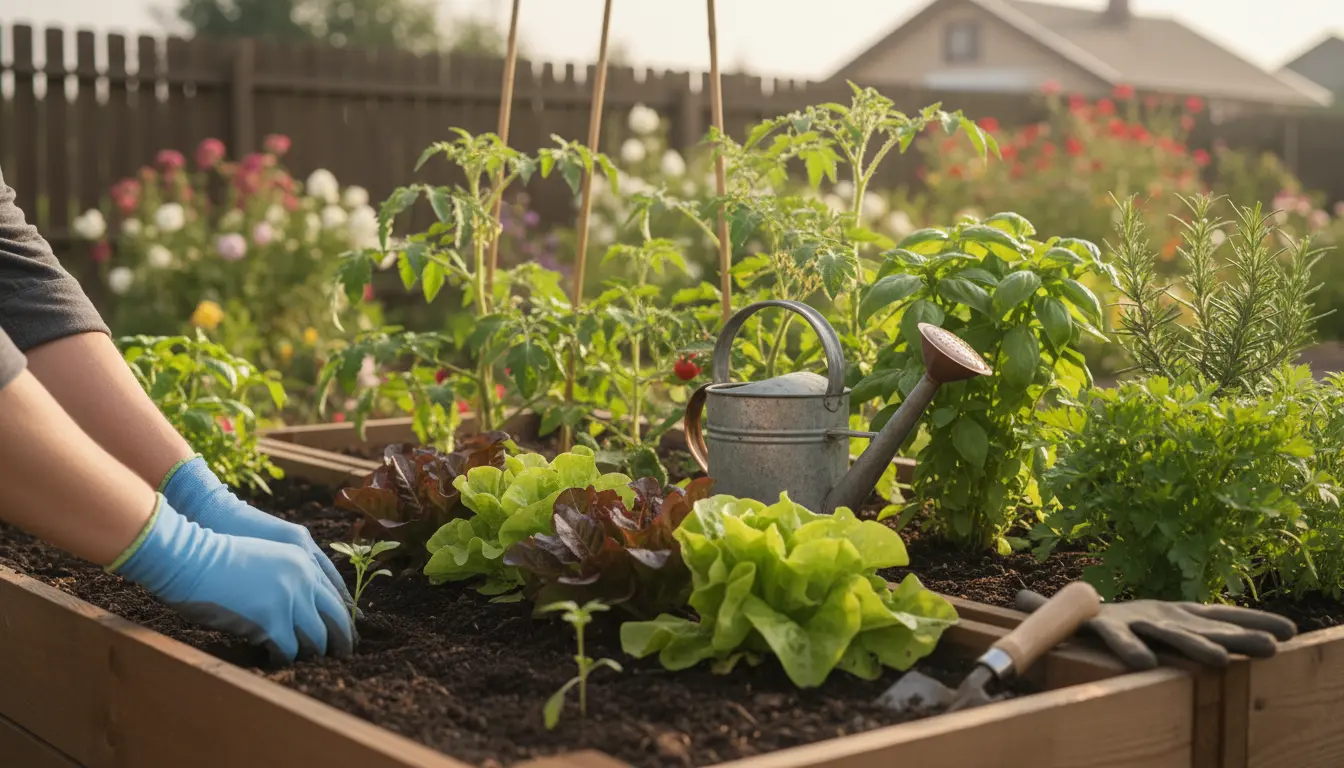
Starting a vegetable garden can be straightforward with the right plan and a few basic skills. This guide breaks down the essential steps so you can plant, maintain, and harvest successfully, whether you have a backyard or a balcony.
Why start a vegetable garden
A vegetable garden provides fresh produce, saves money, and improves wellbeing through outdoor activity. Growing your own food also gives you control over seeds, soil, and pesticides.
Before planting, decide what you want to grow and how much time you can commit to maintenance. That choice will shape your garden design and plant selection.
Planning your vegetable garden
Good planning avoids common mistakes like overcrowding or poor sunlight. A simple plan saves time and increases yields.
Choose the best location for a vegetable garden
Select a spot that gets at least 6 hours of direct sunlight each day. South-facing locations are usually best in temperate climates.
Consider access to water and how close the bed is to your kitchen. Ease of access increases the chance you’ll maintain the garden.
Select vegetables for your vegetable garden
Start with easy, productive crops like tomatoes, lettuce, beans, and herbs. Choose varieties suited to your zone and season.
Think about what your household actually eats. Grow a few favorites well rather than many crops poorly.
Decide layout for your vegetable garden
Choose raised beds, in-ground rows, or containers depending on space and soil quality. Raised beds warm faster and drain well.
Keep paths wide enough to reach the center of beds without stepping on soil. This prevents compaction and maintains root health.
Soil, compost, and planting basics for a vegetable garden
Healthy soil is the foundation of a productive vegetable garden. Spend time improving soil before planting; it pays off through the season.
Test and amend soil for your vegetable garden
Use a basic soil test to check pH and nutrient levels. Most vegetables prefer a pH between 6.0 and 7.0.
Add compost to increase organic matter and fertility. For heavy clay, mix in coarse sand and compost to improve texture.
Planting schedule for a vegetable garden
Follow local frost dates and seed packet instructions. Plant cool-season crops early and heat-loving crops after the last frost.
Stagger plantings of lettuce and other quick crops to extend the harvest period. Succession planting gives a steady supply rather than a single large crop.
Watering, maintenance, and pest control in a vegetable garden
Consistent watering is critical. Water deeply early in the morning to promote strong roots and reduce disease risk.
Use mulch to retain moisture and suppress weeds. Organic mulches like straw or shredded leaves also add nutrients as they decompose.
Pest and disease management for your vegetable garden
Inspect plants weekly and remove damaged leaves or infested plants promptly. Hand-pick large pests and use row covers for protection.
Rotate crops each year to reduce soil-borne diseases. Plant beneficial flowers and herbs to attract pollinators and predators of pests.
Harvesting and rotation in a vegetable garden
Harvest regularly to encourage continued production. Pick beans and peas when pods are full but still tender.
After harvest, remove plant debris and add compost. Practice crop rotation to maintain soil health and reduce pest cycles.
Plants in raised beds can produce up to 20% more yield because soils warm faster and drainage is better. Raised beds also reduce compaction from walking.
Case study: Small urban vegetable garden success
Emma, a city renter, converted two 4×2 ft raised beds on her balcony into a mixed vegetable garden. She chose compact tomato varieties, leaf lettuce, basil, and bush beans.
By testing soil, adding compost, and watering consistently with a simple drip hose, she harvested fresh salad greens and tomatoes from June to October. The garden paid for itself in saved grocery trips and provided seeds for the next season.
Quick checklist to start your vegetable garden
- Pick a sunny location with easy water access.
- Choose 3–6 crops you and your family will eat.
- Decide on raised beds, in-ground rows, or containers.
- Test soil and add compost or amendments as needed.
- Plant according to local frost dates and follow seed instructions.
- Mulch, water deeply, and inspect plants weekly.
- Harvest regularly and rotate crops each season.
Final tips for a successful vegetable garden
Start small and expand as you gain confidence. A few well-tended beds produce more than many neglected ones.
Keep simple records of planting dates and varieties. Notes help you improve choices and timing in following years.
With basic planning, good soil, and regular care, a productive vegetable garden is within reach. Begin with a manageable plot, and build skills each season.