
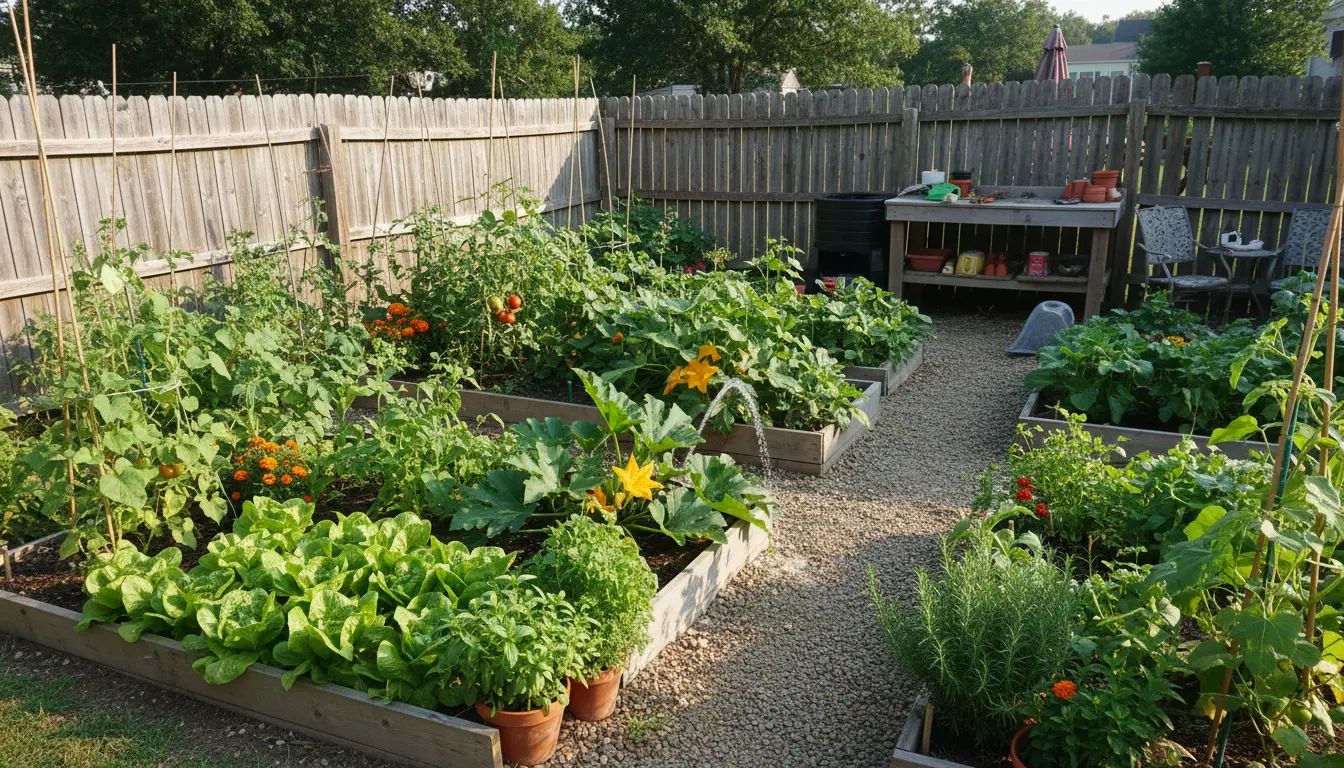
Preparing to Start a Vegetable Garden
Starting a vegetable garden begins with a clear plan. Decide what you want to grow, how much time you can commit, and where the garden will go.
Small, realistic goals help you succeed. A 4×8 foot raised bed can support a family of two with fresh salad greens and a few seasonal vegetables.
How to Start a Vegetable Garden: Site and Soil
Select a site with at least six hours of direct sunlight per day for most vegetables. Avoid low spots that collect cold air or water.
Test and improve your soil before planting. Good soil starts with structure, organic matter, and proper drainage.
Start a Vegetable Garden: Soil Testing and Amendment
Use a simple soil test kit or send a sample to a local extension service. Aim for a soil pH of 6.0–7.0 for most vegetables.
Amend soil with compost, aged manure, or peat-free alternatives. Work in 2–4 inches of compost before planting to improve fertility and moisture retention.
Choosing Crops for Your Vegetable Garden
Choose crops that match your climate, season, and taste preferences. Focus on high-yield, easy-care crops as a beginner.
- Fast wins: lettuce, radishes, spinach
- Reliable staples: tomatoes, peppers, bush beans
- Low-maintenance: Swiss chard, herbs, root vegetables
Start a Vegetable Garden: Crop Rotation and Spacing
Rotate crop families each year to reduce disease and pest build-up. Avoid planting the same family in the same bed two seasons in a row.
Follow seed packet or plant tag spacing to reduce stress and improve airflow. Overcrowding increases disease risk.
Planting and Watering Practices
Time planting to your local last frost date. Start seeds indoors for long-season crops or buy transplants from a reputable nursery.
Water deeply and infrequently rather than shallow daily watering. Aim for 1–1.5 inches of water per week, adjusting for rain and soil type.
Irrigation Tips for a Vegetable Garden
Use drip irrigation or soaker hoses to deliver water to the root zone while keeping foliage dry. Mulch with straw or wood chips to reduce evaporation and suppress weeds.
Morning watering is best to allow leaves to dry and limit fungal problems.
Maintenance: Weeding, Feeding, and Pest Control
Regularly remove weeds to reduce competition for nutrients and water. Use shallow cultivation to avoid disturbing plant roots.
Feed your vegetables with balanced organic fertilizers or compost tea during the growing season. Follow product instructions and avoid overfeeding.
Managing Pests and Diseases
Monitor plants weekly and remove damaged leaves promptly. Handpick larger pests and use insecticidal soap for soft-bodied insects when necessary.
Encourage beneficial insects with flowering herbs like dill, fennel, and marigolds. Consider floating row covers for early-season pest protection.
Harvesting and Continuous Production
Harvest crops at their peak for best flavor and to encourage further production. Frequent harvesting of greens and beans extends the harvest window.
Practice succession planting: sow small amounts every 2–3 weeks to maintain continuous yields through the season.
Did You Know?
Did you know that adding just 2 inches of compost to garden beds can increase vegetable yields and improve drought resistance? Compost boosts soil life and nutrient cycling over time.
Simple Tools and Supplies for New Gardeners
You don’t need a lot of gear to start. A few quality tools make tasks faster and more enjoyable.
- Spade or shovel for bed preparation
- Hand trowel and fork for planting and weeding
- Garden gloves and pruning shears
- Soaker hose or watering can for irrigation
Small Case Study: From Lawn to Lunchbox
Anna, a beginner gardener in Denver, converted a 10×4 foot patch of lawn into a raised bed. She amended the soil with two wheelbarrows of compost and planted tomatoes, lettuce, carrots, and bush beans.
By the second month she harvested salad greens twice weekly and stored excess basil for pesto. Her investment of two weekend afternoons produced produce worth an estimated $200 that season.
Quick Checklist to Start a Vegetable Garden
- Pick a sunny site and measure available space.
- Test soil and add compost to improve texture and fertility.
- Choose beginner-friendly crops suited to your climate.
- Plant at the right time and follow spacing guidelines.
- Water deeply, mulch, and monitor for pests.
- Harvest regularly and try succession planting.
Starting a vegetable garden is a practical, manageable project. With basic planning, soil preparation, and consistent care, you can produce fresh vegetables for your kitchen and build gardening skills season by season.