
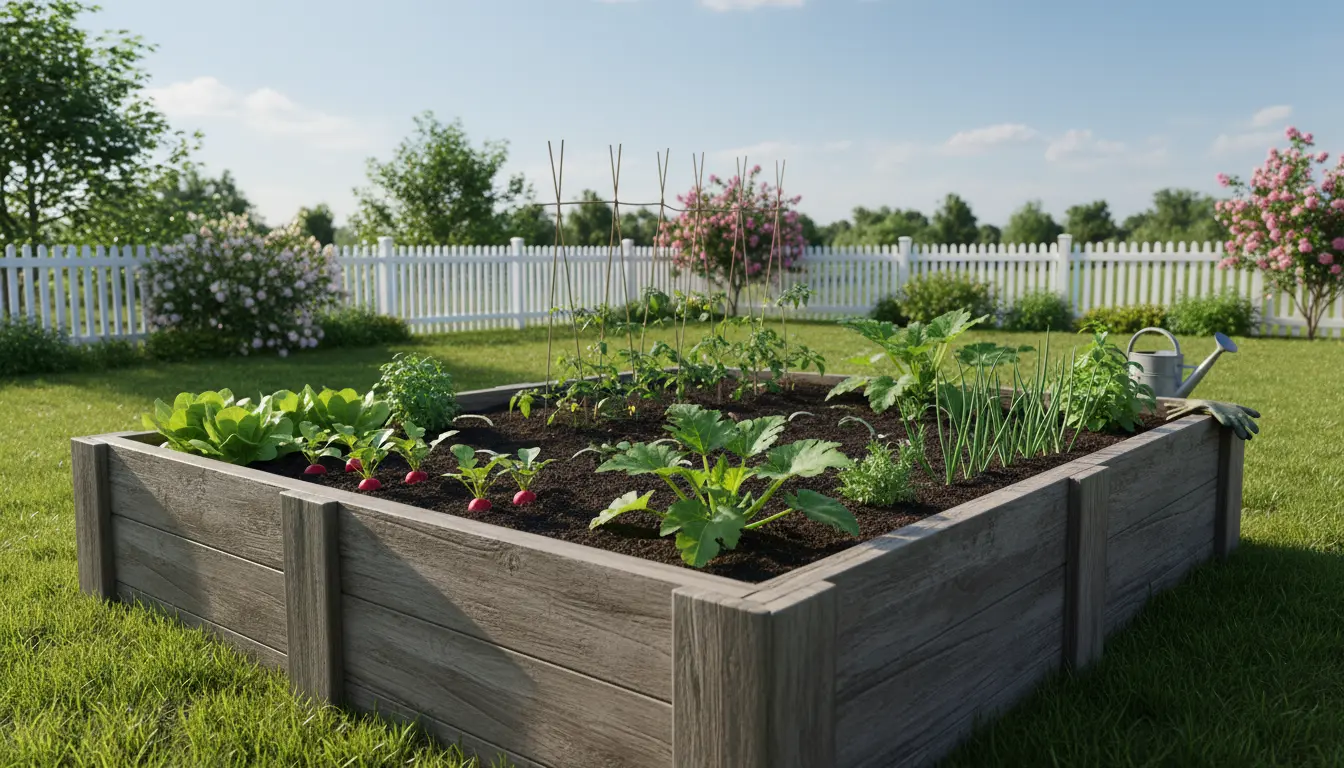
Starting a vegetable garden is a practical way to grow fresh food, save money, and learn a useful skill. This guide breaks down the process into clear steps you can follow whether you have a backyard, balcony, or containers.
How to Start a Vegetable Garden: Choose the Right Location
Location is the first decision for anyone who wants to start a vegetable garden. Vegetables grow best in places with consistent sunlight, good drainage, and easy access for watering and harvesting.
Sunlight and soil
Most vegetables need at least 6 to 8 hours of direct sun daily. Observe your space across a full day to find the sunniest spot.
Check drainage by digging a small hole and filling it with water. If it drains within a few hours, the site is likely suitable. If not, consider raised beds or containers.
Container and raised bed options
If you lack ground space, you can start a vegetable garden in containers or raised beds. They warm earlier in spring and allow you to control soil quality.
- Containers: Use pots with drainage holes for tomatoes, peppers, herbs.
- Raised beds: Easier on soil and back; ideal for root crops and leafy greens.
- In-ground: Best for long-term plantings and crops needing deeper soil.
How to Start a Vegetable Garden: Plan What to Grow
Good planning reduces wasted time and increases yields. Focus first on a few easy, high-reward vegetables suited to your region.
Choose beginner-friendly crops
Start with vegetables that are forgiving and productive. Examples include lettuce, radishes, green beans, cherry tomatoes, and herbs like basil.
Match crops to your season: cool-season (lettuce, spinach) and warm-season (tomato, pepper). Plant accordingly to extend harvests.
Layout and crop rotation
Design beds or containers so tall plants don’t shade short ones. Rotate families (e.g., nightshades, brassicas, legumes) each year to reduce pests and soil depletion.
How to Start a Vegetable Garden: Prepare Soil and Plant
Healthy soil is the foundation. Spend time testing and amending soil before planting to avoid common problems later.
Soil testing and amendment
Get a basic soil test from your local extension or use a home kit. Key metrics are pH and nutrient levels. Most vegetables prefer a pH around 6.0–7.0.
Amend heavy clay with compost and coarse sand for drainage. Add compost or well-rotted manure to improve fertility and structure.
Planting tips
Follow seed packet or plant tag spacing and depth. Overcrowding reduces airflow and increases disease risk.
- Seed starting: Start seeds indoors for long-season crops like tomatoes.
- Direct sowing: Sow beans, carrots, and radishes directly in soil.
- Transplanting: Harden off seedlings for a week before moving them outdoors.
How to Start a Vegetable Garden: Care and Maintenance
Regular care keeps plants productive. Focus on watering, mulching, feeding, and pest management.
Watering and mulching
Water deeply and less frequently to encourage strong roots. Early morning is the best time to water to reduce disease risk.
Apply 2–3 inches of organic mulch to conserve moisture, suppress weeds, and moderate soil temperature.
Pest control and fertilizing
Use physical barriers and hand-picking for many pests. Encourage beneficial insects with diverse plantings and flowers.
Fertilize based on soil test results. A balanced organic fertilizer or compost tea applied during active growth supports yields.
Harvesting, Records, and Season Extension
Harvest frequently to encourage production. Keep simple records of planting dates, varieties, and yields to improve each season.
Extend your growing season with row covers, cold frames, or containers that can move indoors during cold snaps.
Simple record-keeping
- Note planting and harvest dates.
- Track which varieties performed well.
- Record pest or disease issues and remedies used.
Beans and peas fix nitrogen in the soil, improving fertility for later plantings. Planting legumes as a cover crop or in rotation reduces the need for synthetic fertilizers.
Case Study: Small Urban Raised Bed
Maria, an apartment renter, started a 4×4 foot raised bed on her balcony. She chose cherry tomatoes, basil, lettuce, and bush beans for compact, continuous harvests.
She improved potting mix with compost, placed the bed for full sun, and used drip irrigation on a timer. In the first season she harvested weekly salads and two large harvests of tomatoes.
Key takeaways: choose compact varieties, amend soil with compost, and automate watering where possible.
Final Steps to Start a Vegetable Garden
Begin small, keep records, and experiment. Start with a few reliable crops, improve your soil, and tweak spacing and watering as you learn.
With simple planning and consistent care you can build a productive vegetable garden that fits your space and schedule.