
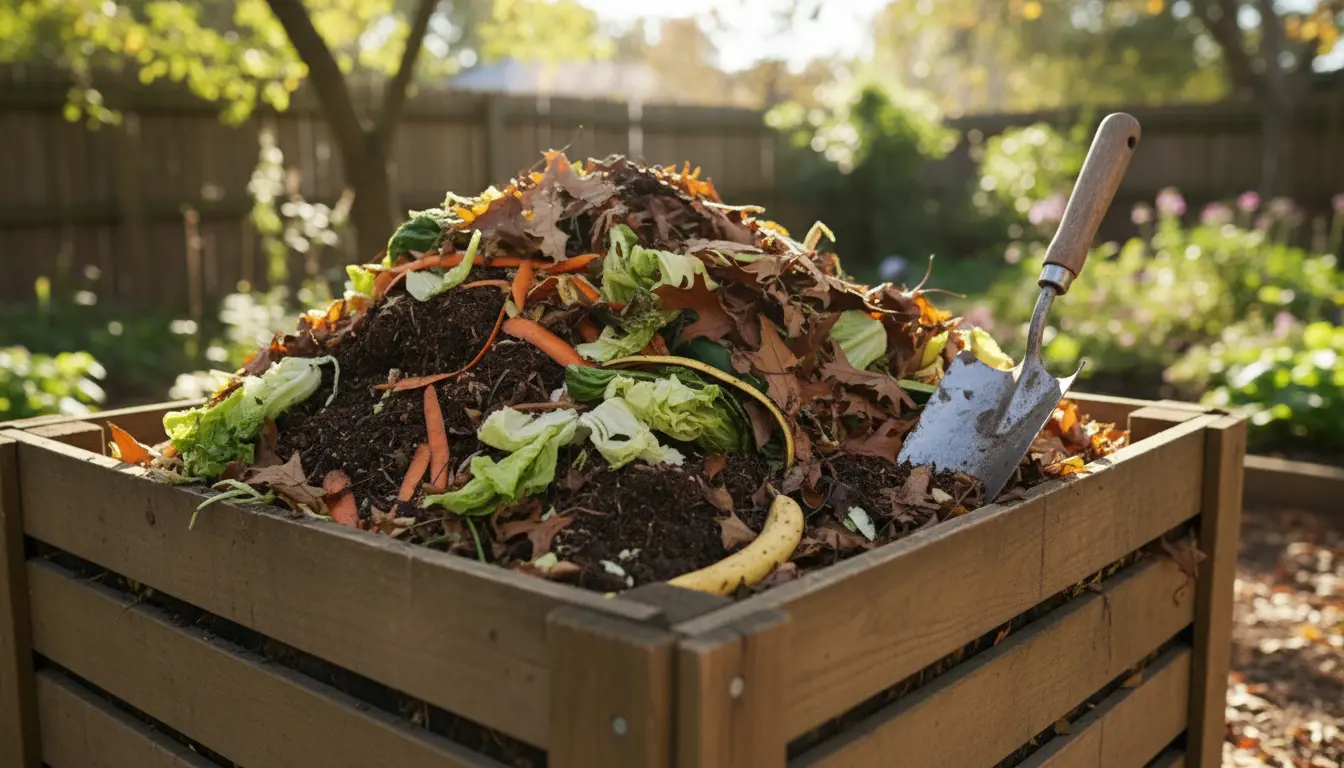
Home Composting Basics
Home composting turns kitchen scraps and yard waste into nutrient-rich soil. It reduces garbage, lowers methane from landfills, and improves garden health.
This guide explains composting for beginners in clear, practical steps you can start this weekend.
Why Try Home Composting
Composting saves money on soil amendments and reduces household waste. It also builds healthier soil structure and supports beneficial microbes.
Beginner-friendly systems require little space and can be scaled to balconies, patios, or backyards.
Composting for Beginners: What Materials to Use
Compost needs a balance of carbon (brown) and nitrogen (green) materials. Proper balance speeds decomposition and prevents odors.
Green Materials (Nitrogen)
- Fruit and vegetable scraps
- Fresh grass clippings
- Coffee grounds and tea leaves (no paper filters)
Brown Materials (Carbon)
- Shredded paper and cardboard (ink-free)
- Dry leaves and straw
- Twigs and small branches
Things to Avoid
- Meat, dairy, and oily foods (attract pests)
- Diseased plants or invasive weeds
- Pet waste from carnivores
Choose a Composting Method
Select a method that fits your space and schedule. Each method suits different lifestyles and effort levels.
Starter Methods for Beginners
- Open pile: Simple, low-cost—best if you have yard space.
- Compost bin: Contained, tidier, and faster than a pile.
- Worm bin (vermicomposting): Great for apartments and kitchens; uses worms to convert scraps quickly.
How to Build a Simple Backyard Bin
Follow these steps to set up a basic 3-foot bin that balances air, moisture, and materials.
- Pick a level, shaded spot with good drainage.
- Start with a 6-inch layer of coarse brown material for airflow.
- Add alternating layers: 2–3 inches green, then 3–4 inches brown.
- Keep the pile moist like a wrung-out sponge.
- Turn the pile every 1–2 weeks to add oxygen and speed up breakdown.
How Often to Turn and How Long It Takes
Turning the pile every 1–2 weeks helps it heat up and decompose faster. With regular turning, compost can be ready in 2–4 months.
Less active piles may take 6–12 months but still produce good compost.
Compost Maintenance Tips
Small adjustments keep your compost healthy. Monitor for smell, moisture, and pests.
- Smell: A sour or rotten smell means too much green material or poor aeration. Add browns and turn the pile.
- Moisture: Add water if dry. Add dry browns if too wet.
- Pests: Use a closed bin or bury food scraps under a layer of brown materials.
Seasonal Care
In winter, composting slows. Insulate with a thicker brown layer and keep adding materials. In summer, prevent overheating by turning more often and maintaining moisture.
Composting can reduce household waste by up to 30% and return nutrients to your garden without chemical fertilizers.
Using Finished Compost
Finished compost is dark, crumbly, and earthy-smelling. Use it to improve garden beds, potting mixes, or as a top dressing for lawns.
Common uses include:
- Mixing with garden soil at a 10–30% ratio
- Top-dressing vegetables and flower beds
- Making a simple compost tea: steep compost in water for a mild liquid feed
Real-World Case Study: Small Apartment Worm Bin
Example: Maria lives in a two-bedroom apartment and started a worm bin on her balcony. She used a plastic bin with holes, bedding of shredded cardboard, and 1,000 red wiggler worms.
After six months she had:
- Reduced kitchen waste by about 60%.
- Produced compost used for potted herbs and indoor plants.
- Spent about 30 minutes a week on maintenance—feeding scraps and harvesting castings.
Her success shows beginners can compost in limited spaces with minimal effort.
Quick Checklist to Start Today
- Choose a bin or method that fits your space.
- Collect greens and browns separately.
- Maintain moisture and turn regularly.
- Monitor for odors and pests; adjust balance as needed.
- Harvest finished compost and use it to enrich soil.
Final Tips for Composting for Beginners
Start small and learn by doing. Composting is forgiving—mistakes are fixable by adding browns, aerating, and adjusting moisture.
Join a local gardening group or online forum to ask questions and share progress. Practical experience will make your composting routine simple and rewarding.