
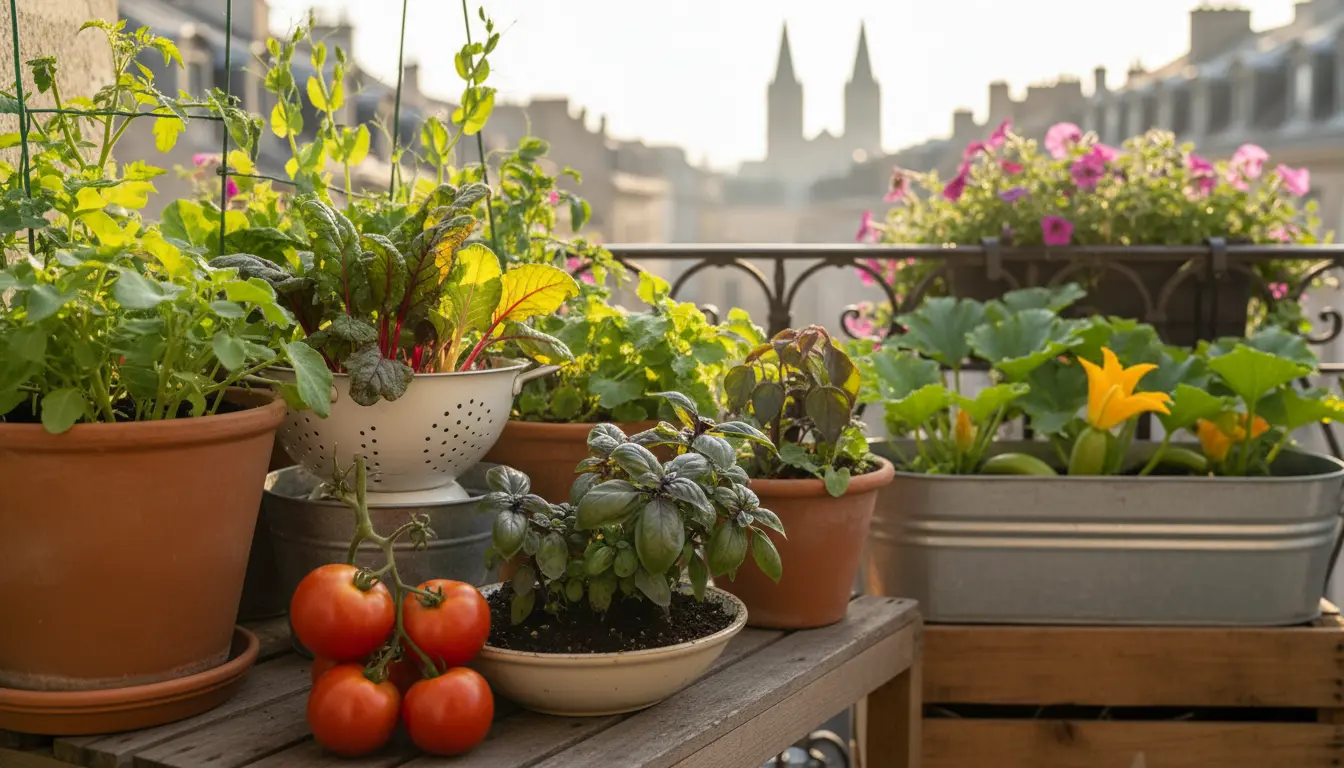
Container vegetable gardening makes growing food possible for people with limited space. You can use balconies, patios, and small yards to grow tomatoes, peppers, herbs, and leafy greens.
Why Choose Container Vegetable Gardening
Containers let you control soil, drainage, and placement. This reduces weeds and allows you to move plants to better light or protection during weather changes.
Containers are ideal for renters, beginners, and city gardeners who need flexible, low-maintenance solutions.
How to Choose Containers for Container Vegetable Gardening
Container material and size affect root growth, soil temperature, and water retention. Choose containers that match the vegetable’s mature size and root depth.
- Small pots (1–3 gallons): herbs, lettuce, baby greens.
- Medium pots (5–10 gallons): peppers, bush beans, dwarf tomatoes.
- Large containers (15+ gallons): indeterminate tomatoes, squash, potatoes.
Ensure containers have drainage holes. If using decorative pots without holes, either create holes or use them as cachepots with a draining inner container.
Soil and Fertilizer for Container Vegetable Gardening
Use a high-quality potting mix formulated for containers. Avoid garden soil alone because it compacts and drains poorly in pots.
Look for mixes with peat alternatives, perlite or vermiculite, and organic matter to balance drainage and moisture retention.
Feeding Schedule and Fertilizer Choices
Container plants use nutrients faster than garden beds. Use a balanced slow-release fertilizer at planting, then complement with liquid feed every 2–4 weeks during the growing season.
- Slow-release granular: Apply at planting per label instructions.
- Liquid fertilizer: Use half-strength for seedlings and full strength for mature plants.
- Organic options: Compost tea, fish emulsion, or seaweed extract.
Watering Techniques for Container Vegetable Gardening
Containers dry out faster than ground soil. Set a regular watering routine and check soil moisture daily during hot weather.
Water until you see runoff from drainage holes to ensure uniform moisture. In very hot conditions, water morning and evening or use drip systems and self-watering pots to maintain consistency.
Best Vegetables for Container Vegetable Gardening
Choose varieties suited to containers and your climate. Look for compact, bush, or patio types labeled for pots.
- Tomatoes: Patio or bush varieties, cherry tomatoes.
- Peppers: Bell and hot peppers do well in 5–10 gallon pots.
- Leafy greens: Lettuce, arugula, spinach in shallow pots.
- Herbs: Basil, parsley, chives, rosemary in small pots.
- Root crops: Radishes and baby carrots in deeper containers.
Pest and Disease Management in Container Vegetable Gardening
Containers reduce but do not eliminate pests. Inspect plants regularly for aphids, whiteflies, and fungal issues.
- Remove affected leaves and isolate infested pots.
- Use insecticidal soaps or neem oil for soft-bodied pests.
- Improve air circulation by spacing containers and pruning dense growth.
Seasonal Tips for Container Vegetable Gardening
Timing matters. Start cool-season crops in early spring and warm-season crops after the last frost date for your area.
Move containers to capture more sun in spring and to shade or protect them in the hottest weeks of summer. In cooler climates, use cloches, row covers, or bring pots indoors at night for tender plants.
Practical Setup: Step-by-Step for a Successful Start
- Choose a sunny spot with 6+ hours of direct light each day for most vegetables.
- Select containers sized to the plants you want to grow and ensure good drainage.
- Fill pots with a quality potting mix and add a slow-release fertilizer at planting.
- Plant seedlings or seeds following spacing recommendations on seed packets.
- Water deeply at planting, then establish a consistent watering and feeding schedule.
- Monitor pests and prune or stake plants as they grow.
Simple Layout Ideas
Group herbs in small pots at the front of a balcony rail. Put larger fruiting vegetables like tomatoes at the back where they can get support and sun.
Use trellises for vining plants to save floor space and improve airflow.
Real-World Example: Balcony Tomato Success
Case study: A two-person household on a third-floor apartment grew five patio tomato plants in 15-gallon containers on a sunny balcony.
They used a compost-based potting mix and slow-release fertilizer, watered daily in summer, and installed a simple tomato cage for support. The harvest was 40–50 cherry tomatoes per plant over the season.
Key takeaways: correct container size, regular watering, and staking improved yield and reduced breakage during wind events.
Common Mistakes to Avoid in Container Vegetable Gardening
- Using garden soil only, which leads to poor drainage and compaction.
- Under-sizing containers for mature plants, causing stunted growth.
- Infrequent watering or inconsistent feeding, reducing yields.
Final Checklist for Container Vegetable Gardening
- Sunny location with at least 4–6 hours of light for many crops.
- Appropriate container size and drainage.
- Quality potting mix and a feeding plan.
- Regular watering and pest checks.
- Support structures for heavy or vining crops.
Container vegetable gardening is a practical way to grow fresh produce in small spaces. With the right containers, soil, and routine care, you can achieve consistent harvests year after year.