
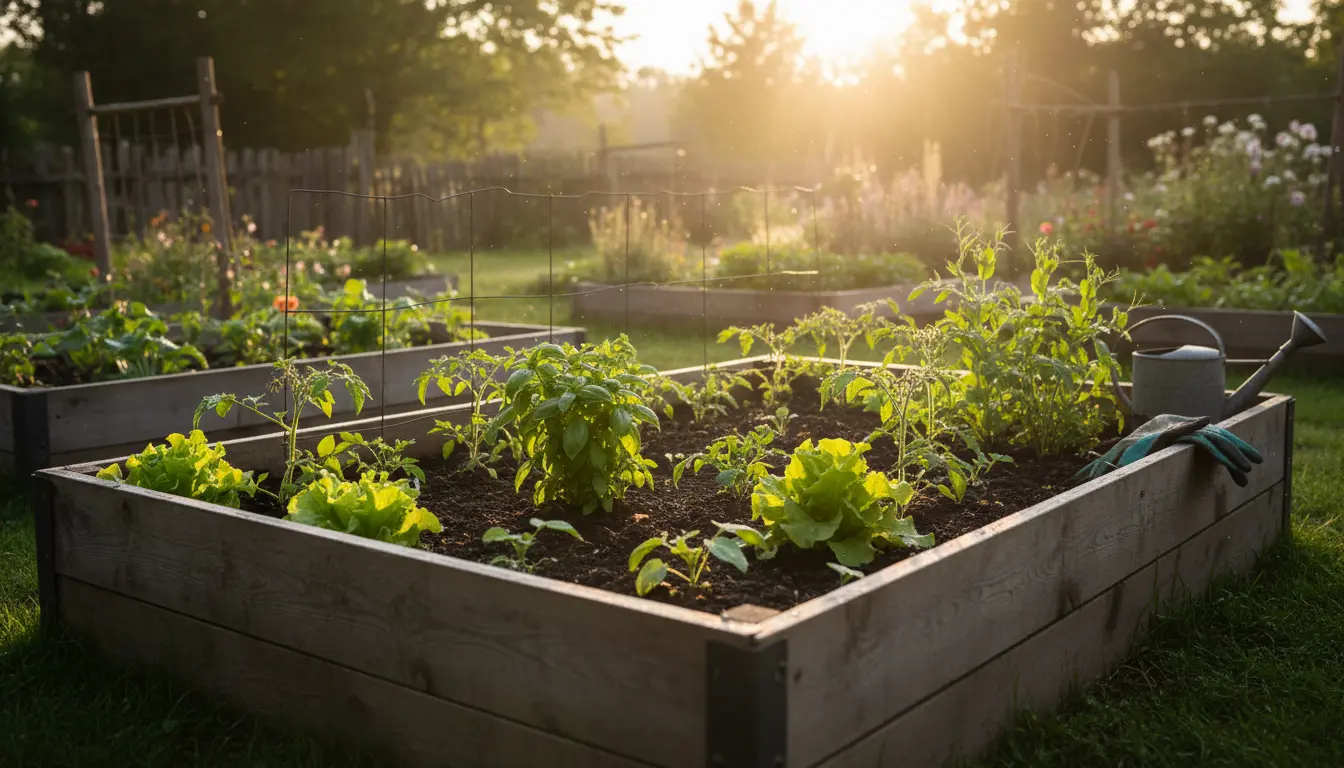
Starting a vegetable garden is a practical way to grow fresh food, save money, and enjoy time outdoors. This guide gives clear, actionable steps you can follow whether you have a small balcony or a backyard plot.
How to Start a Vegetable Garden: Plan and Prepare
Successful gardens begin with planning. Choose a spot with at least 6 hours of direct sunlight, easy access to water, and good drainage.
Consider these site factors:
- Sun exposure: Most vegetables need 6–8 hours of direct sun.
- Water access: Place beds near a hose or rain barrel.
- Soil and drainage: Avoid low spots that hold water.
- Visibility and protection: Keep the garden visible to deter pests and make maintenance easier.
Choose a Garden Type
Decide between in-ground beds, raised beds, or containers based on space and soil quality. Raised beds warm faster in spring and are easier to manage for beginners.
Simple pros and cons:
- In-ground: Lower cost, but requires good soil.
- Raised beds: Better control of soil quality, easier weeding.
- Containers: Best for balconies and patios, limited root space.
Soil Preparation When You Start a Vegetable Garden
Healthy soil is the foundation of productive gardens. Test or assess your soil before planting.
Basic soil steps:
- Test pH and nutrients with a kit or local extension service.
- Add organic matter: compost or well-rotted manure improves texture and fertility.
- Loosen compacted soil to at least 8–12 inches for root crops.
Soil Mix for Raised Beds
A commonly used mix is 40% topsoil, 40% compost, and 20% aeration material (peat moss or coconut coir and perlite). This provides both nutrients and drainage.
Which Vegetables to Plant for Beginners
Start with reliable, easy-to-grow crops. Fast results help maintain motivation.
Good starter vegetables:
- Lettuces and salad greens — quick harvests in 30–45 days.
- Radishes — very fast and forgiving.
- Cherry tomatoes — productive and space-efficient.
- Green beans — high yield with simple trellising.
- Zucchini — generous harvests from one plant.
Use Succession Planting
To maximize harvests, plant cool-season crops early, then follow with warm-season seedlings. Succession planting fills gaps and reduces downtime in beds.
Planting and Care Tips to Start a Vegetable Garden
Planting depth and spacing matter. Follow seed packet or plant tag directions for best results.
Watering and mulch guidelines:
- Water deeply once or twice a week rather than light daily sprinkles.
- Mulch with straw or shredded bark to conserve moisture and suppress weeds.
- Thin seedlings to recommended spacing to avoid crowding.
Pest Management and Fertilizing
Use physical barriers, hand-picking, and companion planting before chemical controls. Apply a balanced organic fertilizer at planting and side-dress with compost mid-season.
Seasonal Checklist: First Year When You Start a Vegetable Garden
Keep a simple calendar to track tasks. This reduces mistakes and improves yields.
- Early spring: Prepare soil, start seeds indoors if needed.
- Late spring: Transplant seedlings after last frost date.
- Summer: Mulch, water deeply, and monitor for pests.
- Autumn: Harvest remaining crops and add garden debris to compost.
- Winter: Plan next year and order seeds early.
Interplanting basil near tomatoes can improve tomato flavor and may help deter some insect pests. Companion planting helps biodiversity and can reduce disease pressure.
Small Real-World Example: One-Season Case Study
Maria, a city apartment renter, used three 2-foot containers on a sunny balcony to start her first vegetable garden. She chose cherry tomatoes, basil, and lettuce and used a commercial potting mix with added compost.
Results after one season:
- Multiple tomato harvests from two plants, enough for salads all summer.
- Continuous lettuce harvest using cut-and-come-again method.
- Low pest pressure thanks to regular inspection and hand removal.
Lessons learned: consistent watering and choosing compact varieties made container gardening simple and productive.
Common Mistakes and How to Avoid Them
- Overwatering: Water deeply and less often to encourage deep roots.
- Planting too close: Follow spacing guidelines to reduce disease and competition.
- Skipping soil improvement: Even small amounts of compost can dramatically boost productivity.
Final Steps After You Start a Vegetable Garden
Keep records of what varieties worked, planting dates, and harvest amounts. Small notes each week help improve next season’s plan.
Starting a vegetable garden is a learning process. With modest planning and regular care, most beginners see success in the first year.