
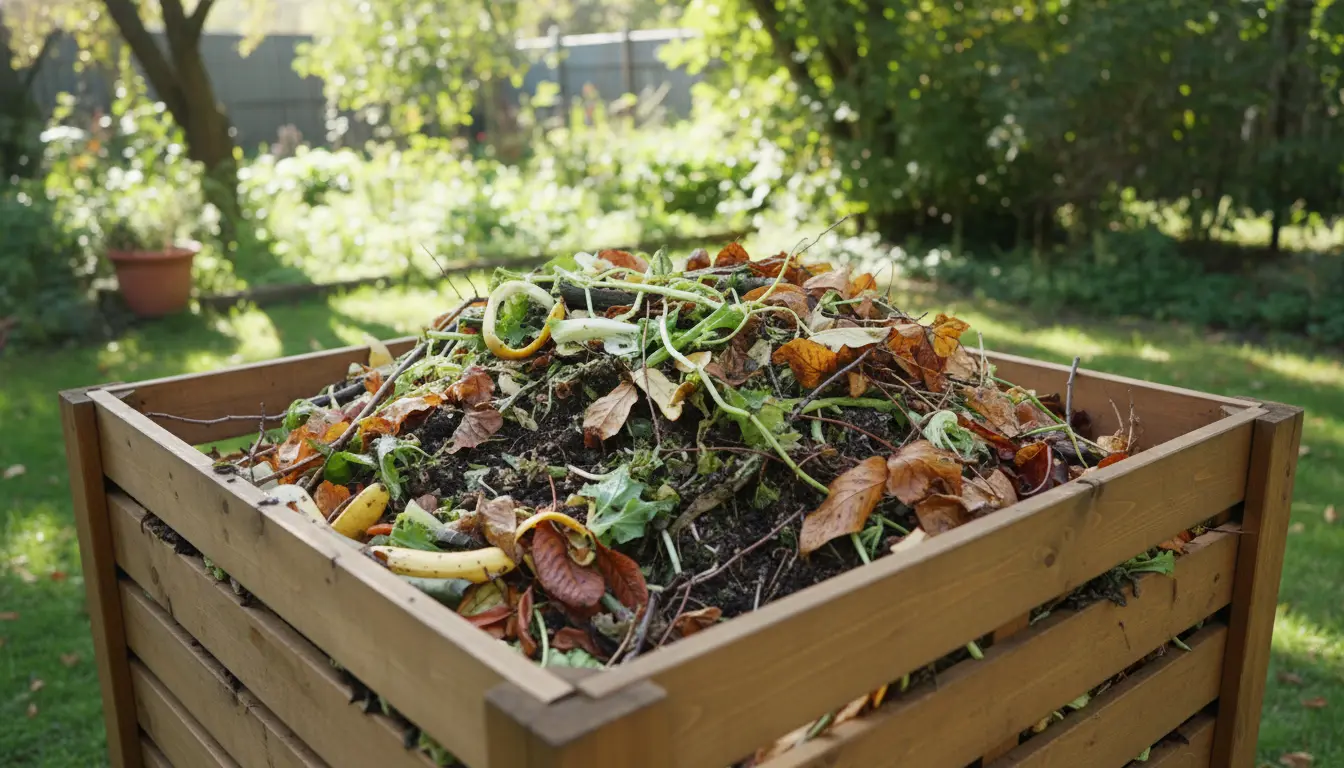
Why Home Composting Works
Home composting turns kitchen and yard waste into nutrient-rich soil amendment. It reduces landfill waste and improves garden soil structure.
This guide gives practical steps for beginners to start composting with minimal tools and time.
Basic Principles of Composting for Beginners
Composting relies on microbes to break down organic matter into humus. That process needs the right balance of carbon, nitrogen, moisture, and air.
Keep these simple targets in mind:
- Carbon to nitrogen ratio: aim for about 25–30 parts carbon to 1 part nitrogen.
- Moisture: the pile should feel like a wrung-out sponge.
- Oxygen: turn the pile every 1–2 weeks for faster decomposition.
What Counts as Green and Brown
Green materials provide nitrogen. Examples include fruit and vegetable scraps, coffee grounds, and fresh grass clippings.
Brown materials supply carbon. Examples include dried leaves, cardboard, straw, and shredded paper.
Choosing a Compost System
Beginners can pick from several low-effort systems depending on space and time.
- Open pile: simple, free, needs space and occasional turning.
- Bin system: tidy and faster; choose a plastic or wire bin with ventilation.
- Tumbler: sealed drum that you rotate; good for quicker results and smaller yards.
Recommended Tools and Supplies
Start with a few basic items to keep composting efficient.
- Pitchfork or garden fork for turning.
- Compost bin or wire cage.
- Chopping tool for shredding large materials.
- Thermometer (optional) to monitor temperature.
Step-by-Step: Start Your First Compost Pile
Follow these clear steps to build a balanced, active pile that decomposes well.
- Pick a dry, shaded spot close to a water source.
- Start with a 4–6 inch layer of coarse browns like twigs for airflow.
- Add a 2–4 inch layer of greens such as kitchen scraps.
- Alternate layers and sprinkle water to maintain moisture.
- Turn the pile every 1–2 weeks to introduce oxygen.
After 2–6 months of regular care, the material will look dark and crumbly—this is finished compost.
Troubleshooting Common Problems
Even simple systems can run into issues. Here are common problems and fixes.
- Smelly pile: add more dry browns and turn the pile to add air.
- Pile not heating: add more greens and ensure proper moisture.
- Too wet: mix in shredded cardboard or sawdust and cover to reduce rain exposure.
- Pests: avoid putting meat, dairy, or oily foods in the pile; use a closed bin if needed.
How to Use Finished Compost
Use finished compost to feed gardens, houseplants, or lawns. It improves soil fertility and water retention.
Application tips:
- Top-dress flower beds with a 1–2 inch layer.
- Mix into potting soil at 10–20% by volume.
- Add to vegetable beds in spring to boost nutrient content.
Small Real-World Case Study
Case: A two-person household in a suburban yard started a 3-bin system to compost food scraps and yard trimmings.
In the first year they diverted roughly 300 liters of kitchen waste and 200 liters of yard waste from the trash. After six months, they produced about 40 liters of finished compost and used it to top-dress their vegetable patch.
Benefits observed: reduced garbage volume, healthier tomato plants, and lower water needs in summer due to improved soil structure.
Tips to Speed Up Composting for Beginners
Want faster results? Try these practical techniques.
- Chop or shred materials before adding them.
- Maintain a pile size of at least 1 cubic meter for heat retention, or use a tumbler for smaller amounts.
- Monitor temperature: an active pile often reaches 40–60°C (104–140°F).
- Keep a good green-to-brown mix; roughly 2 parts brown to 1 part green by volume works well.
Safety and Local Rules
Check local regulations before starting, as some municipalities have rules about outdoor composting. Keep compost away from property lines and water sources to avoid runoff issues.
Use gloves when handling raw materials and avoid inhaling dust from dry browns like sawdust.
Next Steps and Long-Term Practice
Composting is a habit that improves with practice. Start small, track what you add, and adjust the balance as needed.
Over time you can expand the system, try vermicomposting with worms, or partner with a community garden to share finished compost.
Start today by saving your next week of kitchen scraps in a small container and add them to your chosen bin. You’ll quickly learn how your household’s mix of greens and browns behaves and how to adjust for better results.