
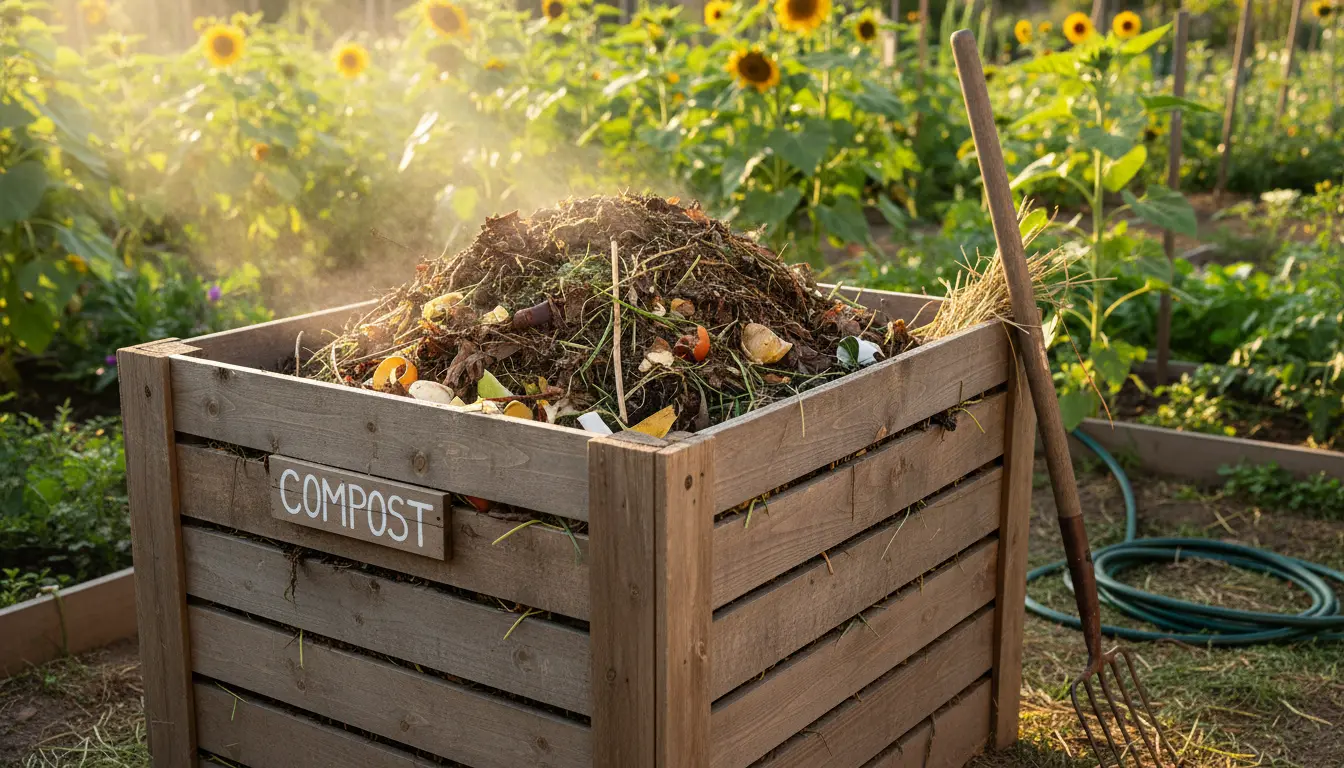
Why Home Composting Matters
Home composting diverts organic waste from landfills and turns it into nutrient-rich soil for gardens. It reduces methane emissions and lowers household waste disposal costs.
This guide on home composting for beginners explains practical steps you can take today. No specialist equipment or prior experience is required.
Choose the Right Composting Method
There are several ways to compost at home. Pick one that fits your space, time, and goals.
- Compost bin: Simple, contained option for yards and balconies.
- Tumbler composting: Speeds up decomposition with regular turning.
- Bokashi composting: Anaerobic system that works indoors and handles cooked food.
- Cold pile: Low-effort method suitable for large outdoor spaces.
How to Pick a Bin for Home Composting
Consider bin size, airflow, and accessibility. For small yards, a 50–100 gallon bin is often sufficient. For balconies, choose a compact tumbling unit or a Bokashi bucket.
Select a bin that allows easy turning and access to finished compost at the bottom.
Basic Components: Greens and Browns
Compost needs a balance of nitrogen-rich materials (greens) and carbon-rich materials (browns). This balance helps microbes break down organic matter efficiently.
- Greens: Kitchen scraps, grass clippings, fresh garden trimmings.
- Browns: Dry leaves, straw, shredded paper, small wood chips.
A good rule is roughly 2–3 parts browns to 1 part greens by volume. Adjust as needed to avoid odor or slow breakdown.
Step-by-Step: Start Composting at Home
Follow these practical steps to set up your first compost bin.
- Choose a location: Level ground with some shade is best.
- Layer the base: Start with coarse browns for drainage, like twigs or straw.
- Add materials: Alternate layers of greens and browns, keeping the pile moist but not soggy.
- Turn periodically: Use a pitchfork or tumbler to aerate the pile every 1–2 weeks for faster composting.
- Monitor: Check temperature and smell; a warm, earthy scent indicates healthy composting.
Common Mistakes and How to Fix Them
- Smelly compost: Add more browns and turn the pile to introduce oxygen.
- Pile too dry: Water lightly until moist like a wrung-out sponge.
- Slow decomposition: Chop materials smaller and maintain the green/brown balance.
Maintenance Tips for Home Composting
Consistent but simple upkeep keeps compost active and productive.
- Turn regularly to supply oxygen to microbes.
- Keep the pile moist but not waterlogged.
- Layer fresh browns to prevent compaction and improve airflow.
- Chop or shred large items to speed decomposition.
Food scraps and yard waste make up nearly 30% of household trash in many regions. Composting at home can significantly reduce this volume and return nutrients to the soil.
When Is Compost Ready to Use?
Finished compost is dark, crumbly, and smells earthy. Depending on method and conditions, this can take 2–12 months.
Use finished compost as a soil amendment, top dressing for lawns, or a potting mix ingredient when mixed with other materials.
Ways to Use Finished Compost
- Mix into garden beds at a 1–2 inch layer to improve structure and fertility.
- Top-dress potted plants or houseplants to provide slow-release nutrients.
- Create compost tea by steeping compost in water for a nutrient boost for plants.
Small Case Study: Family Reduces Waste and Improves Garden
A three-person household in Portland started a 70-gallon bin in spring. They added kitchen scraps, shredded paper, and yard trimmings following the 2:1 brown-to-green guideline.
Within six months they produced enough compost to top-dress a 10 x 10 foot vegetable bed. Their weekly garbage volume dropped by one-third, and their tomatoes produced earlier and larger yields the following season.
Safety and What Not to Compost
Avoid adding meat, dairy, diseased plants, and pet waste to a standard home compost bin. These items can attract pests or spread pathogens.
If you want to compost meat or pet waste, consider a heated composting system or specialized service that handles these materials safely.
Quick Checklist for Home Composting for Beginners
- Choose an appropriate compost method for your space.
- Balance greens and browns and maintain moisture.
- Turn the pile periodically to add oxygen.
- Monitor for odors and troubleshoot with more browns or aeration.
- Harvest finished compost and apply it to your garden.
Home composting for beginners is a low-cost, effective way to reduce waste and improve garden soil. Start small, maintain balance, and adjust practices to fit your home. With a little attention, you can convert kitchen and yard scraps into a valuable resource for plants.