
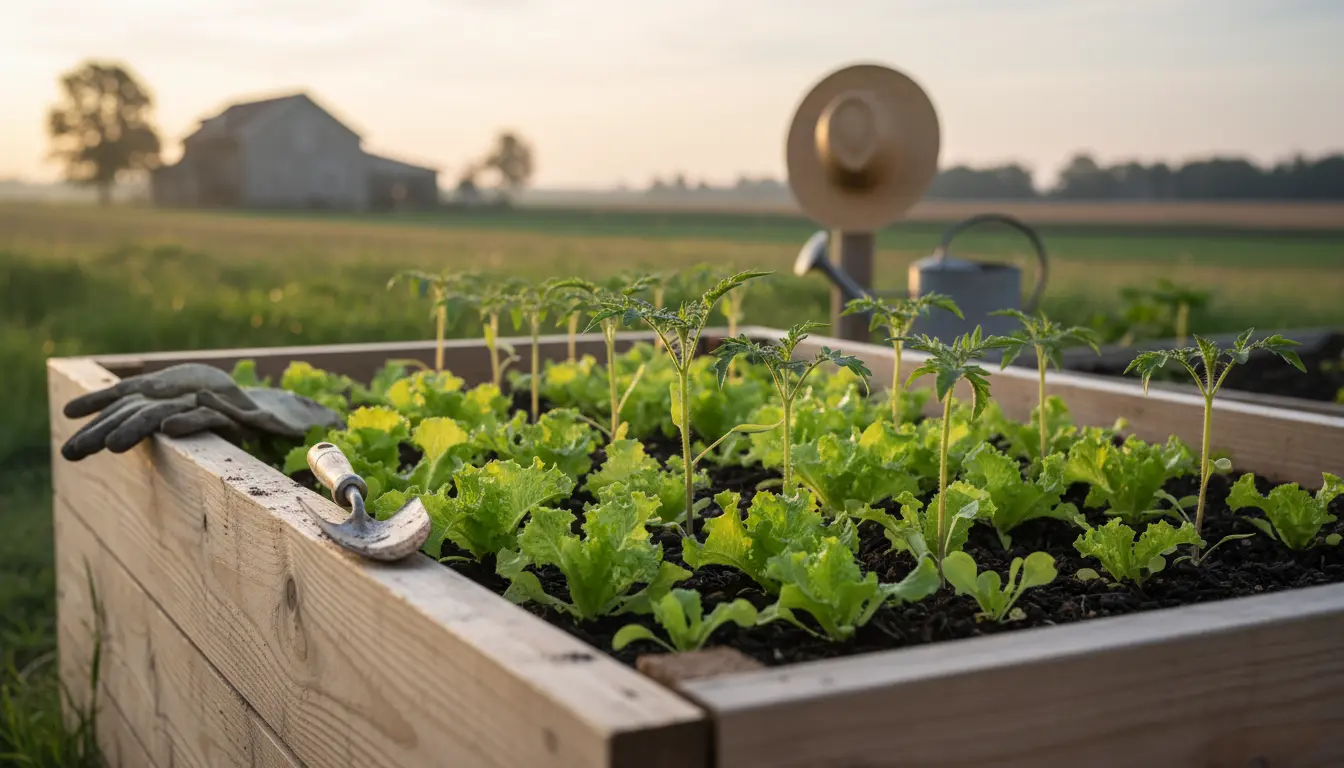
Starting a vegetable garden can be straightforward with the right steps. This guide gives practical, instructional advice you can apply in a small yard, raised bed, or balcony container.
Starting a Vegetable Garden: First Steps
Before you plant anything, assess space, sunlight, and time available. Good planning reduces wasted work and improves yields.
Starting a Vegetable Garden: Choose the Right Location
Vegetables need at least 6 hours of direct sunlight daily; more is better for tomatoes and peppers. Look for well-drained spots away from large tree roots and heavy shade.
Consider access to water and ease of reaching the bed for weeding and harvesting. If ground space is limited, containers or raised beds perform well.
Starting a Vegetable Garden: Decide What to Grow
Pick easy, fast crops first: lettuce, radishes, spinach, bush beans, and herbs are forgiving for beginners. Choose varieties suited to your climate and season.
- Cool-season: lettuce, spinach, radishes, peas.
- Warm-season: tomatoes, peppers, cucumbers, beans.
- Herbs: basil, parsley, chives are low maintenance.
Starting a Vegetable Garden: Soil, Beds, and Planting Basics
Healthy soil is the foundation of a productive garden. Focus on structure, drainage, and fertility before planting.
Starting a Vegetable Garden: Soil Preparation
Test your soil if possible to check pH and nutrient levels. Most vegetables prefer a pH between 6.0 and 7.0.
Improve soil with compost and aged organic matter. For heavy clay, add coarse sand and compost to improve drainage; for sandy soil, add compost to increase water retention.
Starting a Vegetable Garden: Planting Schedule and Spacing
Follow seed packet or plant label instructions for planting depth and spacing. Overcrowding causes poor air flow and higher disease risk.
Stagger plantings (succession planting) for continuous harvests: plant lettuce every 2–3 weeks rather than all at once.
Starting a Vegetable Garden: Watering, Mulching, and Maintenance
After planting, routine care keeps plants vigorous. Focus on consistent watering, weed control, and simple pest monitoring.
Starting a Vegetable Garden: Watering Tips
Water deeply and less frequently rather than shallow daily watering. Aim for moist soil to a depth of 6 inches for vegetables.
- Morning watering reduces evaporation and fungal risk.
- Drip irrigation or soaker hoses deliver water efficiently to roots.
Starting a Vegetable Garden: Pest and Disease Basics
Inspect plants regularly for insect damage, yellowing leaves, or fungal spots. Early detection prevents larger problems.
Use integrated pest management (IPM): hand-pick pests, encourage beneficial insects, rotate crops, and remove diseased plants promptly.
Companion planting—like growing basil near tomatoes—can improve flavor and help repel some pests naturally without chemicals.
Starting a Vegetable Garden: Containers, Raised Beds, and Small Spaces
Containers and raised beds are ideal for limited space or poor native soil. They warm faster in spring and offer better drainage.
Use a quality potting mix for containers, and choose deep pots for root crops like carrots and beets.
Starting a Vegetable Garden: Container Tips
Select containers with drainage holes and use a mix of compost, peat or coconut coir, and perlite for good structure. Water containers more often than ground beds.
Small Case Study: Starting a Vegetable Garden on a City Balcony
Maria, a city resident, turned a 6-foot balcony into a productive garden in one season. She began with three 12-inch deep containers and a 4×2-foot raised planter.
She chose compact tomato varieties, lettuce, chives, and dwarf bush beans. With morning sun and a drip line, her plants produced fresh salad greens for months.
Lessons from Maria: start small, pick compact varieties, and set up simple drip watering to save time and water.
Starting a Vegetable Garden: Common Mistakes and Quick Remedies
New gardeners often overwater, plant too densely, or ignore soil quality. These issues are easy to fix.
- Overwatering: Check soil moisture and reduce frequency; use mulch to retain moisture.
- Overcrowding: Thin seedlings to recommended spacing to improve air flow.
- Poor soil: Add compost and organic fertilizer before planting.
Starting a Vegetable Garden: Quick Starter Checklist
- Choose a sunny location with access to water.
- Test and improve soil with compost.
- Select easy crops for your season and space.
- Plan planting dates and spacing from seed packets.
- Mulch, water deeply, and check plants weekly for pests.
Starting a vegetable garden is a step-by-step process. With basic planning, good soil, and regular care, even a small garden can provide reliable, healthy produce.