
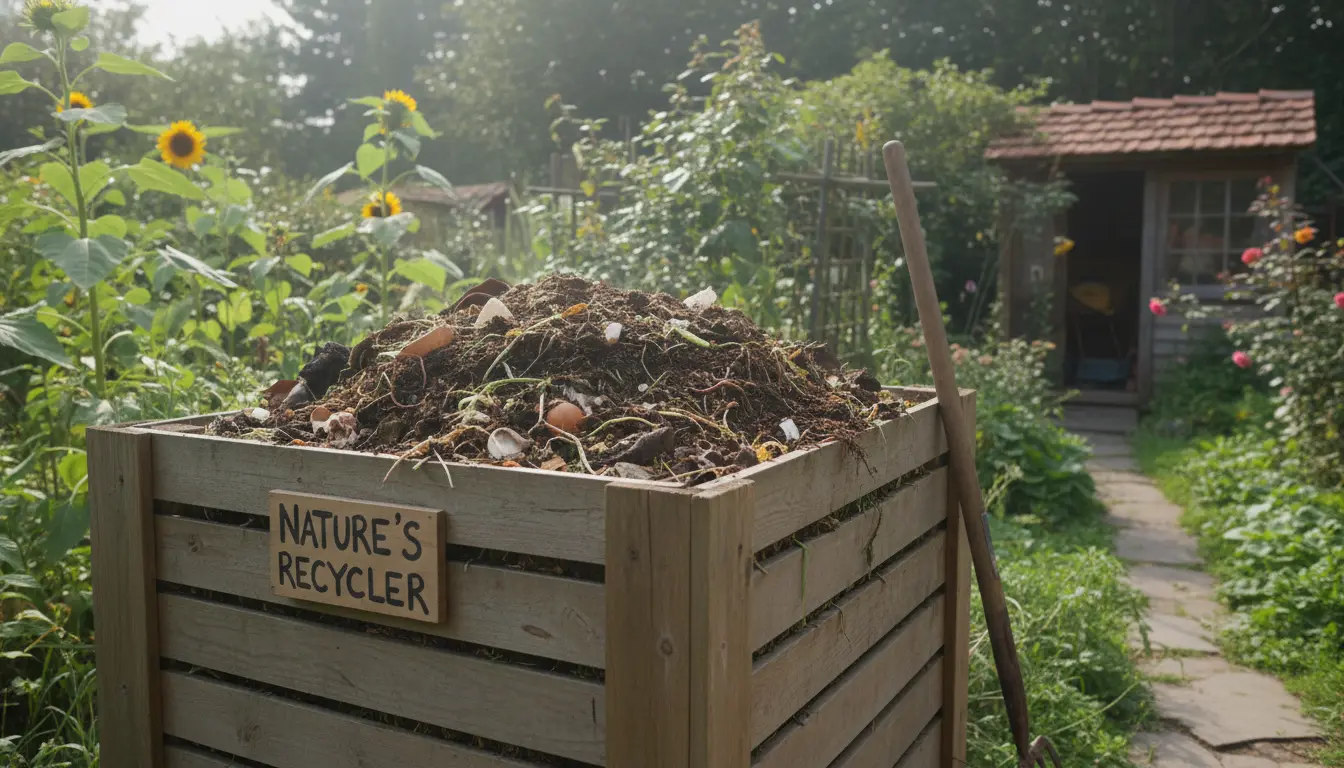
Why Home Composting Matters
Home composting turns kitchen scraps and yard waste into useful soil. It reduces landfill waste and provides nutrient-rich compost for gardens and potted plants.
This guide shows practical steps to start and maintain a compost system at home. You do not need special equipment or prior experience.
Getting Started with Home Composting
Choose a location that is level and has good drainage. A spot near the kitchen or garden saves carrying time and encourages regular use.
Select a bin type that fits your space and budget. Options include tumblers, stationary bins, or simple open piles for larger yards.
Materials for Home Composting
Compost needs a balance of carbon and nitrogen materials. Carbon helps structure the pile, while nitrogen speeds decomposition.
- Carbon (brown): dry leaves, straw, shredded paper, cardboard
- Nitrogen (green): vegetable scraps, coffee grounds, fresh grass clippings
- Avoid: meat, dairy, oily foods, diseased plants, pet waste
Layering and Mixing
Start with a layer of coarse material for airflow. Alternate thin layers of greens and browns to maintain balance.
Mix or turn the pile every 1–2 weeks to introduce oxygen. Turning speeds up decomposition and prevents bad odors.
Managing Moisture and Temperature
Compost should be as moist as a wrung-out sponge. Too dry and microbes slow down; too wet and the pile can smell.
Use a garden fork or a compost thermometer to check conditions. Ideal internal temperature for active composting is 120–160°F (50–70°C).
Tips to Adjust Moisture
- If too dry: add water and more greens, then mix.
- If too wet: add browns and increase turning frequency.
- Cover with a lid or tarp during heavy rain to prevent saturation.
Speeding Up Home Composting
To produce finished compost faster, aim for small particle sizes and regular turning. Shredding materials exposes more surface area to microbes.
Maintain a roughly 2:1 or 3:1 ratio of browns to greens by volume for steady activity. Add a thin layer of finished compost or garden soil to introduce microbes.
Tools That Help
- Pitchfork or compost aerator for turning
- Compost thermometer to monitor temperature
- Shredder or scissors for breaking down large pieces
Composting can reduce household waste by up to 30 percent. Gardeners also report improved soil water retention and higher plant yield when using compost.
Troubleshooting Common Issues in Home Composting
Bad smells usually mean too much moisture or not enough oxygen. Turn the pile and add dry browns to correct odors.
Slow decomposition can be due to low temperature, large pieces, or imbalance of materials. Chop or shred bulky items and adjust layers.
Pests and Rodents
To deter pests, avoid adding meat, dairy, or oily foods. Use a closed bin or wire mesh around the base if rodents become a problem.
Freeze smelly scraps until you are ready to add them, or bury kitchen scraps deep within the pile to reduce attraction.
Using Finished Compost
Compost is ready when it looks dark, crumbly, and smells earthy. This can take from a few months to a year, depending on conditions.
Apply compost as a top dressing, mix it into potting soil, or work it into beds before planting. Use a thin layer around existing plants to improve soil health.
How Much Compost to Use
- Vegetable beds: 1–3 inches incorporated into the topsoil annually
- Flower beds and lawns: 0.25–0.5 inches as a top dressing
- Houseplants: mix 10–30% compost into potting soil
Small Real-World Case Study
Case Study: Sarah in Portland started with a 3×3 ft stationary bin and kitchen caddy. She layered food scraps with shredded cardboard and garden trimmings.
By turning the pile every 10 days and keeping it moist, Sarah produced usable compost in six months. She now uses it to top-dress raised beds and reports healthier tomato plants and fewer watering needs.
Simple Weekly Routine for Home Composting
- Empty kitchen caddy into the bin when half full.
- Add a handful of shredded browns each time you add greens.
- Check moisture and turn the pile once a week.
- Record progress and temperature if actively composting.
Final Tips for Successful Home Composting
Start small and learn as you go. Composting is forgiving and improves with experience.
Keep a simple balance of materials, manage moisture and airflow, and use finished compost to close the loop on organic waste.
If you follow these basic steps, home composting will become a low-effort, high-benefit routine for your household and garden.