
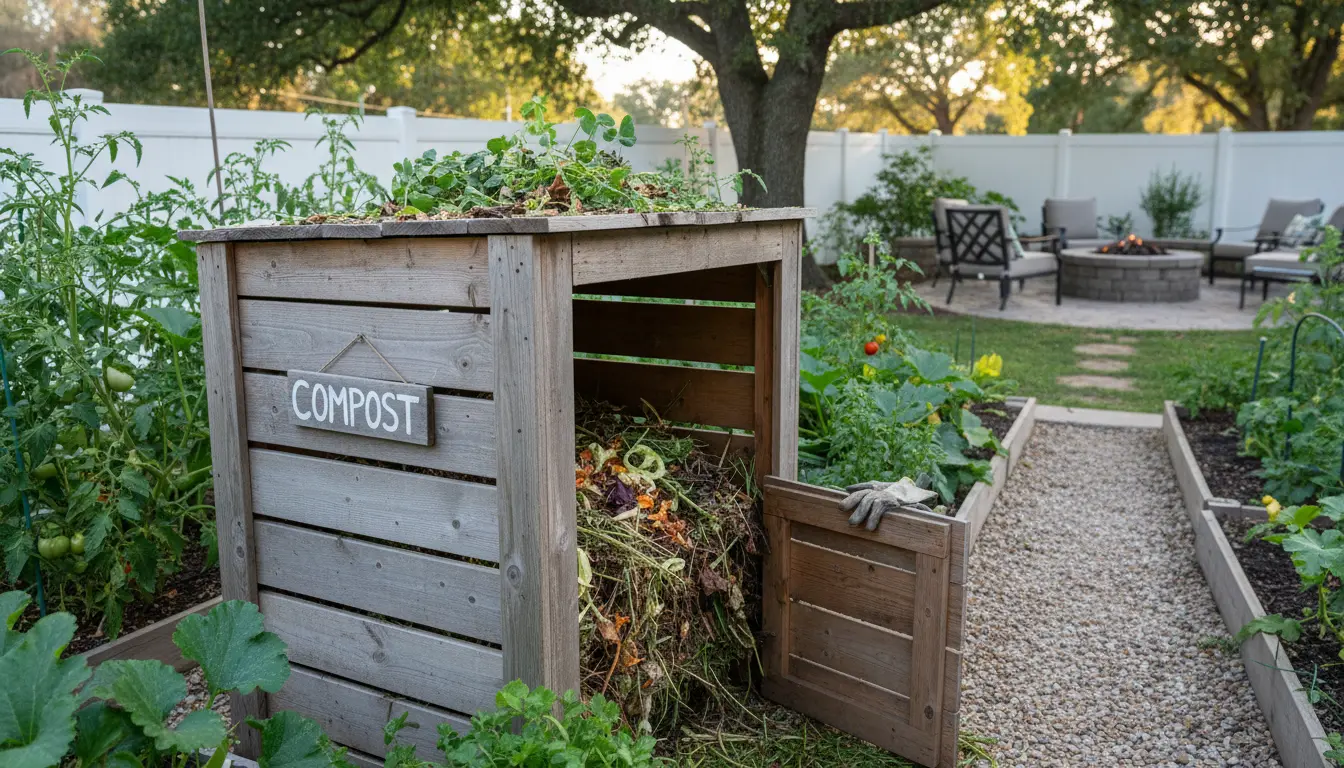
Composting at home turns kitchen scraps and yard waste into rich soil that helps plants thrive. This guide explains simple, reliable steps so anyone can start composting and get consistent results.
Why choose home composting for beginners
Home composting reduces household waste and returns nutrients to your garden. It also lowers landfill contributions and can save money on soil amendments.
Beginners benefit from easy methods that require low time and cost while still producing usable compost in months.
Key benefits of home composting for beginners
- Reduces food and yard waste
- Improves soil structure and fertility
- Reduces need for chemical fertilizers
- Suitable for yards, balconies, and apartments (with small systems)
Basic principles you need to know
Compost breaks down when microbes have the right balance of carbon, nitrogen, moisture, and air. Think of these as the basic ingredients your compost needs.
Keeping conditions balanced speeds decomposition and prevents odors or pests.
Materials and the carbon to nitrogen ratio
Use “greens” for nitrogen and “browns” for carbon. Aim for roughly a 25–30:1 carbon to nitrogen (C:N) ratio for efficient breakdown.
- Greens (nitrogen): fruit and vegetable scraps, coffee grounds, fresh grass clippings
- Browns (carbon): dry leaves, shredded cardboard, straw, paper
Step-by-step setup for home composting for beginners
Choose a container, collect materials, and manage moisture and aeration. Start small and scale up as you learn.
1. Pick a compost method and container
Options include a simple bin, a tumbler, or a worm (vermicompost) system. For many beginners, a closed bin or tumbler is least work and prevents animals.
- Backyard bin: inexpensive and holds larger volumes
- Tumbler: easy turning, cleaner and faster
- Worm bin: ideal for apartments and small volumes
2. Build layers and add materials
Start with a layer of coarse browns (twigs or straw) to help drainage. Then alternate greens and browns. Aim to add 2–3 parts browns to 1 part greens by volume if you don’t know exact C:N.
3. Maintain moisture and aeration
Compost should feel like a damp sponge. If it’s soggy, add browns and mix. If it’s dry, add water and more greens. Turn or aerate every 1–2 weeks to add oxygen and speed decomposition.
4. Monitor temperature and timing
Hot composting (active, above 40–60°C) breaks material down in weeks. Cold composting takes months but needs less turning. Beginners often start with cold or moderate systems and progress to hot methods.
Troubleshooting common problems
Odd smells, pests, or slow decomposition are usually signs of imbalance. Adjust one variable at a time to identify the issue.
Smells and pests
- Rotten odor: add more browns and turn to improve aeration.
- Fruit flies: cover fresh food waste with a layer of browns or bury scraps deeper.
- Rodents: use a closed bin with fine mesh and avoid putting meat, bones, or oily foods in the compost.
Slow decomposition
Improve particle size by chopping or shredding materials. Increase moisture slightly and turn more often. Adding a handful of finished compost can introduce helpful microbes.
Compost can hold up to 20 times more water than sand, helping gardens withstand dry spells while improving soil structure.
How to know compost is ready
Mature compost is dark, crumbly, and smells earthy. Most recognizable pieces of the original materials are gone or broken down into small fragments.
Typical timelines: cold systems 6–12 months, active hot systems 2–3 months. Worm compost may be ready in 2–4 months depending on inputs and care.
Using finished compost
- Top-dress garden beds with a 1–3 inch layer
- Mix into potting soil at 10–30% by volume for potted plants
- Use as a seed starting amendment at lower ratios (5–10%)
Small real-world example or case study
Case study: A suburban family of four used a 200-liter tumbler and a weekly kitchen-scraps routine. They added dry leaves and shredded cardboard monthly and turned the tumbler twice a week.
After four months, their compost was dark and crumbly. They used a 2-inch top-dressing on vegetable beds, which noticeably improved tomato yields that season. Their kitchen waste output to the curb reduced by about 40%.
Quick tips for success with home composting for beginners
- Chop materials into small pieces to speed breakdown
- Keep a small kitchen container with a lid for scraps and empty it regularly into the bin
- Balance greens and browns; when in doubt add browns
- Avoid meat, dairy, and oily foods unless you have a secure hot compost system
- Record simple notes (what you added, when you turned) to learn what works
Starting home composting for beginners is low-cost and scalable. With a basic understanding of materials, moisture, and aeration, anyone can convert household waste into valuable soil for gardens and potted plants.