
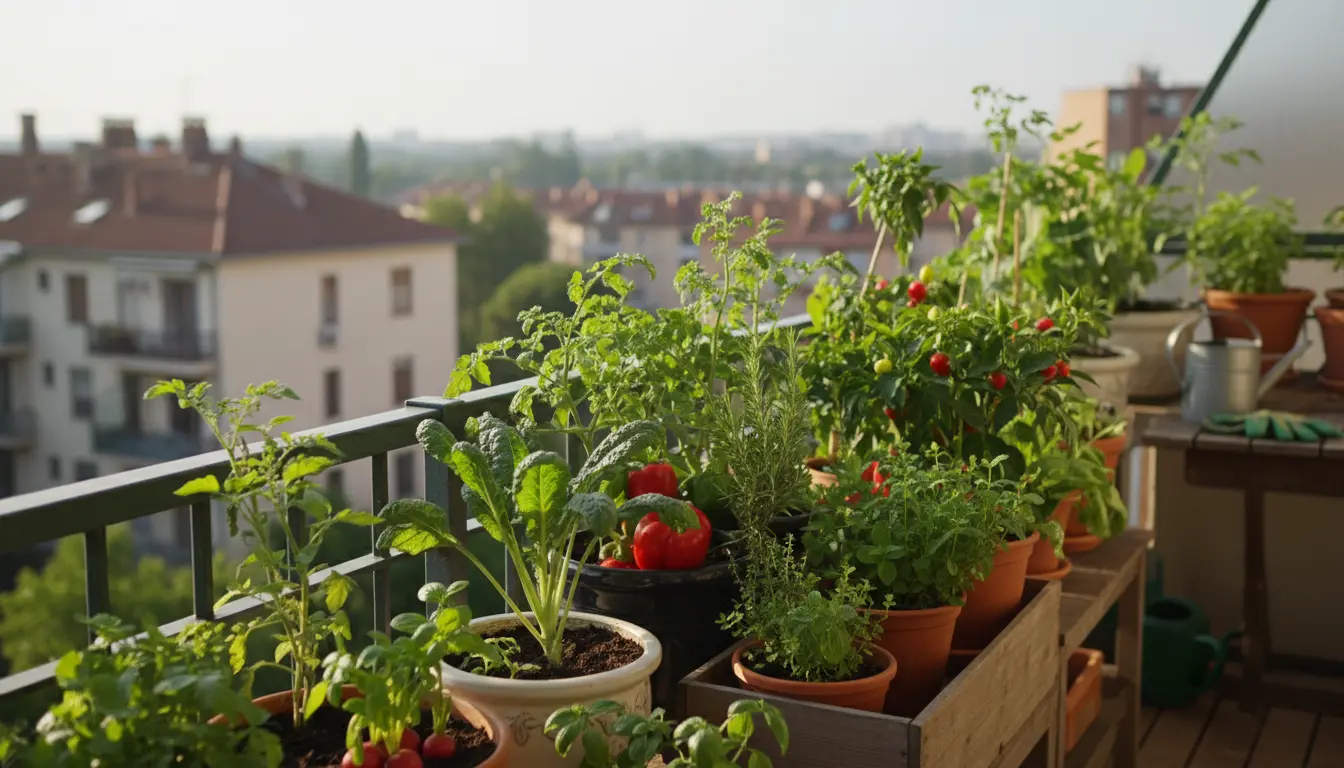
What is container gardening for beginners and why it works
Container gardening uses pots, tubs, or other containers to grow plants instead of planting directly in the ground. It is ideal for small spaces, balconies, patios, and renters who cannot modify soil.
This method gives control over soil, drainage, and plant placement. For beginners it reduces weed pressure and simplifies pest management.
Choose the right containers for container gardening for beginners
Select containers with drainage holes and enough volume for root growth. Materials include plastic, terracotta, wood, and fabric; each affects moisture and temperature differently.
Consider these guidelines:
- Small herbs: 6–8 inch pots.
- Leafy greens: 10–12 inch pots.
- Tomatoes or peppers: 18–24 inch pots.
- Root crops like carrots: deep, narrow containers at least 12 inches deep.
Soil and potting mix for container gardening for beginners
Use a loose, well-draining potting mix made for containers. Avoid garden soil alone because it compacts and holds too much water.
Look for mixes containing peat or coco coir, perlite or vermiculite, and compost. You can add slow-release fertilizer or use a liquid feed later in the season.
Plant selection and placement
Start with easy, fast-growing plants to build confidence. Good beginner choices include basil, lettuce, cherry tomatoes, radishes, chives, and nasturtiums.
Match plant size to container size and light conditions. Put sun-loving plants in the brightest spot and shade-tolerant plants where light is limited.
Sun and light basics
Most edible plants need 6+ hours of sunlight. If you have less light, focus on herbs and leafy greens that tolerate partial shade.
Watering and drainage tips
Watering is the most common challenge in container gardening for beginners. Containers dry faster than ground soil, so check moisture daily in hot weather.
Follow these simple rules:
- Water when the top 1–2 inches of mix are dry.
- Water thoroughly until water runs from drainage holes.
- Use saucers sparingly; remove standing water to avoid root rot.
Feeding and fertilizing
Container plants rely on the potting mix for nutrients, so they need regular feeding. Use a balanced, water-soluble fertilizer every 2–4 weeks or a slow-release granule at planting.
Signs of nutrient deficiency include yellowing leaves and poor growth. Adjust feeding based on plant type and growth rate.
Pest and disease management
Keep plants healthy to reduce pest problems. Inspect leaves regularly and remove dead or infested parts quickly.
Natural controls include handpicking pests, using insecticidal soap, and encouraging beneficial insects like ladybugs.
Seasonal care and rotation
Change crops with the seasons: cool-season crops in spring and fall, warm-season crops in summer. Rotate plant families between seasons to lower disease risk.
Overwinter tender plants indoors or replace them with cold-tolerant varieties in fall.
Common mistakes to avoid in container gardening for beginners
- Using garden soil that compacts and drains poorly.
- Choosing containers that are too small for the plant’s mature size.
- Overwatering or leaving containers without drainage.
- Ignoring light requirements and crowding plants.
Most herbs grow well in containers with only 6 to 8 inches of soil depth, making them perfect for windowsills and small balconies.
Simple step-by-step plan to start
- Pick a sunny spot and measure available space.
- Choose appropriately sized containers with drainage.
- Fill with a quality potting mix and plant seedlings or seeds.
- Water thoroughly and set a watering schedule.
- Fertilize and monitor for pests as plants grow.
Small case study: Balcony tomatoes in a 4th-floor apartment
Maria, a beginner gardener, used two 20-inch fabric pots on her sunny balcony. She filled them with commercial potting mix, planted two determinate cherry tomato seedlings, and used a slow-release fertilizer at planting.
She watered deeply every 2–3 days in summer and pruned lower leaves. By mid-summer she harvested five to eight small bunches of tomatoes weekly. The cost was under $50 for pots and soil, and the plants produced for three months.
Quick troubleshooting checklist
- Yellow leaves: check watering and nutrient levels.
- Wilting in midday heat: increase watering frequency and add shade cloth if needed.
- Pests on leaves: remove by hand and apply insecticidal soap if infestation grows.
Next steps and resources
Start small with one or two containers to learn watering and feeding routines. Join local gardening groups or online forums for plant-specific tips and seed swaps.
Container gardening for beginners is a low-cost, flexible way to grow food and flowers. With the right containers, soil, and routine, you can get consistent results in small spaces.