
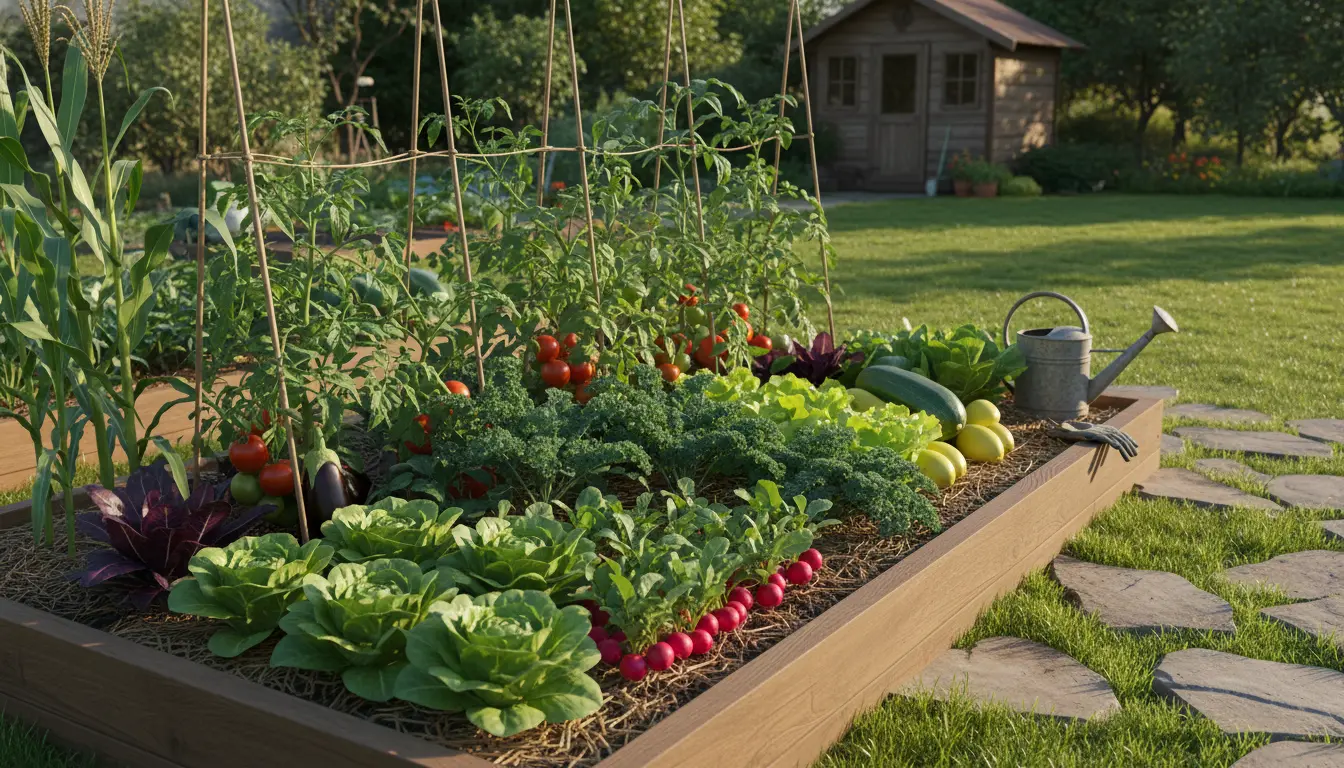
Why Start a Vegetable Garden
Growing your own vegetables saves money and gives you fresh produce on demand. A small, well-planned garden can produce a surprising amount of food with minimal ongoing effort.
This guide explains how to start a vegetable garden in manageable steps, focusing on easy-to-follow actions for beginners.
Choose the Right Spot for Your Vegetable Garden
How to start a vegetable garden begins with location. Most vegetables need 6–8 hours of direct sunlight daily.
Look for a level area near a water source and away from large trees that compete for nutrients.
Site Checklist for How to Start a Vegetable Garden
- Sun exposure: 6–8 hours of direct sun
- Access to water: hose or drip line within reach
- Drainage: avoid low spots that hold water
- Convenience: near the kitchen for easier harvest
Decide on Garden Type and Size
Choose between in-ground beds, raised beds, containers, or a combination. Beginners often find raised beds easier to manage because soil quality and drainage are simpler to control.
Start small—4–8 raised bed squares or a few containers—so tasks like weeding and watering stay quick.
Common Garden Layouts
- One or two 4×8 raised beds for a couple or small family
- Containers on balconies for urban gardeners
- In-ground rows for larger yards with good soil
Prepare Soil and Amendments
Vegetables grow best in loose, fertile soil. Test your soil or assume it needs improvement and add organic matter.
Mix compost into the top 6–12 inches of soil. If using raised beds, use a blend of topsoil, compost, and a light soil conditioner.
Soil Prep Steps for How to Start a Vegetable Garden
- Clear grass and weeds from the area.
- Turn or loosen the soil to 6–12 inches depth.
- Add 2–4 inches of compost and mix well.
- Rake smooth and water to settle the soil.
Raised beds can warm earlier in spring, allowing you to plant faster and extend the growing season by several weeks.
Choose Vegetables That Match Your Climate and Skill
Start with easy, reliable crops: tomatoes, lettuce, radishes, beans, and herbs. These require minimal care and give fast results.
Check your local frost dates and plant accordingly—cool-season crops go in before last frost, warm-season after.
Easy Starter Vegetables
- Lettuce and salad greens — quick harvests
- Radishes — ready in 3–4 weeks
- Bush beans — disease-resistant and productive
- Tomatoes — choose determinate types for small spaces
- Basil and parsley — low maintenance herbs
Planting and Watering Basics
Follow seed packet instructions for spacing and depth. For transplants, plant at the same depth or slightly deeper for stronger root development.
Water thoroughly after planting and establish a consistent schedule. Most vegetables prefer 1–1.5 inches of water per week, applied at the soil level.
Watering Tips for How to Start a Vegetable Garden
- Water early in the morning to reduce evaporation.
- Use drip irrigation or soaker hoses to keep foliage dry and reduce disease.
- Mulch with straw or shredded leaves to retain moisture and suppress weeds.
Maintenance: Weeding, Feeding, and Pest Control
Routine checks are more effective than reactive fixes. Spend 10–20 minutes, 2–3 times a week, walking the beds to remove weeds, check moisture, and inspect plants.
Feed with a balanced organic fertilizer or compost tea every 4–6 weeks for heavy feeders like tomatoes and corn.
Simple Pest Management
- Hand-pick pests like caterpillars and beetles.
- Use row covers early to protect seedlings from insects.
- Encourage beneficial insects with flowers like marigolds and dill.
Harvesting and Succession Planting
Harvest regularly to encourage continued production. Pick leafy greens when young and tender, and harvest tomatoes when fully colored and slightly soft.
Plan succession planting: after an early crop finishes, sow seeds for a later harvest to keep beds productive all season.
Small Real-World Example: Urban Balcony Garden
Case study: Sarah, a renter in Seattle, started a 6-container balcony garden. She chose cherry tomatoes, lettuce, herbs, and bush beans.
By using good potting mix, a morning watering routine, and a simple trellis for tomatoes, she harvested salads weekly and saved money on groceries that summer.
Quick Checklist to Start Today
- Pick a sunny spot and decide bed type (raised bed or containers).
- Prepare soil with compost and test drainage.
- Choose 4–6 easy crops suited to your climate.
- Plant using recommended spacing and set up watering.
- Weed weekly, mulch, and monitor for pests.
Final Tips on How to Start a Vegetable Garden
Keep records of planting dates and varieties to learn what works in your space. Start small, learn from each season, and expand gradually.
Gardening is a practical skill that improves quickly with regular attention and simple adjustments.