
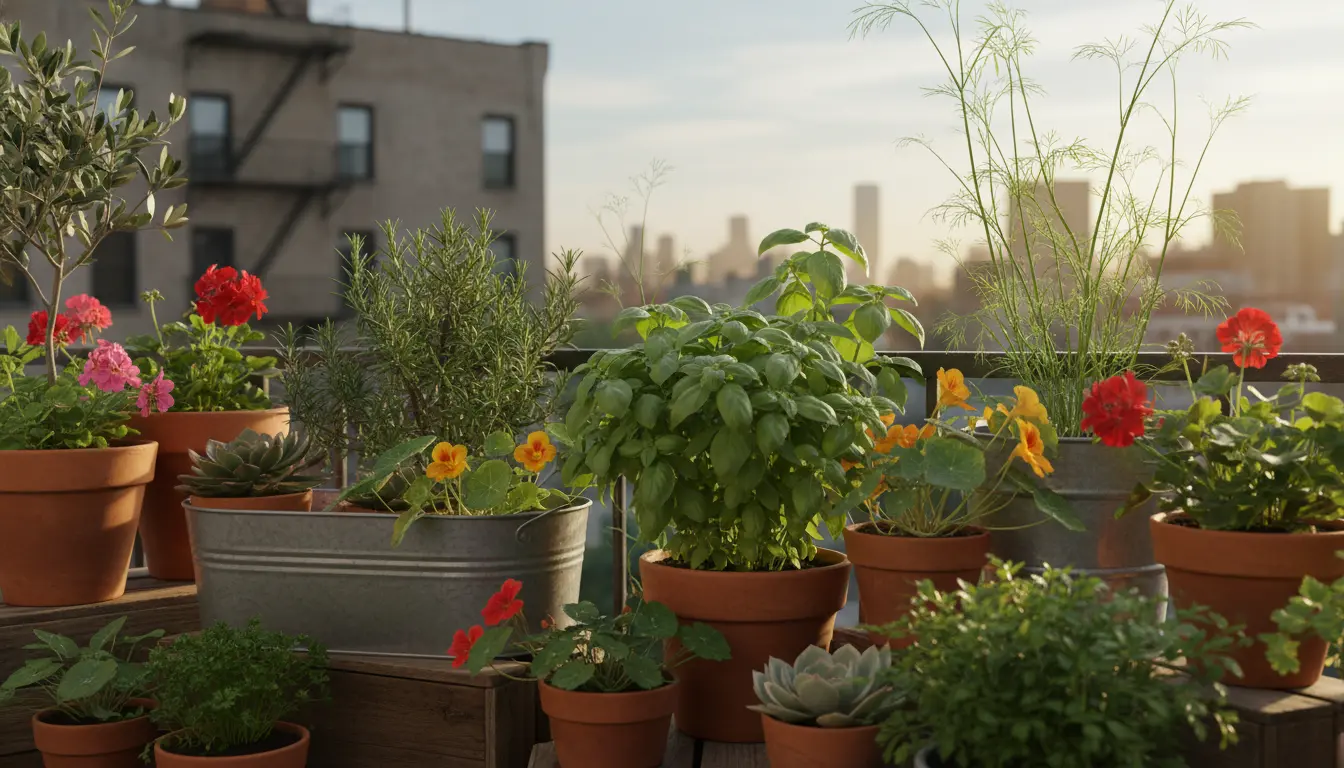
Why Choose Container Gardening for Small Spaces
Container gardening for small spaces makes growing food and ornamentals possible where ground soil is limited or unavailable. It fits balconies, patios, windowsills, and tiny yards.
This method reduces weeding, controls soil quality, and lets you move plants for sun or shelter. It is ideal for beginners and busy people.
Start with a Simple Plan for Container Gardening for Small Spaces
Begin by assessing available light, space, and weight limits if you have a balcony. Note which hours receive direct sun and which are shaded.
Create a short list of crops or plants you want to grow. Herbs, salad greens, dwarf tomatoes, peppers, and compact flowers are good starting choices.
Light and Space Checklist
- Check hours of direct sun per day (4, 6, or 8+ hours).
- Measure available floor, railing, or windowsill depth and width.
- Note wind exposure and temperature extremes.
Choosing Containers for Container Gardening for Small Spaces
Select containers based on the plants you want to grow and the space you have. Larger containers hold moisture longer and support bigger root systems.
Use containers with drainage holes to prevent root rot. If drainage is limited, add a layer of grit or broken pottery at the bottom to help water flow.
Container Options and When to Use Them
- Small pots (6–8 inches): herbs and small succulents.
- Medium containers (10–14 inches): salad greens, dwarf peppers.
- Large containers (15+ inches): tomatoes, compact root vegetables.
- Grow bags: lightweight and breathable for good root health.
Soil, Drainage, and Fertility
Use a quality potting mix labeled for containers rather than garden soil. Potting mixes are lighter and drain better.
Mix in slow-release balanced fertilizer or plan regular liquid feeding. Container plants use nutrients faster than in-ground plants.
Simple Soil Mix Tip
- 2 parts premium potting mix
- 1 part compost or well-rotted manure
- Optional: 1 part perlite for extra drainage
Watering and Maintenance for Container Gardening for Small Spaces
Containers dry out faster than beds, especially in heat. Check moisture daily in warm months and water when the top inch feels dry.
Water deeply so excess drains from the pot base. Shallow frequent watering encourages weak roots.
Basic Maintenance Schedule
- Daily visual check in hot weather
- Weekly feeding with a balanced liquid fertilizer or according to slow-release directions
- Remove dead leaves and pinch back to encourage branching
Pest Management and Common Problems
Container plants can attract aphids, whiteflies, and fungal issues if air circulation is poor. Inspect plants regularly and address issues early.
Use soapy water sprays, neem oil, or hand removal for small infestations. Improve airflow and adjust watering to prevent fungal diseases.
Practical Layouts and Space-Saving Ideas
Maximize small areas with vertical supports, hanging baskets, railing planters, and tiered shelves. Group plants with similar light and water needs together.
Use portable trays or rolling plant stands for heavy containers so you can move them easily for cleaning or seasonal changes.
Example Layouts
- Sunny balcony: tomatoes in large pots at back, herbs in medium pots at front, hanging baskets with trailing strawberries.
- Shady porch: shade-tolerant leafy greens and herbs, using vertical shelves to increase capacity.
Many herbs like basil, mint, and chives produce better flavor when grown in containers because you can control soil nutrients and water more precisely.
Small Case Study: Balcony Tomato Success
Maria, a city resident with a 6-by-4-foot balcony, grew cherry tomatoes and basil in containers last summer. She used two 20-liter containers for tomatoes and four 8-inch pots for herbs.
Her setup included a well-draining potting mix, daily morning watering, and weekly liquid feed. By midsummer she harvested several pints of cherry tomatoes and had fresh basil for meals.
Key factors in her success were container size, consistent watering, and moving pots to follow sun across the balcony.
Seasonal Care and Overwintering
In cooler climates, move tender plants indoors or protect them with frost cloth. Reduce watering in fall as growth slows.
Clean containers annually and refresh potting mix to avoid disease carryover. Store empty pots in a dry place over winter.
Final Checklist for Container Gardening for Small Spaces
- Assess light and space before buying plants
- Choose the right container size and ensure drainage
- Use a quality potting mix and feed regularly
- Water deeply and check moisture often
- Rotate, prune, and monitor for pests
Container gardening for small spaces is a flexible way to grow food and flowers even with limited area. With a simple plan and consistent care, you can enjoy productive plants year after year.