
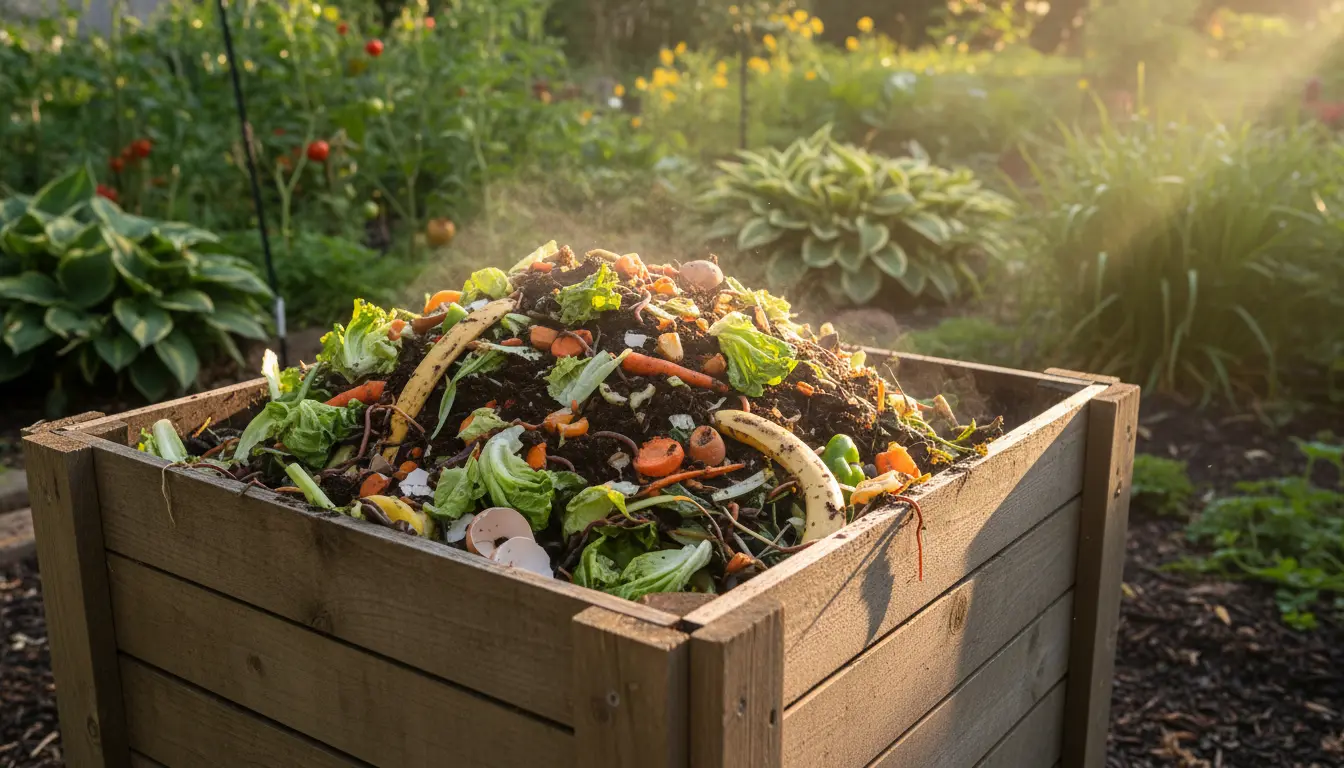
Home composting is a simple, low-cost way to turn kitchen scraps and yard waste into rich soil. This guide explains clear steps and practical tips for home composting for beginners, so you can reduce waste and improve garden soil.
Why Choose Home Composting for Beginners
Composting at home cuts landfill waste and creates nutrient-rich material for plants. It requires little space and can work for apartments, small yards, or large gardens.
For beginners, the process is forgiving. With basic rules and a bit of attention, most people get usable compost in a few months.
Basic Principles of Home Composting for Beginners
Composting relies on microbes breaking down organic material. To support them, balance these elements: carbon, nitrogen, moisture, and air.
- Carbon (browns): dry leaves, shredded paper, straw.
- Nitrogen (greens): vegetable scraps, fresh grass clippings, coffee grounds.
- Moisture: like a damp sponge, not soaking wet.
- Air: occasional turning provides oxygen for microbes.
Choosing a Method for Home Composting for Beginners
Pick a method that matches your space and time. Two common beginner-friendly options are a simple bin and a tumbler.
- Open bin: inexpensive and easy to add materials. Works well for yards.
- Tumbler: speeds mixing and reduces pests but costs more.
Step-by-Step Setup for Home Composting for Beginners
Setting up a basic compost system takes about 30 minutes. Follow these steps to start:
- Pick a location: shady, level ground near water access.
- Choose your container: bin, tumbler, or a DIY pile with wire mesh.
- Layer materials: start with coarse browns, then add greens in thin layers.
- Maintain moisture: add water gradually to reach a damp-sponge feel.
- Turn: every 1–2 weeks for faster compost; less often is fine for a slow system.
What to Compost and What to Avoid
Knowing what goes in prevents odors and pests. Use this quick guide:
- Good: fruit and vegetable scraps, coffee grounds, eggshells, tea bags, shredded paper, yard trimmings.
- Use sparingly: citrus peels and onion skins (can be slow to break down).
- Avoid: meat, dairy, fats, diseased plants, pet waste, and oils.
Troubleshooting Tips for Home Composting for Beginners
Beginners often face common problems. Fixing them is usually straightforward.
- Smelly compost: add more browns and turn to add air.
- Too dry: add water and some greens.
- Too wet or slimy: mix in dry browns and improve drainage.
- Pests (rats, flies): avoid meat/dairy, bury food scraps, use a closed bin or tumbler.
Timeline and Expectations
How long composting takes depends on method and effort. Expect usable compost in:
- 2–3 months: active hot composting with regular turning.
- 4–12 months: passive pile or infrequent turning.
Finished compost is dark, crumbly, and smells earthy. If you still see identifiable scraps, give it more time or chop materials smaller.
Small Real-World Example
Case study: A small urban household in Denver started home composting for beginners using a 60-liter tumbler. They added kitchen scraps and yard waste on alternating days and turned the tumbler twice a week.
Within four months they produced about 45 liters of finished compost. The household reduced weekly trash by nearly half and used the compost to feed container vegetable plants.
Composting one ton of food waste can save the equivalent of nearly one metric ton of CO2 emissions by keeping organic material out of landfills.
Practical Tips and Examples
Make composting easier with these habits:
- Keep a small countertop container for scraps; empty it daily to the outdoor bin.
- Chop larger items to speed decomposition.
- Save shredded paper and dry leaves as a steady supply of browns.
- Use finished compost as a soil top dressing, potting mix amendment, or lawn conditioner.
Simple Mix Example
Try this ratio to start: 3 parts browns to 1 part greens by volume. For example, a bucket of dry leaves plus a bucket of vegetable scraps and coffee grounds makes a balanced layer.
Final Checklist for Home Composting for Beginners
- Location chosen and container set up.
- Have a plan for browns and greens supply.
- Check moisture weekly and turn if possible.
- Avoid problem items and monitor for pests or odors.
With a little patience and attention to basic balance, home composting for beginners is a reliable way to reduce waste and improve soil. Start small, observe, and adjust your mix as you learn what works best in your climate and space.